
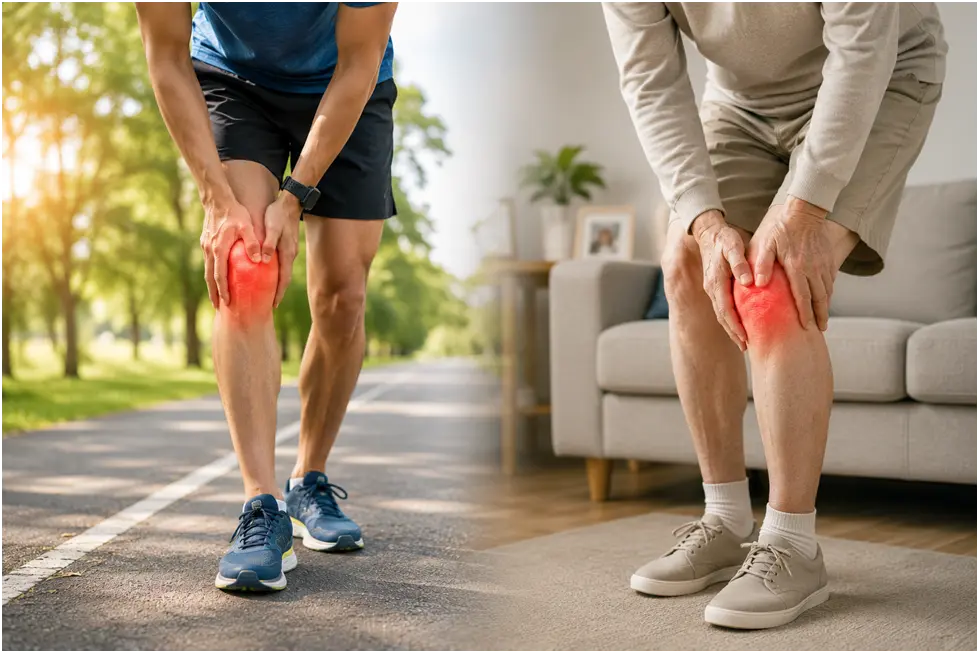
Runner’s Knee vs Arthritis: What’s Causing Your Knee Pain?
Knee pain can make everyday activities more difficult, whether you’re training for a marathon, walking around the neighbourhood, or simply climbing a flight of stairs. One of the biggest challenges is understanding the root cause of the discomfort. While some people may assume all knee pain is a sign of arthritis, others believe it’s simply a sports injury that will go away on it’s on or simply just with rest.
In reality, not all knee pain has the same cause. Two conditions that are commonly confused are betweenrunner’s knee andarthritis. Although both cause pain around the knee joint, they affect different structures, develop for different reasons, and often require different treatment approaches.
Knowing the difference is important because treating the wrong condition may delay recovery and allow symptoms to worsen over time.
In this article, we’ll comparebetweenrunner’s knee and arthritis, explain the common signs of each condition, and help you understand when it’s time to seek professional advice.
What is runner’s knee?
Runner’s knee, medically known as patellofemoral pain syndrome (PFPS), is one of the most common overuse injuries affecting physically active individuals. Despite its name, you don’t have to be a runner to develop it.
The condition occurs when pain develops around or behind the kneecap (patella). This usually happens because the kneecap isn’t moving smoothly within the groove of the thigh bone during movement. Repetitive stress, muscle weakness, poor movement patterns, or sudden increases in activity can all contribute to the problem.
Runner’s knee is especially common among:
- Recreational and competitive runners
- Cyclists
- Gym-goers
- Hikers
- People who spend long periods climbing stairs
- Individuals who recently increased their training intensity
Unlike arthritis, runner’s knee doesn’t involve the gradual breakdown of joint cartilage caused by ageing. Instead, it’s considered an overuse injury that often responds well to physiotherapy and activity modification.
What is knee arthritis?
Arthritis is a broad term used to describe conditions that affect the joints. When comparing runner’s knee and arthritis, the type most people are referring to is knee osteoarthritis.
Osteoarthritis develops when the protective cartilage covering the ends of the bones gradually wears down over time. As the cartilage becomes thinner, movement within the joint becomes less smooth, leading to pain, stiffness, swelling, and reduced mobility.
Although osteoarthritis becomes more common with age, it isn’t simply an inevitable part of getting older. Previous injuries, excess body weight, genetics, and repetitive stress on the knee can all increase the likelihood of developing the condition.
People with knee arthritis often notice that symptoms gradually become more noticeable over months or years rather than appearing suddenly.
How do runner’s knee and arthritis differ?
Both conditions affect different parts of the knee and usually present in different ways.
Runner’s knee mainly affects the tissues surrounding the kneecap and is often triggered by movement or repetitive activity. Arthritis, on the other hand, involves changes within the joint itself due to cartilage degeneration.
Some of the key differences include:
| Runner’s Knee | Knee Arthritis |
| Common in younger and active individuals | More common in older adults, although younger people can also develop it |
| Pain usually develops around or behind the kneecap | Pain may occur throughout the knee joint |
| Often linked to overuse or training errors | Usually develops gradually over time |
| Symptoms often improve with appropriate rehabilitation | Symptoms are managed rather than completely reversed |
| Usually no joint degeneration | Involves cartilage wear within the joint |
Understanding these differences is the first step in identifying the most appropriate treatment.
Where is the pain usually located?
The location of your pain can provide useful clues when comparing runner’s knee and arthritis, although it shouldn’t be used as the only method of diagnosis.
Runner’s knee
People with runner’s knee typically experience pain:
- Around the front of the knee
- Behind the kneecap
- During running or jumping
- When walking downstairs
- After sitting for prolonged periods with bent knees
Many people describe the discomfort as a dull ache that becomes worse with repeated activity.
Knee arthritis
Arthritis pain is often more widespread and may be felt:
- Along the inside or outside of the knee
- Deep within the joint
- During walking or standing
- First thing in the morning
- After prolonged inactivity
As arthritis progresses, pain may become more persistent and eventually occur even during rest.
What symptoms suggest runner’s knee?
Runner’s knee often develops gradually rather than appearing overnight. Many people notice mild discomfort during exercise before the pain becomes more consistent.
Common symptoms include:
- Pain around or behind the kneecap
- Discomfort during running
- Pain while climbing or descending stairs
- Clicking or grinding sensations
- Pain after prolonged sitting
- Tenderness around the kneecap
Symptoms often fluctuate depending on activity levels. Continuing to train through the pain may cause symptoms to become more persistent.
What symptoms point towards arthritis?
While there can be some overlap, arthritis usually presents differently from runner’s knee.
People with knee arthritis commonly experience:
- Joint stiffness, particularly in the morning
- Pain that develops gradually
- Swelling around the knee
- Reduced range of movement
- A feeling that the knee is becoming less flexible
- Difficulty walking longer distances
- Pain during everyday activities, not just during exercise
Some people also notice occasional grinding sensations due to changes within the joint surfaces.
Can younger people develop arthritis?
Yes. Although arthritis is more common in older adults, it can also affect younger individuals.
Previous knee injuries, ligament damage, meniscus tears, obesity, repetitive heavy loading, and certain inflammatory conditions may all contribute to earlier joint degeneration.
Likewise, older adults can also develop runner’s knee if muscle weakness, altered movement patterns, or increased physical activity place additional stress on the kneecap.
This is why age alone isn’t enough to distinguish betweenrunner’s knee and arthritis.
How to be accurately diagnosed?
Due to similar symptoms, an accurate diagnosis is essential before starting treatment.
A physiotherapist or doctor will usually begin by discussing:
- When the pain started
- What activities trigger symptoms
- Whether the pain developed gradually or after an injury
- Your medical history
- Your exercise routine
This is followed by a physical examination, which may include assessing your walking pattern, knee movement, muscle strength, flexibility, and the position of the kneecap during movement.
If arthritis or another structural problem is suspected, imaging such as X-rays or MRI scans may be recommended. However, many cases of runner’s knee can be diagnosed through a thorough clinical assessment without the need for imaging.
Does the treatment differ?
Yes. although both conditions benefit from improving strength and movement, the goal of treatment is different because the underlying causes are different.
For runner’s knee, the aim is to reduce stress on the kneecap, improve muscle control, and correct movement patterns. In contrast, treatment for arthritis focuses on reducing pain, maintaining joint mobility, improving function, and slowing further joint degeneration where possible.
Receiving the correct diagnosis ensures that your treatment plan addresses the accurate source of your knee pain rather than simply managing the symptoms.
How is runner’s knee treated?
Runner’s knee usually responds well to conservative treatment, particularly when addressed early.
Your physiotherapy programme may include:
- Strengthening the quadriceps, glutes, and hip muscles
- Improving flexibility in tight muscles
- Correcting running mechanics
- Manual therapy where appropriate
- Activity modification during recovery
- Gradual return to running
Simply resting is often not enough. Without addressing the underlying movement issues, symptoms are more likely to return once you resume activity.
If you’d like practical advice on recovery and reducing the risk of recurrence, read our guide on: Treating and Preventing: Runner’s Knee
How is knee arthritis managed?
Although osteoarthritis cannot currently be reversed, many people successfully manage their symptoms and remain active for years with the right treatment.
Management may include:
- Physiotherapy to improve strength and mobility
- Weight management where appropriate
- Regular low-impact exercise
- Activity modification
- Pain relief medication prescribed by your doctor
- Assistive devices if necessary
According to the American Academy of Orthopaedic Surgeons (AAOS) regular exercise and muscle strengthening play an important role in improving pain and function for people living with knee osteoarthritis. You can learn more about knee osteoarthritis on the HealthXchange website:
Rather than avoiding movement altogether, staying active is generally encouraged, as appropriate exercise helps maintain joint health and overall function.
Can I have both runner’s knee and arthritis?
Yes. It’s possible for someone to have both conditions at the same time.
For example, an older recreational runner may already have mild osteoarthritis while also developing runner’s knee due to changes in training, muscle weakness, or altered running technique.
In these situations, treatment needs to address both the joint changes associated with arthritis and the movement patterns contributing to runner’s knee.
A comprehensive assessment helps identify all contributing factors instead of focusing on just one diagnosis.
When should you seek professional advice?
Occasional knee discomfort after exercise isn’t always a cause for concern. However, persistent pain should not be ignored, particularly if it begins affecting your daily activities or prevents you from exercising.
Consider seeking professional advice if:
- Your knee pain lasts longer than a few weeks.
- Pain keeps returning whenever you exercise.
- The knee becomes swollen or unstable.
- Walking, climbing stairs, or standing becomes difficult.
- Your symptoms continue despite reducing activity.
- You notice locking, catching, or significant loss of movement.
Early treatment often leads to better outcomes and may help prevent minor problems from becoming chronic.
Can runner’s knee or arthritis be prevented?
While not every case can be prevented, healthy habits can significantly reduce your risk of developing knee problems.
Simple strategies include:
- Increasing training gradually rather than suddenly
- Wearing appropriate footwear
- Maintaining strength in the hips and legs
- Keeping a healthy body weight
- Warming up before exercise
- Taking recovery days between intense training sessions
- Addressing knee pain early instead of pushing through it
These habits support healthier joints and reduce unnecessary stress on the knees over time.
Final thoughts
Understanding the difference between runner’s knee and arthritis is an important step towards finding the right treatment. Although both conditions cause knee pain, they have different causes, symptoms, and management strategies.
Runner’s knee is typically an overuse injury affecting the tissues around the kneecap and often improves with physiotherapy, movement retraining, and strengthening exercises. Arthritis, on the other hand, involves changes within the joint itself and requires long-term management to maintain mobility and reduce pain.
If you’re unsure which condition may be causing your symptoms, a professional assessment can provide clarity and help you begin the most appropriate treatment plan. Early intervention not only improves recovery but also helps you stay active and confident in your daily life.
Tags : Knee Arthritis, Knee Osteoarthritis, knee pain, Knee Physiotherapy Singapore, runner's knee, Runner's Knee vs Arthritis, sports injury