
What Is Strength and Conditioning Physiotherapy?
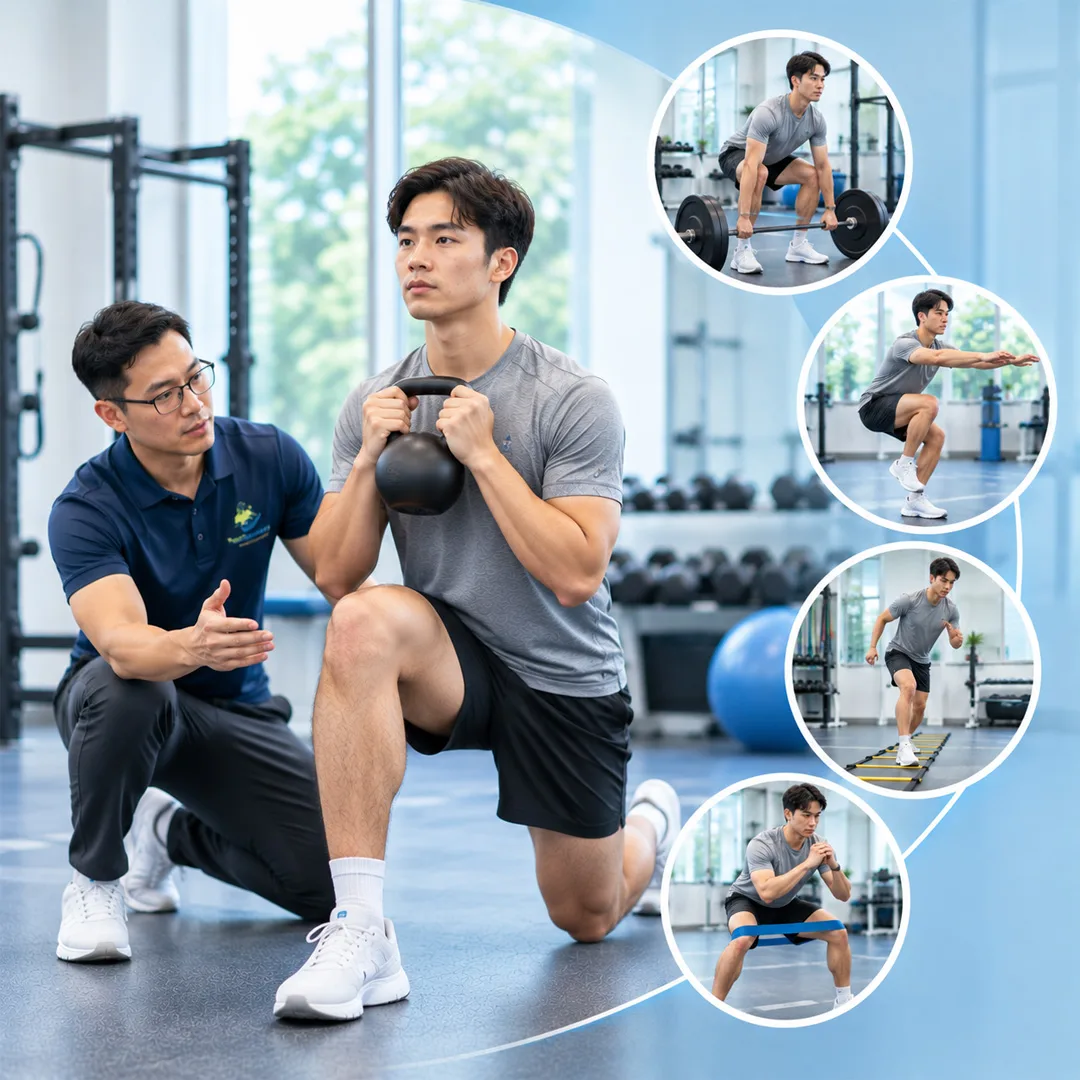
Strength and conditioning physiotherapy is supervised exercise training led by a physiotherapist. It builds muscle strength, joint control, endurance and power, guided by what your physiotherapist knows about your injuries and movement patterns. The aim is a body that handles the demands of your sport, job and daily life with less risk of breaking down.
Strength vs conditioning: Strength training builds the force your muscles can produce. Conditioning builds the fitness to repeat that effort over time, such as the stamina for a full badminton match. A strength and conditioning programme develops both together.
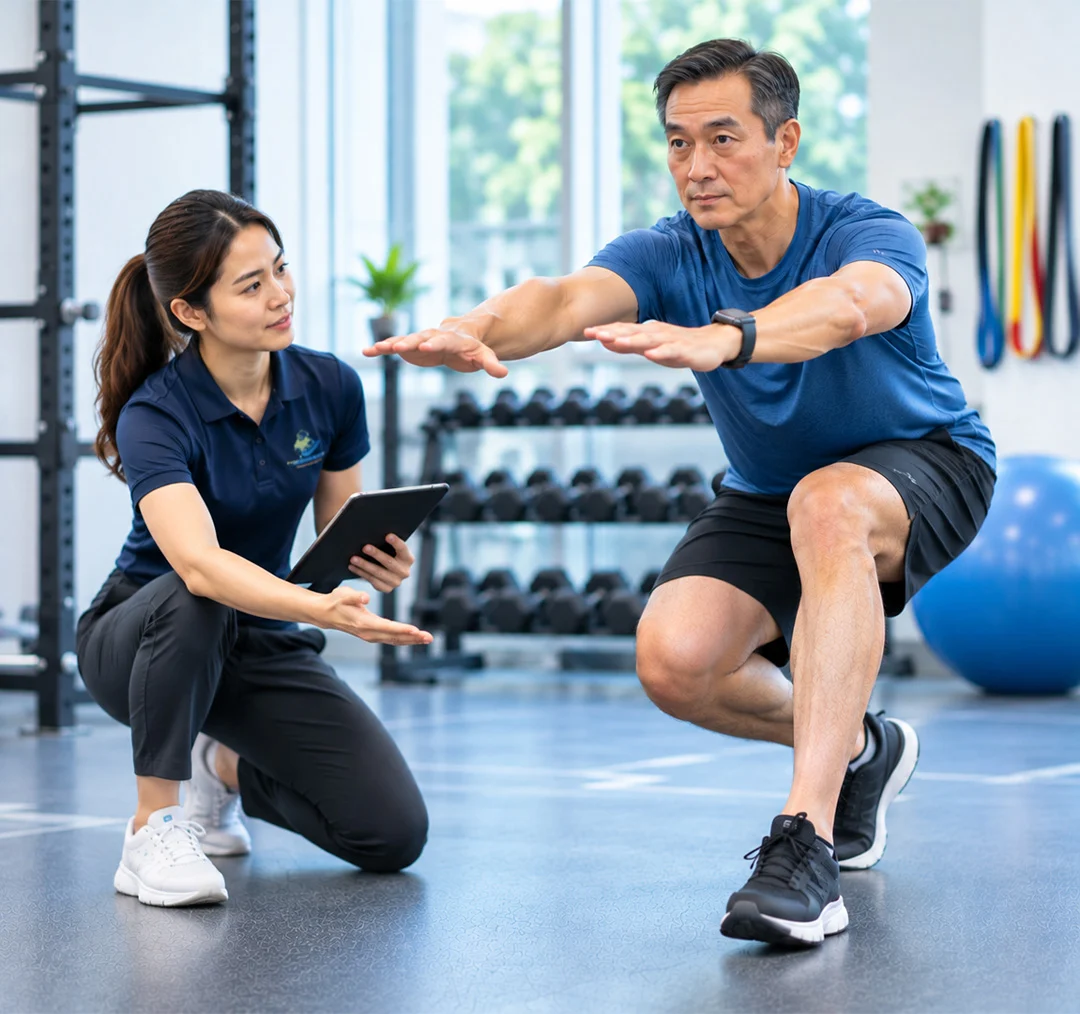
Physiotherapy-led training starts with an assessment. We watch how you squat, land, push and carry, and we compare your left side with your right.
Small differences matter. One calf that tires faster or one hip that drops on a single-leg squat often explains why the same injury keeps returning. No two presentations are identical, so your training follows no generic protocols.
Training Focus Areas:
- Strength & Muscle Capacity, Joint Control & Stability, Endurance & Conditioning, Injury Prevention
Why Strength Often Stalls
Most people who come to us are already active. Something keeps getting in the way.
Who Our Strength and Conditioning Programme Helps
Most people looking for strength training in Singapore fall into one of three groups. Your programme reflects where you are now.
- ACL Reconstruction
- Ankle & Knee Sprains
- Shoulder & Rotator Cuff Injuries
- Post-Surgical Strength Rebuilding
- Running & Marathon Training
- Badminton, Futsal & Racquet Sports
- IPPT Preparation
- Recurring Back & Neck Pain
- Knee Osteoarthritis
- Older Adults Building Strength & Balance
Note: If you have a heart condition, recent surgery or another medical condition, we may ask for clearance from your doctor or surgeon before higher-intensity training.
What Can Slow Down Your Progress?
Strength builds through progressive overload: small, planned increases in load over time. Muscles respond within weeks. Tendons and bone typically adapt more slowly, over months.
Rushing that timeline is one of the most common reasons people break down again. A structured plan lets each tissue catch up before the load climbs.
Common factors include:
- Training through sharp pain
- Sudden jumps in training volume
- Too little recovery time
- Poor sleep
- Training in midday heat
- Copying online programmes
How Your Programme Works
Every programme follows the same four steps. What happens inside each step is specific to you.
We review your injury history, goals and current training. Movement tests and side-to-side strength comparisons show where you are strong and where you are compensating.
Exercises, sets and progressions match your results, your schedule and your equipment. That could be a condo gym, an ActiveSG gym or your living room.
Your physiotherapist coaches technique and adjusts the load each session. We often use a 1 to 10 effort scale, called RPE (rate of perceived exertion), to keep progress steady.
We repeat key tests at set points. You see measurable change and know when you are ready for the next level.
How Long Does Strength and Conditioning Take?
With consistent training, you will often feel noticeably stronger within the first several weeks. Tendon capacity and power take longer to build. Most programmes move through three phases.
| Phase | Focus | What you will do | General timeframe |
|---|---|---|---|
| Acute Phase (Pain relief) | Settle irritated tissues and find pain-free starting loads | Isometric holds (muscle contractions without joint movement), mobility work, movement retraining | Around weeks 1 to 2 |
| Subacute Phase (Restoring range) | Restore full range and base strength | Progressive resistance, single-leg control, core stability | Around weeks 2 to 8 |
| Recovery Phase (Strength & prevention) | Build strength, power and sport-specific fitness | Heavier loading, jumping and landing drills, agility, conditioning circuits | Around weeks 8 to 16, then ongoing |
Starting without an injury? Most people begin in the Subacute Phase. After surgery such as ACL reconstruction, return-to-sport timelines are usually many months long and follow your surgeon’s guidance.
Are You Ready to Return-to-Sport?
Feeling better and being ready to play are two separate milestones. Before a full return-to-sport, you should be able to tick most of these:
- Full, pain-free range of movement in the injured area
- No swelling or lingering ache the day after training
- Hopping, landing and changing direction on the injured side without pain or hesitation
- Strength close to your uninjured side (after knee injuries, clinicians often look for around 90% of the other leg’s strength)
- Completing sport-specific drills at match intensity
- Trusting the joint when you move quickly
Your physiotherapist confirms readiness with formal testing, so you return with clear evidence instead of a guess.
Not sure you tick every box? Book a return-to-sport assessment.
When Should You Start Strength Training Physiotherapy in Singapore?
The best time is before a small niggle becomes a recurring injury. Book an assessment if:
- You finished rehab but do not feel strong
- Pain returns when you train
- You are returning to sport after a break
- You are preparing for a race or IPPT
- You want to train safely with back pain or arthritis
- Your strength or balance is declining with age
See a doctor first if you get chest pain, unusual breathlessness, dizziness or palpitations during exercise. The same applies if you have had recent surgery without clearance to train.
FAQs
Frequently Asked Questions
The World Health Organization recommends muscle-strengthening activity on at least two days a week for adults. Most programmes combine supervised sessions with training at home or in the gym.
Well-coached strength training is generally safe for people with back pain and is often part of managing it. We start with loads you can control and progress gradually.
Yes. The World Health Organization recommends that older adults include balance and strength training in their weekly activity to support daily function and help prevent falls. We adjust every exercise to your current ability.
Heat and humidity make the same session feel harder. For conditioning training in Singapore, aim for early mornings or evenings, drink regularly and ease off on very hot days.
Strength gradually fades when training stops. Your programme ends with a routine you can keep up on your own, and you can return for a check-in before a new season or event.
Start Strength and Conditioning With a Physiotherapist
Book an assessment and leave with a clear starting point: your test results, your first programme and a timeline for each phase. Sessions run at our clinics across Singapore, conveniently close to home or work.