
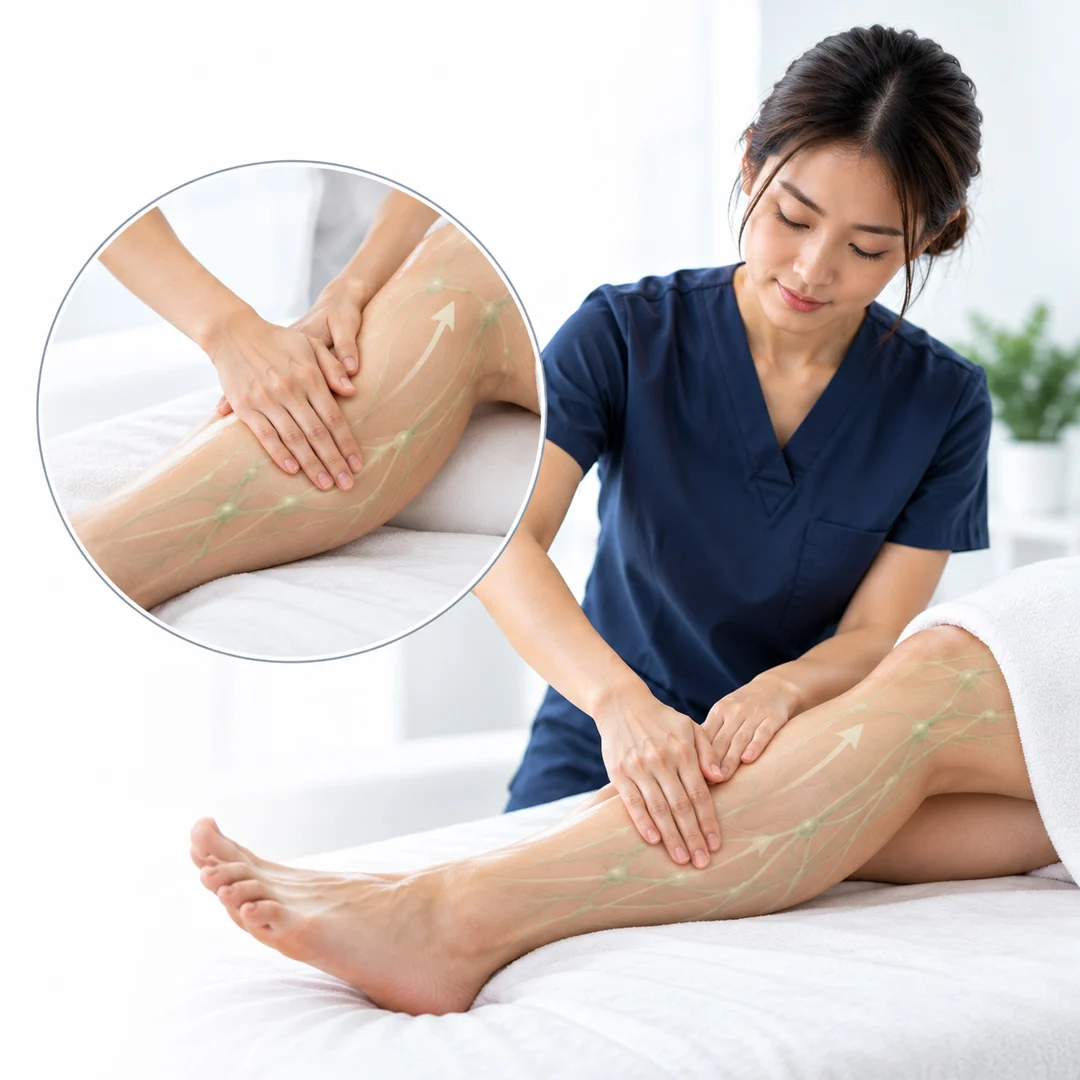
What Is Manual Lymphatic Drainage?
Manual Lymphatic Drainage (MLD) is a specialised technique for a lymphatic system that isn’t clearing fluid the way it should. It uses light, rhythmic, directional strokes to stimulate the lymphangions (the pumping segments of your lymph vessels) and move fluid back toward healthy lymph nodes.
Sessions typically run 30 to 45 minutes, longer than a standard massage. Most of that time goes into preparing nearby healthy lymph nodes to receive fluid before the congested area is even touched, not massaging the swollen site directly.
Whether you’ve had lymph nodes removed during cancer surgery, developed lymphoedema, or you’re managing post-surgical or pregnancy-related swelling, effective drainage depends on the underlying cause, not a fixed routine. This is why searches for Lymphatic Drainage Singapore often led people to two very different services: relaxation-focused spa massage, and clinical, physiotherapist-led treatment. The two aren’t interchangeable.
Recovery Focus Areas:
- Fluid Reduction, Tissue Softening, Skin & Scar Management and Long-Term Self-Management
Common Challenges With Lymphatic Swelling
Managing lymphatic congestion looks different for everyone, but many people experience the same physical and daily challenges.
Common Conditions We Treat With Lymphatic Drainage
Our physiotherapists provide Lymphatic Physiotherapy in Singapore that patients rely on for a range of surgical and medical presentations.
- Mastectomy / Lumpectomy
- Joint Replacement Surgery
- Liposuction & Cosmetic Procedures
- Primary Lymphoedema
- Secondary Lymphoedema
- Chronic Venous Insufficiency
- Pregnancy-Related Swelling
- Sports Injury Swelling
- Post-Surgical Fibrosis
For anyone searching specifically for Lymphoedema Physiotherapy in Singapore support, our approach follows structured, phase-based management rather than a one-off treatment, since lymphoedema is typically a long-term condition, not a short-term injury.
Note: Some swelling has cardiac, renal, or vascular causes requiring medical clearance before manual therapy. Your physiotherapist screens for these during assessment.
Manual Lymphatic Drainage vs Other Swelling Treatments
People often try compression alone, elevation, or general massage before seeking a clinical assessment. Here’s how these compare to true Manual Lymph Drainage that Singapore clinics provide:
| Approach | What It Does | Limitation |
|---|---|---|
| Rest & Elevation | Temporarily reduces fluid pooling from gravity | Doesn't address the underlying lymphatic pathway blockage |
| Compression Garments Alone | Prevents fluid from re-accumulating | Works best alongside active drainage, not as a standalone fix |
| General Massage | Relaxes muscle tension | Uses pressure and direction unsuited to lymphatic vessels; can worsen some cases |
| Manual Lymphatic Drainage | Actively stimulates lymphangion contractions to move fluid through the correct pathways | Requires trained assessment to apply safely and effectively |
What Can Slow Your Recovery?
Recovery timelines differ for everyone, but certain factors commonly delay fluid reduction and tissue improvement.
- Delayed treatment start: waiting weeks before your first assessment
- Untreated infection risk: skin infections that go unaddressed alongside swelling
- Inconsistent compression use: Skipping regular garment wear between sessions.
- Prolonged immobility: long periods without movement that slow natural lymph flow
- Underlying vascular issues: circulation problems that complicate drainage
- Skipping self-management training: not learning the take-home techniques your physiotherapist teaches
A structured lymphatic drainage programme helps address these factors early, before they compound and extend your recovery.
Your Recovery Journey
Manual Lymphatic Drainage aims to reduce swelling, restore tissue mobility, and help prevent future complications through structured, evidence-based treatment.
For lymphoedema specifically, this follows the principles of Complete Decongestive Therapy, a globally recognised conservative management approach. Post-surgical swelling often resolves within weeks; chronic lymphoedema requires ongoing management rather than a single fixed endpoint.
Signs You May Need Manual Lymphatic Drainage
Not everyone with swelling needs MLD, but these signs suggest it’s worth an assessment:
- Swelling that doesn’t reduce overnight or with elevation
- Skin that feels tight, heavy, or leaves a lasting dent when pressed (pitting)
- One limb noticeably larger than the other after surgery
- Swelling that’s lasted more than 2 to 3 weeks post-surgery
- Reduced flexibility in a joint near the swollen area
- A history of lymph node removal or radiation therapy
If 2 or more of these apply to you, book an assessment rather than waiting for it to resolve on its own.
Supporting Your Recovery Between Sessions
Lymphatic drainage works best when it’s supported by daily habits, not confined to clinic visits.
- Stay hydrated. Adequate fluid intake supports lymph flow rather than working against it.
- Keep moving within your limits. Gentle muscle activity (walking, ankle pumps if seated for long periods) helps the lymphatic system’s natural pumping action.
- Wear compression as advised. Consistency matters more than duration; skipping days can undo progress made in session.
- Watch for infection signs. Redness, warmth, or fever near the treated area needs prompt medical attention, not home management.
Your physiotherapist will give you a specific self-care routine based on your condition. These are general habits that support, not replace, that plan.
When Should You Start Lymphatic Drainage?
The ideal time to begin depends on your condition and your surgeon’s clearance. You may benefit from an assessment if:
Swelling hasn’t improved after a few weeks
Skin feels tight, heavy, or firm to the touch
Movement near the swollen area feels restricted
FAQs
Frequently Asked Questions
No. MLD uses light pressure and shouldn’t cause pain. Some patients feel mild tenderness over swollen areas, but the technique itself is gentle by design.
The clinical version is performed by a physiotherapist following a structured assessment, targeting your specific lymphatic pathways and tracking measurable outcomes. Spa-based lymphatic massage Singapore treatments are typically relaxation-focused and not adapted to medical conditions like lymphoedema or post-surgical swelling.
This depends entirely on the cause. Post-surgical swelling may need a short, intensive course of sessions. Chronic lymphoedema usually needs ongoing management, with session frequency reducing over time as you learn self-management techniques.
Timing after surgery usually comes down to your surgeon’s clearance, not a fixed rule.Often you can start once cleared for manual therapy, though this depends on your procedure and healing stage, so we coordinate with your surgical team where needed.
For many lymphoedema and post-surgical cases, yes. Compression supports the drainage achieved during MLD sessions and helps maintain results between appointments.
Coverage varies by provider and policy. We recommend checking directly with your insurer or a member of our clinic team.
Book Your Manual Lymphatic Drainage Assessment
Swelling that doesn’t resolve on its own is a signal worth acting on, not waiting it out. The longer fluid sits congested, the harder it tends to shift.