
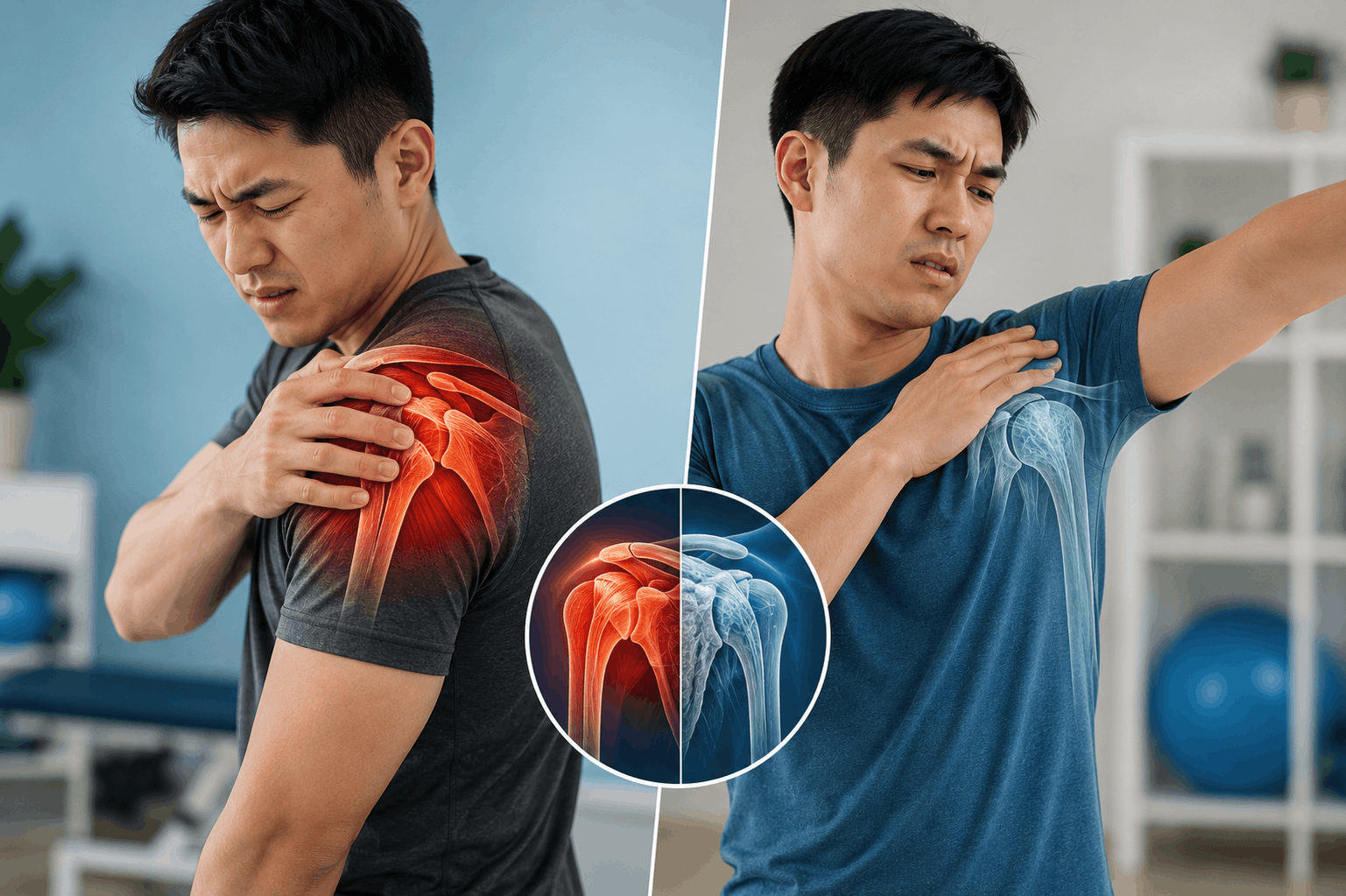
Rotator Cuff Injury vs Frozen Shoulder: How to Tell the Difference
Waking up with a sharp, catching pain or a dull, deep ache in your shoulder joint can make daily life incredibly challenging. Whether you struggle to reach for a cup on a high shelf or feel a sudden pinch while putting on a shirt, shoulder issues are common among active individuals and desk-bound professionals alike. Understanding the difference between a Rotator Cuff Injury and Frozen Shoulder is the first critical step toward receiving the proper rehabilitation plan.
To ensure the highest accuracy of clinical information, this blog is verified by our physiotherapist, who specializes in advanced musculoskeletal rehabilitation. Receiving an accurate clinical diagnosis prevents you from performing incorrect rehabilitation movements that could potentially aggravate your condition. Let us explore the distinct structural differences, overlapping physical symptoms, and specific treatment and recovery pathways for these two prevalent upper-limb conditions.
What is Rotator Cuff Injury?

The rotator cuff consists of a structural group of four specialized muscles and connecting tendons that secure your upper arm bone firmly inside the shallow shoulder socket. A strain, partial tear, or chronic tendinitis typically occurs from repetitive overhead movements, sudden lifting trauma, or age-related tissue degeneration. This specific damage often leads to localized structural inflammation, muscular weakness, and sharp, localized discomfort during multi-directional movements.
When you suffer from this type of structural damage, you likely experience significant pain when actively lifting your arm or reaching behind your back. However, a key biomechanical feature of this condition is that your arm can still be moved through its full range of motion if an external force or a therapist lifts it. To understand more about the underlying structural damage, anatomy, and targeted rehabilitation pathways, read our comprehensive guide on Rotator Cuff Injury: Causes, Symptoms, and Physiotherapy Treatment Options.
What is Frozen Shoulder?

Frozen shoulder, medically referred to as adhesive capsulitis, is a distinct condition characterized by gradual, progressive inflammation and thickening of the connective tissue capsule surrounding the glenohumeral joint. As this protective capsule tightens and develops thick bands of scar tissue, the available space inside the joint decreases significantly, severely restricting normal joint gliding mechanics. This condition typically progresses through distinct freezing, frozen, and thawing stages over several months.
Unlike a tendon tear, adhesive causalities cause a global restriction in both active and passive shoulder mobility. This means that neither you nor an experienced clinical therapist can physically move the arm upward or outward beyond a rigid structural block. To dive deeper into the multi-stage progression and specialized clinical timelines of this condition, explore our detailed analysis on Frozen Shoulder: Causes, Symptoms, and Physiotherapy Treatment Options.
How to Tell the Difference?
The absolute easiest way to differentiate lies in evaluating your passive range of motion. If you experience a severe structural block where the joint physically refuses to budge even when relaxed, it is frozen shoulder. If your shoulder joint remains flexible when supported but feels weak and intensely painful when lifting it using your own muscular strength, a tendon injury is more probable.
The distinct nature and timing of your physical pain also provide valuable diagnostic clues. Rotator cuff pain is typically sharp, specific, and directly triggered by specific overhead actions or sleeping directly on the affected side. In contrast, an evolving frozen shoulder generates a constant, deep, agonizing ache that is highly unpredictable and often accompanied by severe, generalized stiffness that worsens significantly during cold nights or air-conditioned environments.
| Diagnostic Feature | Rotator Cuff Injury | Frozen Shoulder (Adhesive Capsulitis) |
| Primary Structural Cause | Tendon strain, inflammation, or tear | Thickening and tightening of the joint capsule |
| Passive Movement | Generally normal and free when supported | Extremely limited and completely blocked |
| Active Movement | Painful and weak when lifting the arm | Rigidly restricted in multiple directions |
| Pain Characteristics | Sharp, localized, catching sensation | Deep, constant, throbbing ache with stiffness |
How Does a Physiotherapist Diagnose Shoulder Conditions in Singapore?
An experienced physical therapist conducts a series of highly specialized, targeted physical tests to safely isolate the affected soft tissues. These evaluations include precise muscle resistance testing, passive mobility checks, and specific impingement signs to determine the exact origin of your discomfort. A comprehensive clinical assessment ensures that your recovery plan directly targets the root cause of your limited mobility rather than simply masking your temporary symptoms.
At Rapid Physiocare, our professional teams combine hands-on manual assessment with deep postural analysis to rule out secondary issues like cervical nerve compression or thoracic stiffness. Identifying the exact stage of your condition allows us to apply the safest, most effective therapeutic techniques for your unique body. If you are experiencing persistent joint limitations, scheduling a professional evaluation for shoulder pain provides total clarity for your recovery journey.
What Are The Best Physiotherapy Treatment Options For Shoulder Pain?
The most effective clinical rehabilitation path depends entirely on whether your joint capsule requires active mobilization or your underlying tendons require progressive strengthening. For a confirmed rotator cuff tear, physical therapy focuses primarily on eccentric strengthening, scapular stabilization, and correcting movement patterns to reduce tendon impingement. This targeted approach carefully rebuilds muscular endurance and restores your confidence during high-impact overhead activities.
For patients managing active frozen shoulder, the immediate clinical priority shifts toward safely reducing joint capsule inflammation and gently restoring functional mobility. Physical therapists utilize gentle joint mobilizations, passive stretching routines, and advanced modalities such as shockwave therapy to break down dense scar tissue. Transitioning into targeted home exercises under professional guidance ensures that you regain your full range of motion without causing secondary inflammation.
No matter the specific cause of your joint limitation, getting expert physical therapy helps you return to your active lifestyle safely and comfortably. Our six conveniently located clinics across Singapore provide tailored clinical pathways for rotator cuff issues, specialized care for a frozen shoulder, and comprehensive recovery for complex musculoskeletal disorders. Book an appointment online or connect with our clinical care team via WhatsApp at +65 9654 0427 to start your personalized rehabilitation today.
Frequently Asked Questions
Can a rotator cuff injury eventually turn into frozen shoulder?
Yes, it can. If a severe rotator cuff injury causes you to protectively guard your arm and avoid moving your shoulder joint for several weeks, the prolonged lack of movement can cause the surrounding joint capsule to tighten, leading to secondary frozen shoulder.
How long does it typically take to recover from frozen shoulder with physiotherapy?
Frozen shoulder recovery is a gradual process that can take anywhere from a few months to over a year, depending on the stage at which you begin treatment. Consistent physical therapy safely accelerates the thawing phase, manages your pain levels, and prevents permanent mobility loss.
Is shockwave therapy effective for treating chronic rotator cuff issues?
Yes, extracellular shockwave therapy (ESWT) is highly effective for chronic rotator cuff tendinitis and calcific tendinosis. The acoustic waves stimulate localized blood circulation, accelerate natural soft tissue cellular repair, and efficiently break down painful calcium deposits within the tendons.
Should I use ice or heat to manage my acute shoulder pain at home?
As a general rule, use an ice pack wrapped in a towel for 15 minutes to reduce acute, sharp pain and swelling after an activity. For chronic, rigid stiffness, which is common in the frozen stage of adhesive causalities, applying a warm compress helps relax tight muscles and increase local blood flow.
Can I fully recover from a partial rotator cuff tear without undergoing surgery?
Most partial rotator cuff tears respond exceptionally well to structured, progressive physical therapy. By systematically strengthening the surrounding deltoid and scapular stabilizing muscles, you can successfully restore full physical function and live completely pain-free without surgical intervention.