
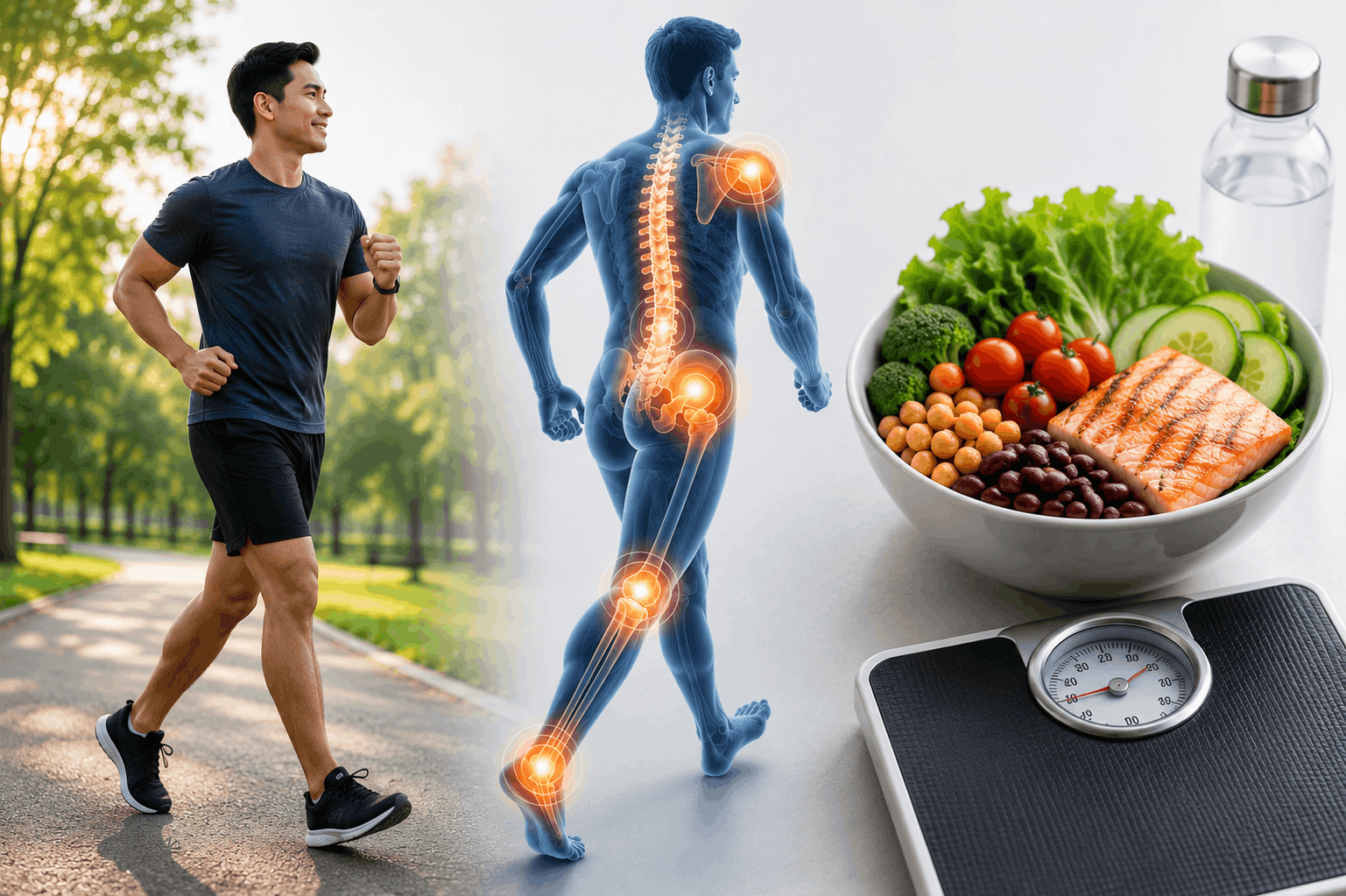
How Weight Management Protects Your Joints, Spine, and Long-Term Mobility
What Is Weight Management and Why Does It Matter for Joint Health?
Many people view weight management strictly through the lens of aesthetics or cardiovascular health. However, maintaining a healthy body composition plays a critical role in preserving your musculoskeletal system. True physical empowerment focuses on long-term, injury-free movement rather than fleeting fad diets.
Every component of your body interacts dynamically to facilitate daily movement. When you carry excess body weight, you place immense physical stress on your weight-bearing joints. This continuous structural overload primarily targets your knees, hips, spine, and feet.
Even minor weight increases create disproportionately large loads on your cartilage and bone structures. This extra pressure accelerates wear and tear, frequently resulting in chronic pain and reduced mobility. Specialized osteoarthritis physiotherapy helps mitigate these risks by optimizing how your body distributes mechanical loads.
How Does Excess Weight Affect Joint Health?
Excessive body weight compromises your structural integrity through direct compressive joint loading. The physical pressure physically crushes the protective cartilage layers between your bones. Over time, this mechanical stress triggers painful cartilage degeneration and chronic joint inflammation.
Furthermore, carrying extra pounds alters your natural walking mechanics. Your body shifts its center of gravity, forcing muscles and ligaments to work under unnatural angles. You might notice this strain during simple everyday activities, such as:
- Climbing flights of stairs.
- Prolonged standing during busy networking sessions or retail commutes.
- Increased walking pressure on your heels and arches during daily errands.
Biomechanical studies show that every extra kilogram adds substantial force to your knees during movement. When you run or step downward, that force multiplies significantly, compounding the structural damage.
Why Are the Knees Most Affected by Weight Gain?
Your knees act as the primary shock absorbers for your entire upper body. The complex knee anatomy relies on a delicate balance of ligaments, tendons, and meniscal cartilage. Because of their primary weight-bearing role, your knees suffer the highest patellofemoral stress when body mass increases.
This persistent mechanical overload directly elevates your long-term osteoarthritis risk. The joint essentially wears down faster than it can naturally repair itself. You will typically experience early warning signs of overload, including:
- Persistent joint stiffness after waking up or sitting for long periods.
- Localized swelling around the kneecap after mild physical activity.
- Sharp or dull pain while walking long distances.
- Increasing difficulty climbing stairs or stepping off curbs.
If you recognize these symptoms, targeted knee pain physiotherapy can help restore proper joint tracking and alleviate discomfort.
Can Excess Body Weight Cause Back and Spine Problems?
Your spine features natural curves designed to distribute weight evenly across your vertebrae. Carrying excess weight, particularly in the abdominal region, pulls your pelvis forward. This structural shift alters your spinal alignment and causes severe lumbar spine compression.
This postural change forces your lower back muscles into a state of constant contraction. The resulting muscle fatigue causes chronic aching, while the compressed spinal discs face higher risks of herniation. Protecting your back requires lifestyle adjustments and regular movement breaks; you can explore practical spine health prevention tips to safeguard your posture.
How Does Weight Affect Hip and Foot Mechanics?
Your hips and feet form the foundation of your mobility, bearing the brunt of your daily step count. Excess body mass induces intense hip joint compression, limiting your natural range of motion. To cope with the extra load, your body unconsciously alters its gait, which destabilizes your stride.
Down at the ground level, your feet endure immense plantar stress. This pressure can flatten your arches and cause debilitating heel conditions like plantar fasciitis. These foot issues reduce your overall balance, forcing other joints to compensate and spreading pain across your entire lower body.
What Daily Habits Contribute to Unhealthy Weight Gain?
Modern urban environments often encourage habits that gradually disrupt effective weight management. A highly sedentary lifestyle combined with prolonged sitting at office desks slows down your metabolic rate. When you mix a lack of exercise with poor sleep, your body increases its production of stress hormones.
These hormonal changes frequently trigger stress eating and cravings for calorie-dense foods. Eventually, the physical discomfort from aching joints reduces your desire to move altogether. This creates a frustrating cycle where joint pain actively limits your physical activity, leading to further weight gain.
Singapore Health Guideline Reminder: Under Ministry of Health (MOH) guidelines, individuals with a BMI greater than 23 (overweight or obese) face an increased risk of chronic conditions. MOH highly encourages utilizing structured weight management programs to safely protect long-term health from risks like hypertension and osteoarthritis.
Which Exercises Support Safe Weight Management?
Dropping weight shouldn’t mean destroying your joints in high-impact bootcamp classes. Instead, choose low-impact exercises that burn calories while respecting your skeletal structure. Excellent choices for sustainable fitness include:
- Consistent brisk walking on flat terrain.
- Swimming or water aerobics to eliminate joint impact entirely.
- Stationary cycling to build aerobic endurance safely.
- Physiotherapy-guided strengthening to support vulnerable structures.
Jumping straight into high-intensity routines without preparation often worsens existing joint inflammation. Prioritize building structural strength before increasing your workout intensity. You can learn more about finding this balance through how to prevent knee injury through walking and running.
Can Physiotherapy Help With Weight Management?
Many people assume physical therapy only addresses post-surgical recovery or acute sports injuries. However, professional physiotherapy provides an essential foundation for safe, long-term lifestyle changes. By addressing physical limitations, therapists help you build a reliable path toward your health goals.
A skilled physiotherapist performs an in-depth movement assessment to find structural imbalances before you start exercising. They implement targeted pain reduction treatments and focus on mobility restoration so you can move without restriction. Their customized exercise prescription ensures you burn calories without overloading your joints.
Persistent pain often stops people from staying consistent with their fitness routines. Physiotherapy breaks this cycle by removing movement barriers and correcting your posture. This specialized care gives you the physical confidence to maintain an active, healthy lifestyle.
How Does Weight Management Help Prevent Osteoarthritis?
Maintaining an optimal body weight provides direct, long-lasting protection for your articular cartilage. Lowering physical stress minimizes mechanical wear and tear on your joints, preventing premature degeneration. Furthermore, reducing body fat lowers systemic inflammatory markers that damage joint tissues.
By pairing lifestyle changes with improved movement mechanics, you give your joints the best environment to stay healthy. Proactive lifestyle changes can keep you active and mobile well into your later years. Discover additional guidance on preserving your joints by reading how to prevent osteoarthritis.
What Are Practical Weight Management Tips for Long-Term Joint Health?
Achieving a healthier lifestyle requires small, consistent changes to your daily routine. Focus on building sustainable habits rather than chasing rapid, extreme transformations. Implement these practical steps to protect both your waistline and your joints:
- Take regular movement breaks: Set an alarm to stand up and stretch every hour during your desk sessions.
- Prioritize strength training: Build supportive muscles around your knees and hips to reduce joint stress.
- Focus on portion awareness: Fuel your body with nutrient-dense foods that support tissue repair.
- Stay well-hydrated: Drink plenty of water throughout the day to keep your joint cartilage lubricated.
- Practice posture correction: Align your spine consciously while sitting, walking, or lifting heavy objects.
When Should You Seek Professional Help?
You should consult a professional whenever physical discomfort interferes with your daily activities. Never ignore chronic warning signs or push through severe pain during exercise. Schedule a clinical assessment if you experience any of the following issues:
- Persistent joint pain that lasts for more than a few days.
- Noticeable mobility limitations when performing simple daily movements.
- Sharp or sudden pain during or immediately after your workouts.
- Repeated joint injuries, such as recurrent ankle sprains.
- A significantly reduced tolerance for basic physical activities.
Final Thoughts
Effective weight management involves much more than tracking numbers on a weighing scale. It serves as a vital investment in your long-term mobility, spinal health, and joint longevity. Taking care of your structural health ensures you can maintain your physical independence as you age. Small, consistent adjustments to your daily habits will protect your body and keep you moving pain-free for years to come.
Take Action with Rapid Physiocare
Ready to kickstart your journey toward pain-free, sustainable movement? Rapid Physiocare provides premier, physiotherapist-led care to help you achieve your wellness goals safely. Our experienced team conducts comprehensive structural evaluations and designs customized exercise plans tailored to your unique physical capabilities.
With six highly accessible locations across Singapore, premium care is always right around the corner:
Book an appointment today or contact our friendly team via WhatsApp at +65 9654 0427 to schedule your initial consultation.
Frequently Asked Questions
How does body weight affect knee pain?
Excess body weight increases the compressive forces acting directly on your knee joints during daily movement. This extra pressure speeds up the breakdown of protective cartilage, resulting in inflammation, stiffness, and chronic knee pain.
Can losing weight reduce joint pain?
Yes. Dropping excess weight significantly lowers mechanical stress on your weight-bearing joints. This reduction in physical pressure helps calm tissue inflammation, eases daily discomfort, and improves your overall mobility.
Does excess weight cause osteoarthritis?
Carrying excess body weight stands as a major risk factor for developing osteoarthritis. The continuous physical overload accelerates cartilage wear and tear, causing bones to rub together painfully over time.
What exercises are safest for weight management?
Low-impact exercises like brisk walking, swimming, stationary cycling, and physiotherapy-guided resistance training are the safest options. These activities burn calories and build muscular strength without placing harsh impacts on vulnerable joints.
Can physiotherapy help overweight individuals exercise safely?
Absolutely. A physical therapist evaluates your unique movement patterns, identifies structural vulnerabilities, and treats underlying pain. They design personalized, progressive workout plans that help you burn calories while keeping your joints protected.
Why does obesity affect posture and spine health?
Carrying excess weight in the abdominal area shifts your body’s center of gravity forward. This displacement pulls your pelvis out of alignment, compresses the lumbar spine, and causes chronic lower back muscle fatigue.
Can walking help with weight management and joint health?
Yes, consistent walking serves as an excellent, highly accessible, low-impact exercise. It helps you manage your weight safely while promoting joint fluid circulation, which keeps cartilage nourished and healthy.
Tags : Osteoarthritis, Weight management