

Runner’s Knee v/s ACL Injury: How to Tell the Difference
What Is the Difference Between Runner’s Knee and an ACL Injury?
Pain around the knee during running or sports can have many causes, but two conditions are commonly confused: runner’s knee and an ACL injury. Although both can limit movement and affect performance, they involve different structures of the knee and require different rehabilitation strategies.
Runner’s knee, medically known as patellofemoral pain syndrome, develops gradually from repeated stress around the kneecap. An ACL injury, on the other hand, involves damage to the anterior cruciate ligament, one of the major stabilizing ligaments inside the knee, and usually occurs suddenly during twisting or pivoting movements.
Understanding the difference allows proper early treatment and helps reduce the risk of long-term joint problems.
What Is Runner’s Knee?
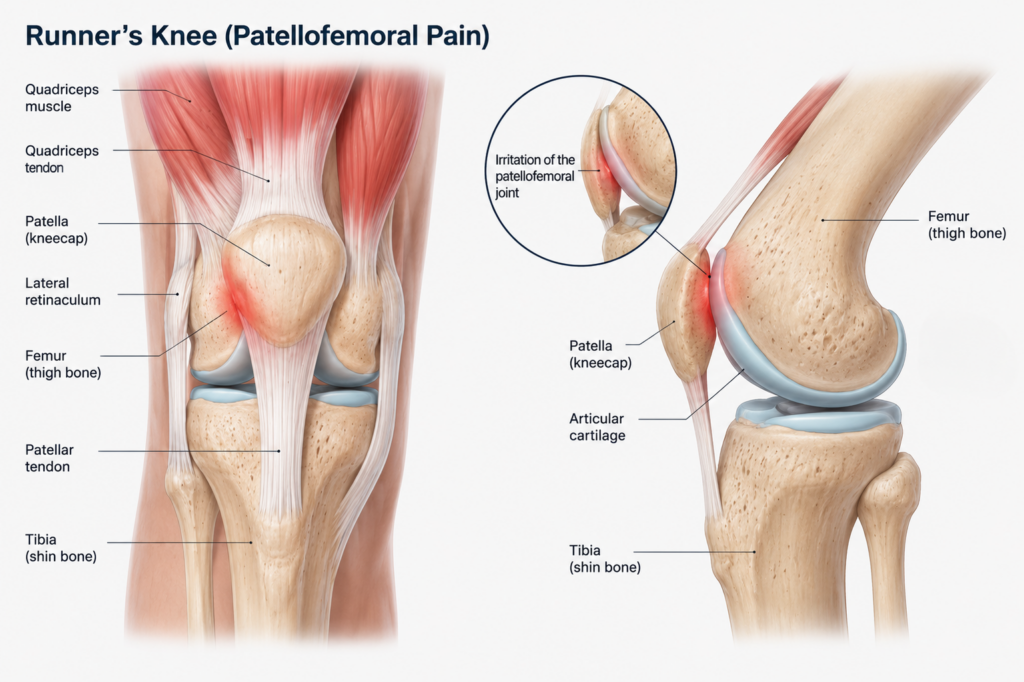
Runner’s knee is one of the most common overuse injuries among runners, hikers, cyclists, and active adults. It occurs when excessive stress develops between the kneecap (patella) and the thigh bone (femur), causing irritation of the surrounding tissues.
Rather than resulting from a single injury, runner’s knee typically develops over weeks or months due to repeated loading.
Common contributing factors include:
- Weak hip and thigh muscles
- Poor running mechanics
- Flat feet or abnormal foot alignment
- Sudden increases in training distance
- Tight quadriceps or hamstrings
The pain usually appears at the front of the knee and worsens during running, stair climbing, or prolonged sitting.
What Is an ACL Injury?
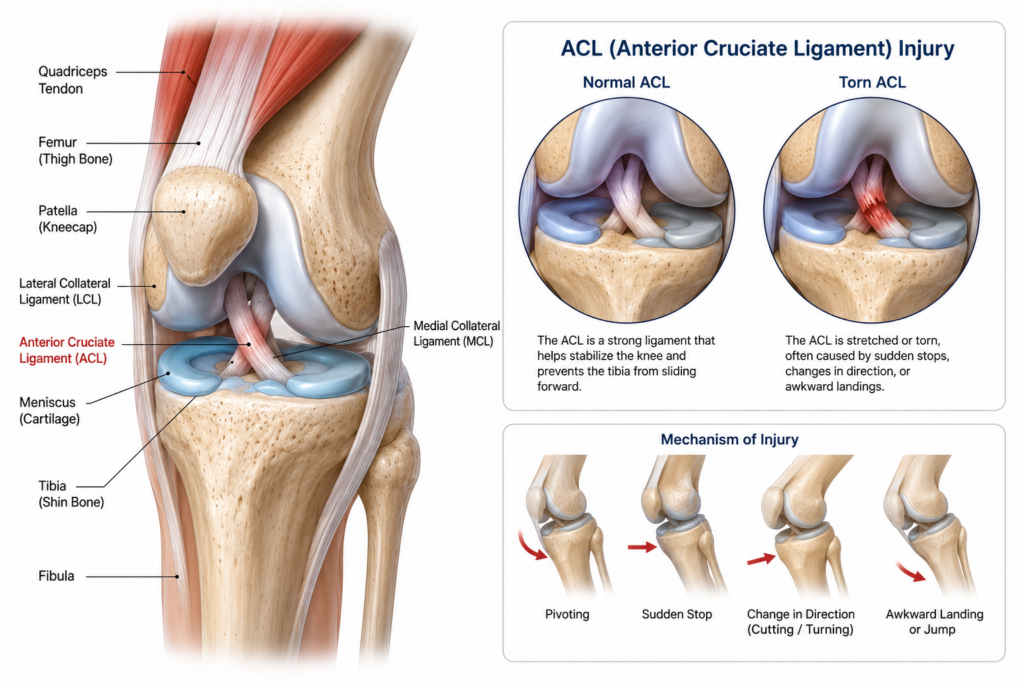
The anterior cruciate ligament (ACL) connects the thigh bone to the shin bone and prevents excessive forward movement and rotation of the knee.
Unlike runner’s knee, an ACL injury usually occurs suddenly during sports involving rapid direction changes, jumping, or awkward landings.
Many patients describe hearing or feeling a “pop” at the moment of injury, followed by immediate swelling and difficulty walking.
Without appropriate rehabilitation, ACL injuries can lead to long-term instability and increase the risk of early osteoarthritis.
What Are the Symptoms of Runner’s Knee?
Recognizing runner’s knee symptoms early can help prevent the condition from progressing into chronic knee pain. Unlike traumatic knee injuries, runner’s knee usually develops gradually due to repetitive stress on the kneecap and surrounding structures. The discomfort often starts during physical activity and may become noticeable during everyday movements if left untreated.
Typical runner’s knee symptoms include:
- Pain around or behind the kneecap, especially during or after running
- Pain while running downhill or on uneven surfaces due to increased pressure on the patellofemoral joint
- Discomfort when climbing or descending stairs, squatting, or kneeling
- Knee pain after prolonged sitting, often called the “moviegoer’s sign,” where the knee becomes stiff after remaining bent for an extended period
- Mild swelling around the front of the knee, particularly after exercise or prolonged activity
- Grinding, clicking, or rubbing sensations when bending or straightening the knee
Many runners also notice that the pain gradually worsens as training intensity or mileage increases. In the early stages, symptoms may disappear with rest, but continuing to run without addressing the underlying cause can lead to persistent pain and reduced knee function. Seeking early physiotherapy assessment can help identify movement imbalances and prevent the condition from becoming a long-term problem.
What Are the Symptoms of an ACL Injury?
An ACL injury often occurs suddenly during sports or physical activities that involve rapid pivoting, cutting, jumping, or awkward landings. Unlike runner’s knee, which develops gradually, an ACL tear is usually associated with an immediate traumatic event and can significantly affect knee stability. Recognizing the symptoms early is essential for prompt diagnosis and appropriate rehabilitation.
Common ACL injury symptoms include:
- A sudden popping sensation or audible “pop” at the time of injury
- Immediate knee swelling, often developing within a few hours due to bleeding inside the joint
- Severe pain after a twisting movement or awkward landing, making it difficult to continue activity
- A feeling that the knee “gives way” or buckles, particularly during walking or changing direction
- Difficulty bearing weight on the affected leg because of pain and instability
- Reduced range of motion, making it uncomfortable to fully bend or straighten the knee
- Loss of confidence during walking, turning, or climbing stairs, as the knee may feel unstable or unreliable
Unlike runner’s knee symptoms, which are mainly related to pain around the kneecap, ACL injury symptoms are characterized by significant joint instability and rapid swelling after injury. Without appropriate physiotherapy and rehabilitation, an ACL injury can increase the risk of recurrent knee instability, meniscus damage, and early joint degeneration. Early assessment allows a personalized treatment plan that supports safe recovery and a gradual return to sport and daily activities.
Key Differences
| Runner’s Knee | ACL Injury |
| Gradual onset | Sudden injury |
| Front knee pain | Deep knee pain with instability |
| Overuse condition | Traumatic ligament injury |
| Usually little swelling | Rapid swelling within hours |
| Stable knee | Knee feels unstable |
| Pain during stairs and running | Difficulty walking after injury |
| No popping sensation | Often associated with a pop |
Although these features provide clues, a professional assessment is often necessary for an accurate diagnosis.
Why Is It Important to Differentiate Between the Two?
Treating the injury with the incorrect treatment may delay recovery. Similarly, assuming a ligament injury is “just overuse” can allow instability to worsen.
Runner’s knee generally responds well to activity modification, muscle strengthening, and movement correction. While ACL injury may require a more structured rehabilitation program and, in some cases, surgical consultation depending on activity demands and instability.
Early diagnosis helps patients return to activity safely while reducing long-term joint damage.
How Does Physiotherapy Help Both Conditions?
Although the underlying causes differ, physiotherapy plays an important role in managing both runner’s knee and ACL injuries.
Treatment may include:
- Biomechanical assessment
- Manual therapy
- Progressive strengthening
- Balance and proprioception training
- Gait analysis
- Functional movement retraining
- Return-to-running progression
For runner’s knee, treatment focuses on improving patellar tracking and reducing excessive joint loading.
For ACL rehabilitation, physiotherapy restores strength, stability, and neuromuscular control to improve knee function and reduce reinjury risk.
When To See a Physiotherapist?
An ACL injury should never be ignored, even if the initial pain begins to settle after a few days. Damage to the anterior cruciate ligament can compromise the stability of the knee joint, making everyday activities such as walking, climbing stairs, or changing direction more difficult. Early assessment helps determine the severity of the injury and allows rehabilitation to begin before muscle weakness and joint instability worsen.
Consider seeking a physiotherapy assessment if you experience:
- A popping sensation at the time of injury, followed by knee pain
- Rapid swelling that develops within a few hours after a fall or twisting movement
- A feeling that the knee is unstable or “giving way” during walking or pivoting
- Difficulty bearing weight on the affected leg
- Reduced knee movement that makes bending or straightening the leg uncomfortable
- Persistent pain or swelling that does not improve with rest after several days
Early physiotherapy plays a vital role in restoring knee stability, rebuilding muscle strength, improving balance, and guiding a safe return to sports and daily activities. Delaying treatment may increase the risk of recurrent instability and additional injuries to the meniscus or cartilage.
If you are experiencing any of these ACL injury symptoms, book an appointment with Rapid Physiocare for a comprehensive assessment and a personalized rehabilitation plan designed to help you recover safely and regain confidence in your movement.
Final Thoughts
Although runner’s knee and ACL injury may appear similar at first, the underlying causes and rehabilitation needs are very different. Runner’s knee develops gradually through repetitive loading, while ACL injuries typically occur suddenly during twisting movements and often involve instability.
Recognizing the warning signs early allows appropriate physiotherapy management and supports a safer return to sport and everyday activities.
If knee pain or instability is affecting your movement, seek a professional physiotherapy assessment to identify the cause and begin a personalized recovery program.
Frequently Asked Questions
1. How can you tell the difference between runner’s knee and an ACL injury?
Runner’s knee usually develops gradually from overuse and causes pain around the front of the kneecap, especially during running or climbing stairs. An ACL injury typically occurs suddenly after a twisting movement, often accompanied by a popping sound, immediate swelling, and knee instability.
2. Can runner’s knee feel like an ACL injury?
Yes. Both conditions can cause knee pain during movement, making them easy to confuse. However, runner’s knee rarely causes instability or rapid swelling, while an ACL injury often results in the knee feeling unstable or giving way.
3. Can you walk with an ACL injury?
Many people can walk after an ACL injury, but the knee may feel unstable or buckle during turning or pivoting movements. Walking ability does not necessarily indicate that the ligament is intact, so a professional assessment is recommended.
4. Where is the pain located in the runner’s knee?
Runner’s knee pain is usually felt around or behind the kneecap (patella). The discomfort often increases when running downhill, climbing stairs, squatting, or sitting with bent knees for prolonged periods.
5. Does an ACL injury always cause swelling?
Most ACL injuries cause significant swelling within a few hours because bleeding occurs inside the joint. Runner’s knee, in contrast, usually causes little or no swelling and develops more gradually.
6. Can physiotherapy treat both runner’s knee and ACL injuries?
Yes. Physiotherapy plays an important role in treating both conditions. Treatment focuses on reducing pain, improving muscle strength, restoring knee stability, correcting movement patterns, and helping patients return safely to daily activities and sports.
7. When should I see a physiotherapist for knee pain while running?
You should seek physiotherapy if knee pain persists for more than a week, recurs during running, causes swelling, limits movement, or affects your ability to exercise comfortably. Early treatment can help prevent long-term joint problems.
8. Can a runner’s knee or an ACL injury heal without treatment?
Mild runner’s knee symptoms may improve with rest and activity modification, but the underlying muscle imbalance often remains without rehabilitation. An ACL injury should always be assessed by a healthcare professional, as untreated ligament injuries can lead to chronic knee instability and further joint damage.
9. Which is more serious: runner’s knee or an ACL injury?
An ACL injury is generally more serious because it involves a major ligament responsible for knee stability and may require prolonged rehabilitation or surgery in some cases. Runner’s knee is typically an overuse condition that responds well to physiotherapy and exercise-based treatment.
10. How long does recovery take for runner’s knee compared with an ACL injury?
Runner’s knee often improves within 4 to 8 weeks with appropriate physiotherapy and exercise. Recovery from an ACL injury can take 6 to 12 months, depending on the severity of the injury, whether surgery is required, and adherence to rehabilitation.