
Trigger Finger: Causes, Symptoms and Treatment
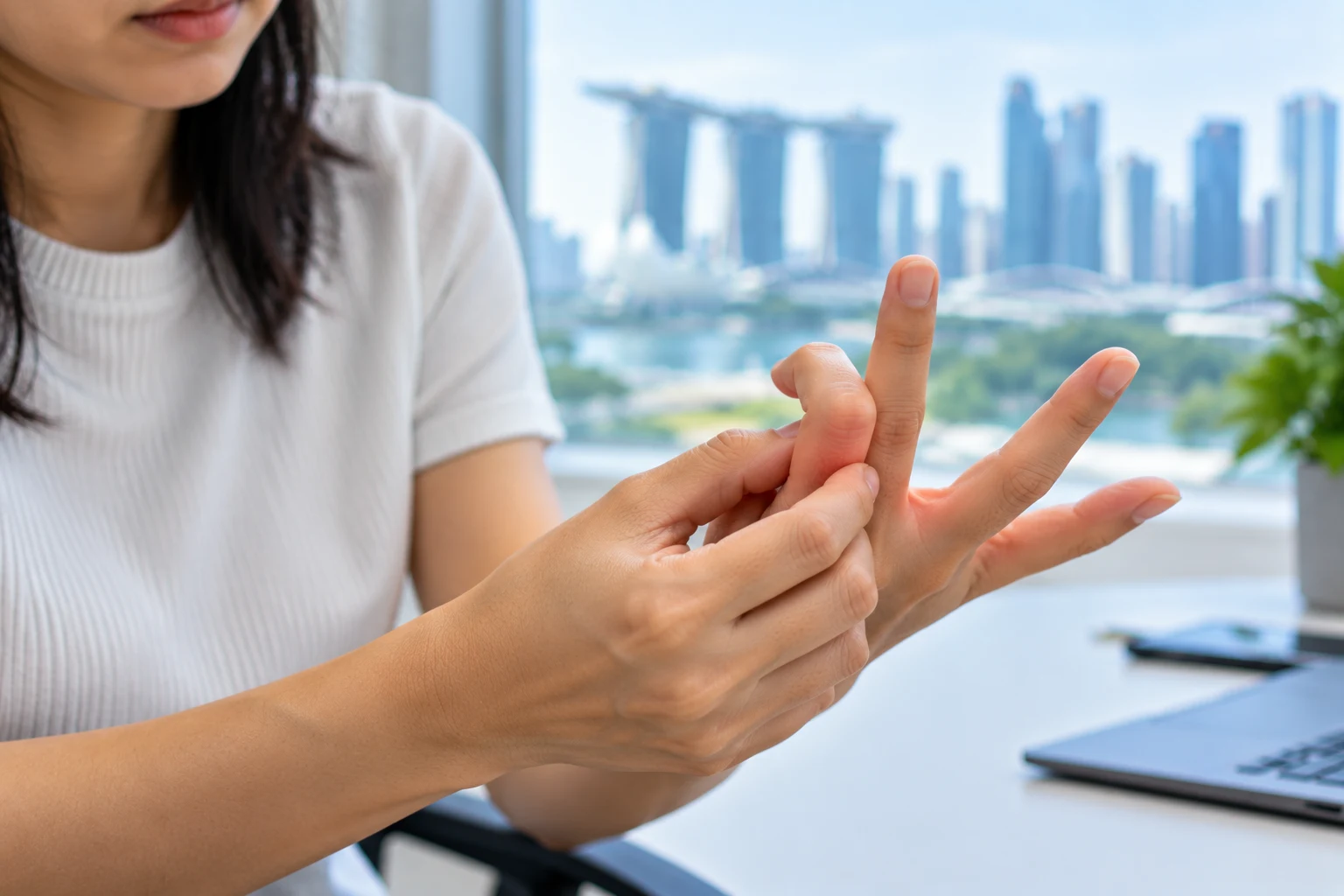
It is 3pm at your desk. You curl your fingers around the mouse, and your ring finger catches when you try to straighten it. You gently ease it straight with your other hand, feel a small click, and get back to work.
That click may be a sign of trigger finger. Understanding the factors associated with it, including repetitive gripping and health conditions such as diabetes, can help you seek assessment and appropriate treatment early.
Trigger finger occurs when the flexor tendon thickens or the surrounding tendon sheath thickens, making it harder for the tendon to glide smoothly through the A1 pulley at the base of the finger. The exact cause is often unclear. Repetitive gripping may aggravate symptoms, while diabetes and inflammatory conditions are recognised risk factors. Treatment may include activity modification, splinting. A doctor can add an injection and, in some cases, surgery. A hand therapist or physiotherapist may also help with movement, function and activity modification.
Why does finger click and lock?
Your finger bends because flexor tendons (the cords linking forearm muscles to finger bones) glide through small tunnels called pulleys. The A1 pulley is located at the base of each finger, right where your finger meets the palm.
Thickening of the tendon or its sheath can make it difficult for the tendon to pass smoothly through the A1 pulley. A tender nodule may be felt at the base of the finger, and the tendon can catch as it moves through the narrowed area, producing a click or pop.
The medical name is stenosing tenosynovitis. It is described as the narrowing of the tendon sheath. With repeated catching, the lump grows more tender and harder to clear.
What are the trigger finger symptoms to watch for?
Trigger finger symptoms tend to progress through four stages:
- Morning stiffness and a tender spot at the base of one finger or thumb.
- A click or catch when you open your fist.
- Brief locking that frees with some effort.
- A finger that stays bent until your other hand straightens it.
The ring finger, middle finger and thumb are commonly affected, and more than one digit may be affected at once. Early assessment can help clarify the cause of symptoms and identify suitable treatment options.
What are the main trigger finger causes in everyday life?
The cause is often unclear, and there may not be one identifiable trigger. A clinician will consider your symptoms, medical history and activities when assessing possible contributing factors.
Does gripping really overload the tendon?
Repeated or forceful gripping and pinching can aggravate symptoms in some people. Examples include carrying heavy grocery bags, prolonged mouse use, gripping a badminton racket or holding gym equipment. These activities are not necessarily the underlying cause of trigger finger, but modifying them may help reduce irritation.
Does health conditions play a part?
Yes. Trigger finger is more common in women, particularly between the ages of 40 to 60. It is also associated with conditions such as diabetes and rheumatoid arthritis, an autoimmune condition that can cause joint inflammation.
If you have diabetes, mention it during your assessment. Trigger finger may be more difficult to treat in people with diabetes, and corticosteroid injections may be less effective.
Why does the rest of my hand start to ache?
A catching finger may change how you hold objects or perform daily tasks. You might rely more on the other fingers or adjust wrist to avoid discomfort. If this causes additional painor difficulty, mention it during your assessment.
Can trigger finger heal on its own?
Mild trigger finger can sometimes improve without treatment, particularly if aggravating activities are reduced. Persistent symptoms, repeated locking or difficulty straightening the finger warrant assessment. A finger that remains locked or becomes increasingly stiff should be reviewed by a healthcare professional.
Rest settles the flare. The tendon still needs a plan to glide freely again.
Is there trigger finger treatment without surgery?
Yes. Many people start with non-surgical options. The most appropriate approach depends on symptom severity, duration and functional impact. Options may include:
| Option | What it does | Who provides it |
| Activity changes | Lowers repeated stress on the pulley | You, guided by a physiotherapist |
| Splinting | Rests the tendon by limiting full bending | Physiotherapist or hand therapist |
| Physiotherapy | Restores glide, grip and movement habits | Physiotherapist |
| Corticosteroid injection | Reduces inflammation in the tendon sheath | Doctor |
| Surgical release | Opens the A1 pulley | Hand or orthopaedic surgeon |
Surgery may be considered when symptoms persist or recur despite non-surgical treatment, or when the finger remains locked. A physiotherapist can recommend a medical or hand-surgery review when appropriate.
Does a trigger finger splint help?
It can. A trigger finger splint limits finger movement and reduce irritation around the tendon. Different designs support different joints, and some are worn at night. The appropriate splint and wearing schedule depend on the affected finger and an individual assessment.
The right type and duration depend on the affected digit and your symptoms. A splint worn too long or fitted poorly may cause discomfort or restrict movement, so seek advice from a suitably trainedhealthcare professional before using one.
How does trigger finger physiotherapy work?
Physiotherapy or hand therapy may focus on activity modification, maintaining comfortable finger movement, managing stiffness and adapting tasks that aggravate symptoms. A personalised trigger finger treatment approach can help address these difficulties and support better hand function. Your therapist will tailor the approach to your symptoms and functional needs. Evidence for specific exercise programs is limited, so treatment should be individualised.
Catching occurs when the tendon does not glide smoothly through the pulley system. Reducing aggravating activities may help settle symptoms, while therapy can support comfortable movement and practical changes to daily tasks.
What happens at the first assessment?
It starts with questions. When does the finger catch? Which task sets it off? Does it lock at night, and does your other hand need to help?
Then comes the physical check. The physiotherapist presses along the palm to find the tender nodule at the A1 pulley, watches the finger open and close, and tests your grip. The wrist and forearm get checked too, because the muscles that pull the tendon sit in the forearm. Any sign that needs a doctor’s input, such as a hot, swollen finger, is flagged at this stage.
How does a physiotherapist reduce the load on the pulley?
Every grip squeezes the tendon against the pulley. Load changes give the tendon room to settle, and they target your actual week: padded or wider handles, moving heavy carrying to the forearm or shoulder, and breaking up long mouse sessions.
A trigger finger splint adds to this by limiting full bending, often overnight, so the tendon rests while you sleep. The type and wearing time depend on the digit involved.
Which exercises may help with trigger finger?
Gentle tendon-gliding exercises may be used to maintain finger movement. They should be performed comfortably and adapted to the person’s symptoms. A therapist may demonstrate a sequence such as the following:
- Straight: Hold your fingers straight and together, with the palm open.
- Hook: Bend the middle and fingertip joints while the knuckle at the base stays straight, like a hook.
- Full fist: Curl every joint into a relaxed fist.
- Straight fist: Bend the knuckle and middle joint and keep the fingertip joint straight.
Move slowly from one position to the next and stay within a comfortable range. There is no single standard repetition dose for everyone; your therapist can advise on the number and frequency based on your symptoms. Stop if the exercise increases catching or pain.
Research on trigger finger exercises and hands-on techniques is still modest. For that reason, your physiotherapist tracks how the finger responds and adjusts repetitions and frequency.
Do stretching and strengthening exercises help?
Gentle movement or stretching may help maintain range of motion, provided it does not provoke pain or force the finger through a catch. Avoid forcefully straightening a locked finger. A therapist can advise whether passive stretching is appropriate for your presentation.
Strengthening is not always necessary in the early stages and may aggravate symptoms if it involves repeated forceful gripping. If grip exercises are appropriate, your therapist can introduce them gradually once symptoms allow.
Does ice and ultrasound help trigger finger?
Ice can ease a painful flare. Use short sessions with a cloth between the ice and your skin, and check with your doctor first if you have circulation or sensation problems in your hand.
Some clinics use therapeutic ultrasound, but evidence supporting its effectiveness for trigger finger is limited. It should not replace established options such as activity modification, splinting or medical treatments when indicated.
How can hand function be rebuilt as symptoms improve?
As symptoms improve, your therapist may gradually reintroduce tasks that matter to you, such as carrying shopping or playing sport. Progress should be guided by symptoms and function; repeated forceful gripping should not be used to ‘strengthen’ an irritated tendon.
Stopping at the first good week invites a return of symptoms, which is why this stage matters even when the finger feels fine.
How do you know it is working?
Typical signs include shorter morning stiffness, fewer and milder catches, no night locking, and daily tasks that cost less effort. Fewer, milder catches usually appear before the catching stops completely.
If the finger stays locked or worsens after a proper trial of treatment, your physiotherapist refers you to a doctor to discuss an injection or surgery.
What is the trigger finger recovery time?
Recovery time varies widely. Some mild cases improve over several weeks, while persistent or more severe cases may take longer and may require an injection or surgery. A finger that has been locked for a prolonged period may be more difficult to treat.
Factors that may affect recovery include symptom duration and severity, the affected digit, underlying health conditions such as diabetes, and the response to the chosen treatment.
A corticosteroid injection can improve symptoms, although recurrence is possible and results may be less favourable in people with diabetes or longstanding symptoms. Activity modification may still be useful after an injection if particular tasks aggravate the finger.
How can I stop trigger finger from coming back?
There is no guaranteed way to prevent trigger finger, but these practical habits may help reduce aggravation of symptoms:
Modify gripping tasks. Avoid sustained or forceful gripping where possible, and use a grip that feels comfortable. Gentle hand movements before activity may help prepare the hand, but they
have not been proven to prevent trigger finger.
Spread the load. Alternate hands for carrying, use padded or wider handles, and avoid clenching a tool or racket harder than the task needs.
Take breaks. Break up prolonged or repetitive gripping tasks and change position or activity when practical.
Seek advice if clicking, catching or locking persists, worsens or interferes with daily activities. Early assessment can help you understand the cause and discuss appropriate options.
Where can you find hand physiotherapy in Singapore?
A hand assessment should consider the affected finger, hand and wrist, as well as the activities that may aggravate symptoms. Rapid Physiocare’s physiotherapy team can assess your movement and discuss suitable next steps.
Before you book, keep a seven-day catch log. Write down the time, the task and whether the finger needed help to straighten. Patterns such as morning-only catching or catching after long mouse sessions point your physiotherapist towards the cause.
Frequently Asked Questions
Does trigger finger hurt all the time?
Pain usually peaks when you grip and in the morning, then eases as the finger warms up. That pattern appears because the tendon stiffens while the hand rests overnight and glides more easily once it moves. As the condition progresses, the palm can ache at rest too, and the finger may lock more often. Pain that wakes you at night or keeps climbing is a reason to book an assessment.
Can I keep typing and using my phone?
Light use is usually fine. Keep your wrist in a neutral position, take regular short breaks, and share the work across different fingers when you tap and scroll. A loose phone grip, or a stand, reduces strain on the thumb. If the finger catches during a task, pause and ease it open gently. Your physiotherapist adjusts this advice to your finger and workload.
Can I play badminton or go to the gym with trigger finger?
Often yes, with adjustments. Grip load drives trigger finger, so a physiotherapist looks at your racket handle size, how tightly you squeeze and how long you play. A padded or slightly larger grip can lower the squeeze on the A1 pulley. In the gym, lighter weights, wrist straps or machines that spread the load may help. A pain spike, or a finger that locks mid-game, is a signal to pause and get assessed.
Should I massage or stretch a locked finger?
Gentle movement helps. Forcing a locked finger open can inflame the nodule, so let it release slowly, using your other hand for light support if needed. Then move it through easy gliding movements. Deep pressure directly on the tender lump can irritate it further. If the finger keeps locking, a physiotherapist can show you the right technique and pressure.
How is trigger finger different from arthritis or carpal tunnel syndrome?
Trigger finger causes a catch or lock as the tendon passes the A1 pulley, usually with a tender lump at the base of the finger in your palm. Arthritis tends to cause swelling and stiffness in the joints themselves. Carpal tunnel syndrome tends to cause numbness or tingling in the thumb, index and middle fingers. The conditions can overlap, particularly in people with diabetes or rheumatoid arthritis, so a physiotherapist assesses the full picture before treating.
How many physiotherapy sessions will I need?
The number depends on how long the finger has been catching, which digit is involved, your daily grip demands and how the finger responds. Your physiotherapist gives an estimate after the first assessment and updates it at each review. A finger caught at the clicking stage often needs fewer visits than one locked for months. Strengthening work can continue at home as clinic visits taper.
Should I see a doctor or a physiotherapist first?
Either can be a first stop. See a doctor first if the finger is hot, red or swollen, if you have a fever, if the problem followed an injury, or if you want to discuss an injection. A physiotherapist is a sensible first stop for a finger that catches or locks without those warning signs. Your physiotherapist assesses it, starts conservative care and refers you on when needed.
Is trigger thumb the same as trigger finger?
Yes, the mechanism is the same. In the thumb, the tendon catches at its own pulley at the base of the thumb, so the thumb clicks and may lock bent. Treatment follows the same ladder of load changes, splinting, physiotherapy, injection and surgery. Babies and young children can have a congenital trigger thumb, which needs a paediatric doctor’s review.
Does a steroid injection fix trigger finger for good?
A corticosteroid injection can reduce symptoms and may provide lasting relief, but symptoms can recur. Injections may be less effective in people with diabetes. A doctor can discuss the potential benefits and risks, including whether another injection or surgery may be appropriate. Activity modification or hand therapy may also help address functional difficulties.
Will trigger finger come back?
It can recur, in the same finger or in another digit. The risk rises with diabetes, rheumatoid arthritis or several affected fingers, and when the original gripping demands return unchanged. Graded strengthening, sensible grip habits and attention to the first click lower the chance. Your physiotherapist can give you a short flare-up plan, so you catch a return early and act on it.
Do I always need surgery?
Many cases settle with conservative care, which is why surgery sits at the end of the ladder. A doctor considers surgical release when the finger stays locked, when symptoms persist after a proper trial of treatment (splinting, load changes, physiotherapy and sometimes an injection), or when daily function suffers. The procedure opens the A1 pulley so the tendon glides freely. Your physiotherapist can refer you on if you reach that point.