Daily Habits That Can Damage Your Knees Without You Realising
You feel it on Monday morning. A dull ache behind the kneecap as you rise from your office chair, a slight resistance as you straighten your leg. You attribute it to the weekend run, or maybe the way you slept. You ignore it and move on. That moment, repeated across weeks and months, is the beginning of most knee joint pain stories we see at Rapid Physiocare.
Knee damage rarely announces itself with a dramatic injury. It accumulates. Understanding which daily habits damage your knees is the first step toward protecting them.
Why Are Knees Vulnerable to Daily Wear and Tear?
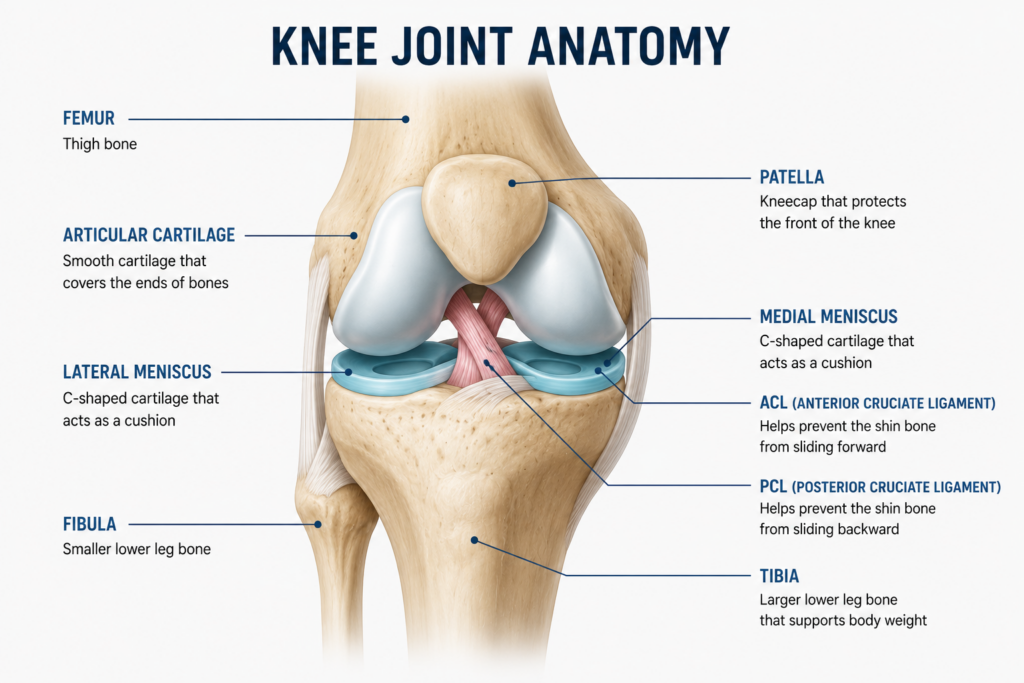
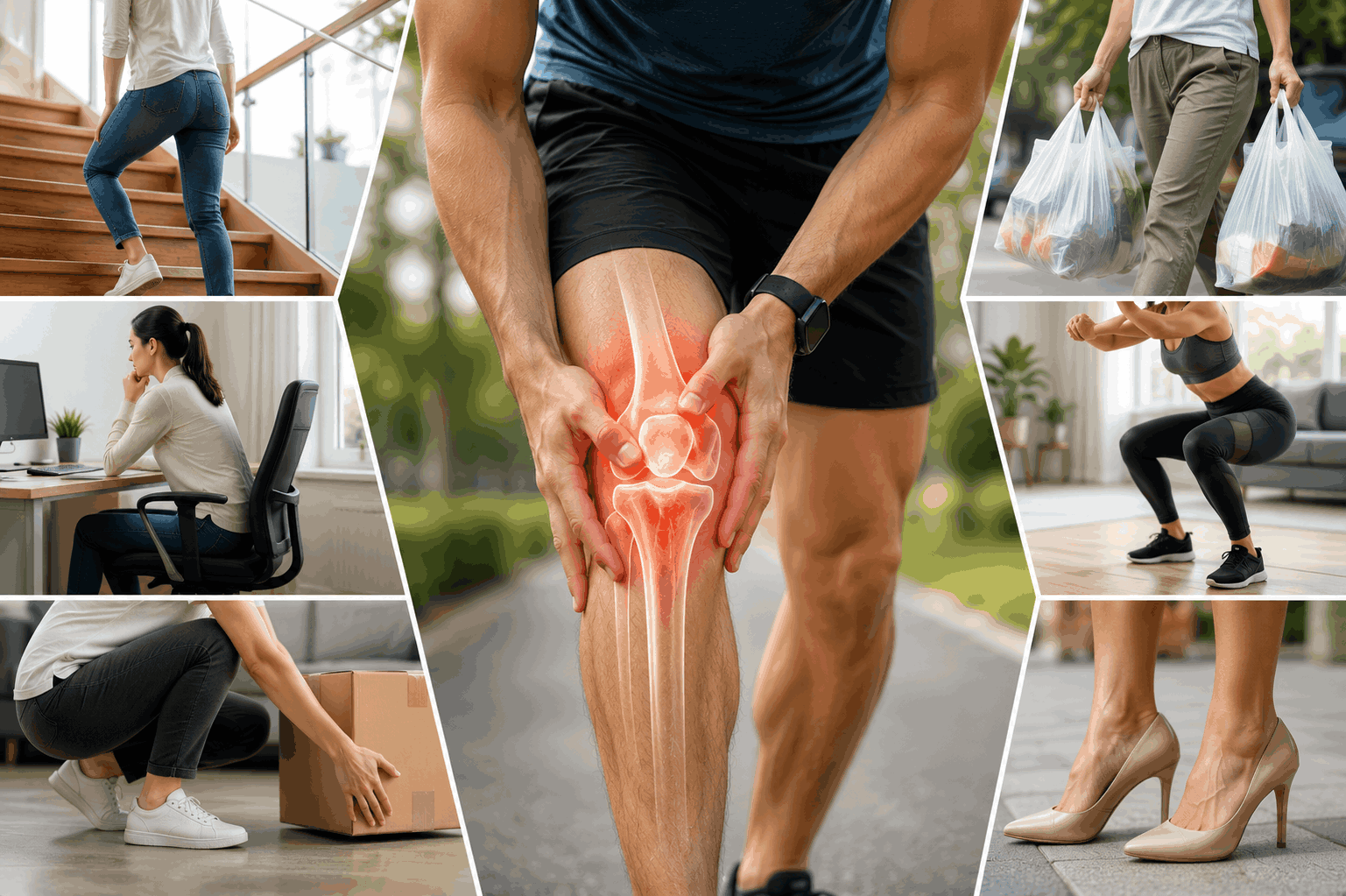
The knee joint carries your full body weight across every step, staircase, and squat of your day. During a normal walk, each step transmits a force roughly equal to one and a half times your body weight through the joint.
On the stairs, that figure rises three times. These numbers matter because the knee relies on a thin layer of articular cartilage to absorb and distribute those forces. Cartilage has no blood supply of its own; it depends entirely on joint fluid and surrounding muscle activity to stay nourished and resilient.
This is why physiotherapists assess knee health in the context of the entire lower limb: what happens at the hip and ankle directly determines the mechanical load on the cartilage and ligaments in between.
Does Sitting Too Long Affect Knee Health?
Most Singaporeans sit for six to nine hours daily. Prolonged inactivity weakens the quadriceps, tightens the hip flexors, and reduces synovial fluid circulation, all of which increase knee joint strain over time.
Muscle Weakening:
Sustained inactivity reduces quadriceps activation, leaving the knee without its primary stabiliser and increasing joint load.
Hip Flexor Tightness:
Shortened hip flexors pull the pelvis forward, rotating the femur inward and creating uneven patellofemoral stress on the knee.
Reduced Joint Nutrition:
Synovial fluid requires movement to circulate. Prolonged sitting starves the cartilage of nutrients, accelerating early wear.
How Can Poor Walking Mechanics Damage the Knees?
Poor walking mechanics are among the most common causes of knee pain we assess. Overpronation, flat feet, and inward knee collapse alter the biomechanical load on the joint, straining cartilage and ligaments with every step.
A gait analysis identifies the specific movement dysfunction driving the problem. Strengthening the gluteus medius corrects inward knee collapse; supportive footwear reduces ground reaction forces on the joint.
Why Does Climbing Stairs Incorrectly Increase Knee Pain?
Stair climbing generates patellofemoral stress of up to four times body weight. Weak quadriceps and poor knee tracking concentrate the load at a single cartilage point rather than distributing it evenly across the joint.
Inward Knee Collapse:
Allowing the knee to drop toward the midline during each step concentrates compressive force on the inner cartilage surface.
Weak Quadriceps:
Insufficient quad strength forces surrounding structures to absorb stair-loading forces, increasing ligament and tendon strain.
Toe Loading:
Rising onto the toes rather than driving through the heel shifts patellofemoral pressure forward, stressing the kneecap cartilage.
Leading Weaker Leg:
Initiating each step with the weaker limb places a disproportionate single-leg load through an already compromised joint.
Can Poor Exercise Habits Lead to Knee Injuries?
Each additional kilogram of body weight adds approximately four kilograms of compressive force through the knee joint during walking. Sustained overloading accelerates cartilage wear and increases inflammation in the joint lining.
Cartilage Breakdown:
Repeated overloading degrades articular cartilage faster than the joint can adapt, raising the risk of long-term degeneration.
Synovial Inflammation:
Excess load irritates the joint lining, triggering low-grade inflammation that progressively accelerates structural knee damage.
Reduced Mobility:
Joint pain from excess loading discourages movement, which weakens the surrounding musculature and further destabilises the knee.
Low-Impact Exercise:
Swimming, cycling, and water-based resistance training build strength and manage weight without placing repeated stress on the knee.
How Does Excess Body Weight Affect Knee Joints?
Each additional kilogram of body weight adds approximately four kilograms of compressive force across the knee joint during walking. This is not a rough estimate; it is a consistently replicated biomechanical finding across multiple research centres. For someone carrying 10 kilograms of excess weight, the knee absorbs an extra 40 kilograms of load with every step across the course of an entire day.
That sustained overloading accelerates cartilage wear, increases inflammation in the joint lining (the synovium), and elevates the risk of joint degeneration. Body weight management is one of the most effective and evidence-based strategies for reducing joint pain in the knees long-term.
A physiotherapist can design a progressive programme that supports weight management while protecting the knee through every stage of that process.
Does Poor Posture Contribute to Knee Problems?
Poor posture shifts the pelvis into an anterior tilt, rotating the femur inward and placing the knee in chronic internal rotation. The joint absorbs more load because surrounding muscles are no longer positioned to share it.
Hip weakness, particularly in the gluteus medius, is the most common postural driver of knee problems without direct joint injury. When it fails, the pelvis drops, the femur rotates inward, and the patella tracks laterally.
What Sleeping and Sitting Habits Affect Knee Health?
Sleeping with both knees pulled sharply toward the chest holds the knee joint in sustained flexion for hours. This position compresses the posterior capsule and restricts the normal fluid mechanics of the joint overnight. A pillow placed between the knees during side-lying sleep maintains neutral hip and knee alignment and significantly reduces morning stiffness.
Joint positioning strategies are not minor lifestyle tweaks. For someone with early cartilage changes, consistently poor joint positioning overnight adds hours of compressive stress to tissue that is already compromised during the day.
Which Daily Habits Help Protect Your Knees?
Knee injury prevention is built on consistency, not intensity. The habits that protect the joint are the same ones that maintain the muscle, mobility, and movement quality it depends on.
- Stand and walk for five minutes every hour during desk-based work.
- Strengthen the quadriceps and gluteus medius three times per week with targeted exercises.
- Wear footwear with adequate arch support, especially during long commutes or extended standing.
- Warm up for at least eight to ten minutes before any exercise that involves running, jumping, or weighted lower limb work.
- Maintain a healthy body weight to reduce the compressive load on the cartilage.
- Sleep with a pillow between the knees if you are a side sleeper.
- Perform daily mobility work for the hip flexors, hamstrings, and calves to maintain the movement quality that supports healthy knee mechanics.
For practical guidance on structuring these habits around your schedule, explore our blog on knee pain prevention tips.
How Can Physiotherapy Help Prevent Knee Damage?
Physiotherapy for knee health is not only for people in pain. Assessment before damage becomes symptomatic is where the greatest clinical value lies.
At Rapid Physiocare, our physiotherapists with 45 years of combined clinical experience across 6 locations in Singapore conduct comprehensive assessments that evaluate the full kinetic chain: hip strength, ankle mobility, gait mechanics, and patellofemoral tracking. No two presentations are identical. Treatment follows no generic protocols.
The clinical approach moves through three structured phases:
Acute Phase: Pain Relief and Load Reduction
Where active knee pain exists, treatment focuses on reducing inflammation, restoring pain-free range of motion, and identifying the mechanical trigger. Manual therapy, myofascial release, and activity modification protect the joint while the initial irritation settles.
Subacute Phase: Restoring Range and Correcting Movement
As pain decreases, the focus shifts to correcting the movement dysfunction that caused the problem. Gait analysis, muscle imbalance correction, and progressive loading exercises recalibrate the biomechanics of the lower limb. Hip strengthening, quad activation, and proprioceptive training are central to this phase.
Recovery Phase: Strength, Endurance, and Prevention
The final phase builds the joint capacity required to sustain daily demands without recurrence. Sport-specific or activity-specific loading is introduced progressively. A home programme supports the gains made in the clinic and reduces the long-term risk of degeneration.
Early physiotherapy intervention consistently reduces the risk of structural knee damage progressing to the point where surgical management becomes necessary. Learn more about our approach on our knee pain physiotherapy page.
What Are the Early Warning Signs of Knee Problems?
The signals that precede knee joint pain are often dismissed because they are intermittent and mild. They should not be.
- Stiffness in the first five minutes after rising from a seated position.
- A clicking or grinding sensation during knee flexion or extension.
- Mild swelling around the kneecap that subsides within a day.
- Discomfort on stairs that resolves once you are moving at a flat surface.
- A subtle sense of instability or giving way when stepping off a kerb.
Each of these is a sign that the load being placed on the knee exceeds its current capacity to absorb it without stress. The joint is not broken. But it is telling you something. Act on it early.
When Should You Seek Professional Help?
Seek a professional assessment when knee pain persists for more than two weeks, returns after physical activity, is accompanied by visible swelling or warmth, or when you notice changes in how you walk. If you are avoiding the stairs, shortening your stride, or shifting weight to the opposite leg without consciously choosing to, your body is already compensating. Compensatory movement patterns are more damaging to the joint over time than the original injury.
Rest alone does not resolve the underlying cause. A mechanical problem requires a mechanical solution.
Small choices compound. The angle of your knee under your desk right now, the shoes you wore to work this morning, the way you braced your knee on the MRT stairs: each one is either protecting or slowly damaging your cartilage. Protecting your knee health starts with understanding what it asks of your body every day.
Book a consultation with Rapid Physiocare. Our physiotherapists will assess your knee movement, identify the specific habits and mechanics placing your joint at risk, and build a plan to protect your long-term knee health before pain becomes the only signal you cannot ignore.
Frequently Asked Questions
What daily habits cause knee pain?
Prolonged sitting, poor walking mechanics, incorrect squat form, and unsupportive footwear are the most common daily habits that gradually cause knee pain and cartilage wear.
Can sitting too long damage the knees?
Yes. Prolonged sitting reduces circulation around the knee joint, weakens the quadriceps, and tightens the hip flexors, all of which alter knee alignment and increase joint strain over time.
How does posture affect knee health?
Poor posture shifts the pelvis and alters lower limb alignment. This forces the knees to absorb uneven mechanical loads, accelerating cartilage wear and increasing the risk of patellofemoral pain.
What exercises protect the knees?
Quadriceps strengthening, gluteus medius activation, and calf raises all help stabilise the knee joint. Low-impact activities such as swimming and cycling protect cartilage while building supportive muscle.
Can physiotherapy prevent knee injuries?
Yes. Physiotherapy identifies muscle imbalances, corrects movement patterns, and builds joint-stabilising strength before structural damage occurs, reducing long-term degeneration risk significantly.
Why do knees become stiff after sitting?
Joint fluid requires movement to circulate. Prolonged sitting reduces synovial fluid distribution around the knee, causing stiffness and discomfort when you stand or walk after a period of inactivity.
Tags : knee pain physiotherapy