

Hip Pain Prevention: Practical Tips to Protect Your Joint Health
You do not notice your hips until they remind you they are there. One morning, getting out of bed takes a beat longer than it should. The stairs feel heavier. A dull ache settles in after sitting through a long meeting, and it does not fully leave. At first, you dismiss it as tiredness or age. But these are not random inconveniences. They are early signals, and most people ignore them until the problem is significantly harder to manage.
Hip pain prevention is not something most people think about until discomfort has already taken hold. That delay is exactly what makes hip problems so much more difficult to address later on.
Why Is Hip Pain Prevention Important?
The hip joint bears the full weight of the upper body through nearly every movement you make: walking, rising from a chair, climbing stairs, exercising, and even standing still. The lower back and hip connection means that dysfunction in the hip rarely stays isolated; when hip stability is compromised, the lumbar spine compensates, creating a secondary layer of strain. Over time, when the muscles that support this joint are weak or tight, and when poor posture and sedentary habits go unaddressed, the joint absorbs stress it was not designed to carry alone.
The consequences build gradually and quietly
- Long-term joint damage – Once cartilage deteriorates, the risk of conditions such as osteoarthritis increases, and the process cannot be reversed. Arthritis hip care becomes a lifelong management commitment at that stage, which is why prevention carries far greater value than treatment.
- Impact on daily mobility – Hip dysfunction progressively limits the activities that define daily life, from walking and recreational exercise to the ability to remain physically independent as you age.
- Greater reliance on medication or invasive treatment – Many patients who eventually require pain tablets or surgical consultation could have avoided or delayed that path with timely preventive care.
The case for acting early is straightforward
- Prevent chronic pain from becoming the baseline
- Maintain full, functional mobility over the long term
- Reduce the risk of injury that accumulates silently over years
How to Prevent Hip Pain Naturally
The most effective way to prevent hip pain does not require specialist equipment or a clinic visit. It starts with daily habits that most people have the capacity to build but rarely prioritise until something goes wrong.
To prevent hip joint pain naturally and sustainably, these foundational strategies apply:
Stay Active. Regular movement keeps the hip joint lubricated and muscles strong.
Manage Your Weight. A healthy weight reduces joint compression and long-term wear.
Correct Your Posture. Postural faults create uneven hip loading patterns over time.
Progress Gradually. Sudden increases in activity are a leading cause of hip strain
These principles, applied consistently, form the practical foundation of how to avoid hip pain before discomfort has a chance to take hold.
Best Exercises for Hip Pain Prevention
Strong, mobile muscles surrounding the hip joint reduce the mechanical load placed on the joint itself. This is the central principle behind hip pain prevention exercises. When the glutes, hip abductors, hip flexors, and core function effectively together, the hip is protected across everything from daily walking to structured athletic training.
The following exercises are reliable and accessible for most fitness levels. If you are currently experiencing discomfort, consult a physiotherapist before beginning a new exercise programme.
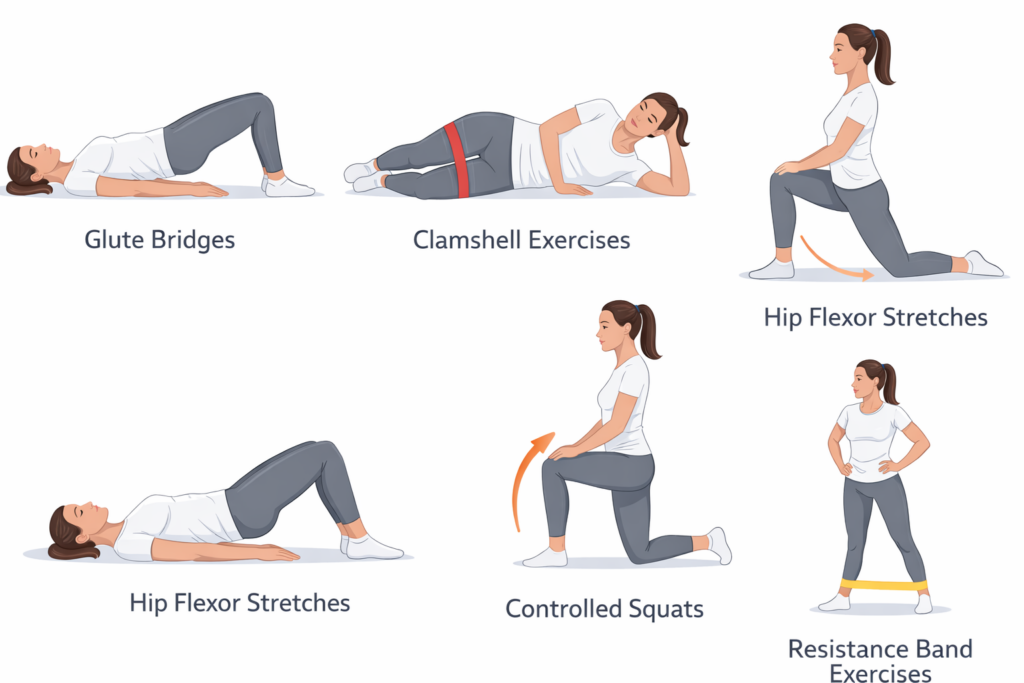
Glute Bridges.
Lie on your back, press through the heels to raise the hips, and activate the glutes for hip stability.
Clamshell Exercises.
Lying on your side, rotate the top knee upward to activate the hip abductors and external rotators.
Hip Flexor Stretches.
Kneel in a lunge and shift forward to lengthen tight hip flexors and improve pelvic alignment.
Controlled Squats.
Build functional strength in the glutes, quadriceps, and hip stabilisers with deliberate, precise form.
Resistance Band Exercises.
Banded lateral walks add progressive load to hip abductor training for lasting joint protection.
Incorporating these hip mobility exercises alongside hip strengthening and glute strengthening exercises creates a balanced programme that protects the joint through its full range of motion. Stretching for hip flexibility should always complement strengthening work, not replace it.
How Does Posture Affect Hip Health?
Prolonged sitting compresses the hip joint, shortens the hip flexors, and progressively weakens the glutes. Without adequate muscular support, the hip absorbs mechanical stress it was not designed to carry alone.
Sit with a neutral pelvis and adjust your chair so both feet rest flat on the floor. Avoid prolonged leg crossing. These adjustments help prevent hip pain while sitting and reduce cumulative joint strain over time.
Can Lifestyle Changes Prevent Hip Pain?
Beyond structured exercise and postural correction, daily lifestyle habits have a direct and measurable effect on how to reduce hip pain risk across the lifespan.
Take Movement Breaks – Stand or walk briefly every hour to reduce cumulative hip joint compression.
Wear Supportive Footwear – Proper arch support protects hip loading mechanics during daily movement.
Balance Activity Levels – Alternate high-impact and low-impact exercise to reduce repetitive hip strain.
Warm Up Before Exercise – A targeted warm-up prepares the hip joint and prevents soft tissue injury.
Small, consistent lifestyle adjustments create cumulative protection that no single consultation can replicate on its own.
When Should You See a Physiotherapist?
Self-management and preventive habits have an important role, but certain presentations require professional assessment.
Seek a physiotherapy consultation if you experience:
- Hip discomfort that persists beyond two weeks without clear improvement
- A noticeable reduction in range of motion or flexibility in the hip
- Pain that develops or worsens during walking
- Discomfort that disrupts sleep or prevents restful recovery
- Hip pain that radiates to the groin, thigh, or lower back
- Uncertainty about which exercises are appropriate given your specific health history
Early professional assessment at this stage prevents manageable issues from progressing into more complex structural problems that require longer, more intensive intervention. For a thorough overview of what treatment involves for existing hip conditions, read our complete guide on hip pain causes, symptoms & recovery guidelines.
How Physiotherapy Helps in Hip Injury Prevention
Physiotherapy is as valuable before injury as it is after. For individuals who want to protect their hip joints proactively, a physiotherapy assessment provides structured, personalised guidance that general self-management advice cannot replicate.
Physiotherapy supports hip injury prevention through:
Movement Correction
Identifying and addressing dysfunctional movement patterns before they produce cumulative joint stress or tissue damage.
Strength Training
Designing a progressive programme that targets the specific muscle groups responsible for hip stability, calibrated to the individual’s current capacity and goals.
Manual therapy
Hands-on techniques, including joint mobilisation and myofascial release (targeted treatment of tight or restricted soft tissue), restore normal movement where stiffness or restriction already exists before compensatory patterns become entrenched.
Injury risk assessment
A structured clinical evaluation of biomechanics, muscular balance, and loading patterns identifies precisely where an individual’s hip is most vulnerable, informing a prevention strategy that is specific rather than generic.
This approach to hip injury prevention addresses root causes, from hip pain during walking prevention to hip bursitis prevention, by correcting load patterns before tissue damage accumulates. It does not manage symptoms after the fact.
Long-Term Strategies to Protect Your Hip Joints
Protecting the hip joint is a long-term commitment, not a short programme with an end date. The following principles support sustained hip health across all age groups and activity levels:
Consistency in exercise.
Regular, moderate-intensity activity performed consistently over time builds stronger joint protection than intermittent, intense sessions. The body adapts when load is applied progressively and repeatedly.
Gradual progression.
Whether returning from inactivity or increasing training demands, gradual load progression prevents the abrupt mechanical stress spikes that lead to injury.
Monitoring early symptoms.
Mild stiffness after prolonged sitting is a key target for hip stiffness prevention; aching following activity or a subtle reduction in walking comfort are equally worth addressing before they compound. Seeking assessment at this stage leads to shorter, more straightforward intervention than waiting for pain to become limiting. Preventing hip pain starts with the right habits, but if discomfort continues, early intervention is key. Explore our hip pain treatment in Singapore to get expert guidance and long-term relief.
Knowing how to protect hip joints over the long term requires staying attuned to what your body communicates and acting on it before the situation escalates.
The hip joints you protect today are the ones that carry you through everything that matters tomorrow. Do not wait for pain to make the first move. Book a Consultation at Rapid Physiocare today.
Frequently Asked Questions About Hip Pain Prevention
Is it safe to exercise with mild hip discomfort?
In many cases, yes, but the type and intensity of exercise matter considerably. A physiotherapist can assess your specific condition and recommend a programme that supports rather than aggravates the hip.
How long does it take to notice results from hip prevention exercises?
Most individuals notice meaningful improvement in strength, mobility, and overall comfort within four to eight weeks of consistent exercise. The timeline varies based on baseline fitness, age, and the presence of any existing hip condition.
Is physiotherapy for hip prevention only relevant for athletes?
No. Preventive physiotherapy is equally relevant for desk-bound professionals, older adults managing age-related joint changes, and anyone seeking to maintain functional independence. Programmes are adapted to the individual’s capacity and lifestyle
Can I perform hip prevention exercises at home without equipment?
Yes. Foundational exercises, including glute bridges, clamshells, and hip flexor stretches, require no equipment and can be performed at home. A resistance band adds progression and variety but is not necessary to begin a prevention programme.
Do I need a referral to see a physiotherapist at Rapid Physiocare?
No referral is required. You can book directly at any of our six clinics across Singapore at a time that is convenient for you.
Tags : hip pain physiotherapy, hip pain therapy