
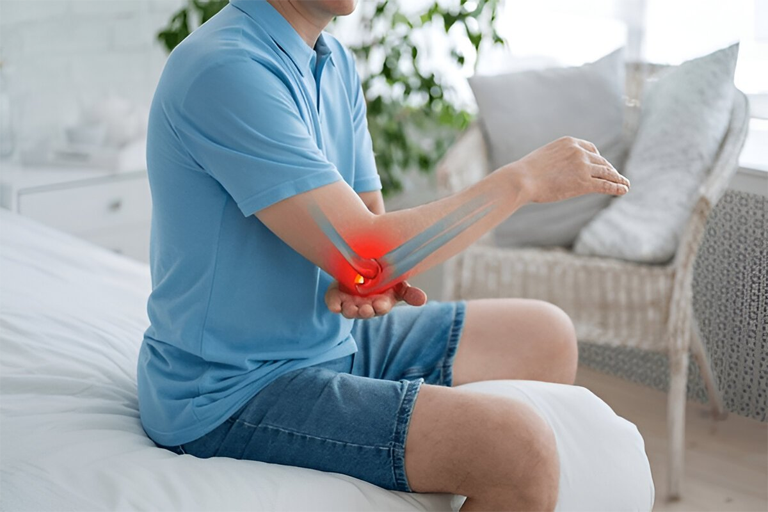
Types of Elbow Sprain Injuries and How Physiotherapy Helps
Elbow sprains are common injuries caused by crashes, sudden twisting movements, or repetitive strain on the joints. Although some elbow sprains appear minor at first, improper treatment can lead to long-term pain, stiffness, and reduced arm function. Understanding the type of elbow sprain and selecting the appropriate treatment plan is critical for a full and safe recovery.
Elbow injuries are treated at Rapid Physiocare using evidence-based assessment and structured elbow sprain physiotherapy to restore movement, strength, and long-term joint stability.
What Is An Elbow Sprain Injury?
An elbow sprain occurs when one or more ligaments supporting the elbow joint are overstretched or torn. Ligaments are strong connective tissues that stabilize the joint and guide controlled movement. When these ligaments are injured, the elbow may become painful, swollen, or unstable during daily activities.
Common causes include:
- Falls onto an outstretched arm
- Sudden pulling or twisting of the elbow
- Sports involving throwing, lifting, or contact
- Repetitive strain from work or household activities
Without appropriate physiotherapy, ligament healing may be incomplete, which can increase the risk of chronic elbow pain and reduced function.
Why Proper Diagnosis Matters For Elbow Sprains
Elbow sprains are classified according to the severity of ligament damage. Accurate grading enables physiotherapists to develop a treatment plan that is consistent with tissue healing timelines and functional requirements.
Incorrect or delayed diagnosis can lead to:
- Prolonged pain and stiffness
- Loss of elbow and grip strength
- Reduced arm coordination
- Recurrent elbow injuries
Physiotherapy begins with a detailed clinical assessment to determine ligament involvement, joint stability, swelling, and movement limitations.
Types of Elbow Sprain Injuries
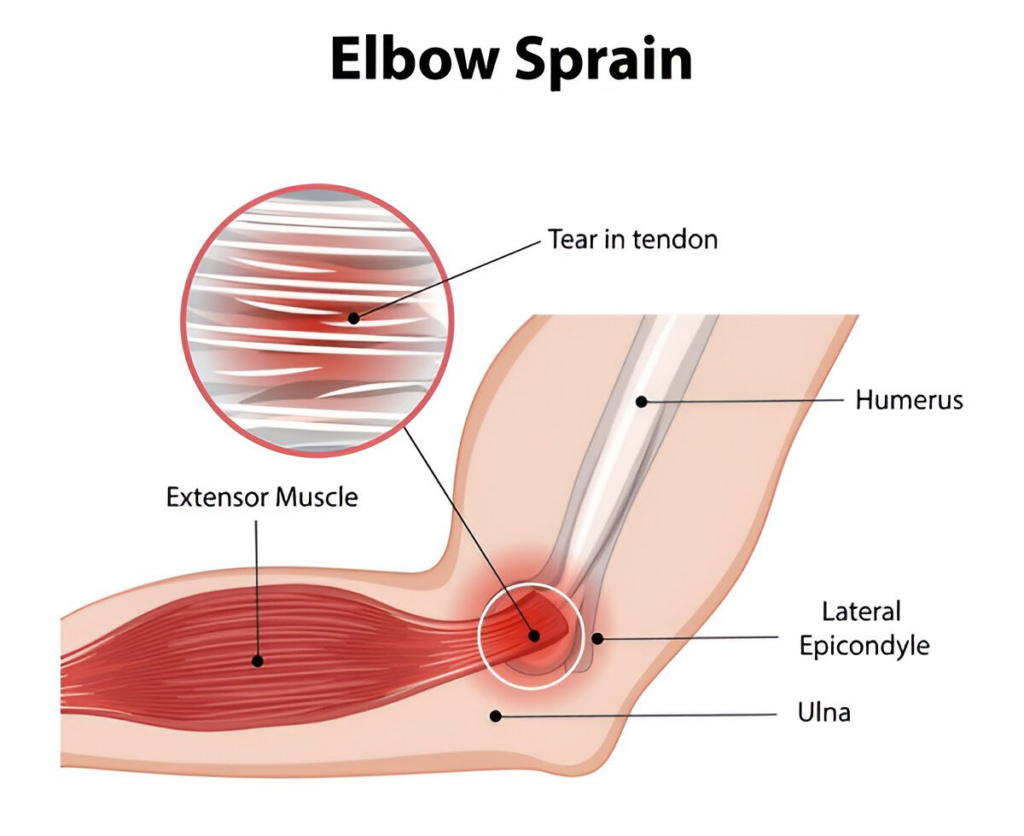
While elbow sprains are commonly graded based on ligament damage, some sprain-related conditions are also associated with repetitive tendon overload. Two frequently diagnosed conditions include lateral elbow sprain (tennis elbow) and medial elbow sprain (golfer’s elbow). Both respond well to structured physiotherapy when addressed early.
Grade 1 Elbow Sprain (Mild Ligament Stretch)
A Grade 1 elbow sprain involves minor stretching of the ligament without tearing. Pain is usually mild, and joint stability remains intact.
Common symptoms include:
- Mild discomfort with movement
- Slight swelling
- Minimal loss of strength
How physiotherapy helps:
Early elbow sprain physiotherapy focuses on pain reduction and restoring normal joint movement. Gentle range-of-motion exercises prevent stiffness while maintaining circulation to support ligament healing. Activity modification is recommended to avoid unnecessary strain during recovery.
Lateral Elbow Sprain (Tennis Elbow)
Lateral elbow sprain, also known as tennis elbow sprain, occurs when the outer structures of the elbow are repeatedly gripped, lifted, or extended with the wrist. Although this condition is frequently associated with sports, it also affects office workers and manual laborers.
Targeted tennis elbow physiotherapy focuses on load management, controlled strengthening, and tendon rehabilitation. Treatment aims to reduce pain, restore grip strength, and improve elbow resilience without aggravating the injured tissues.
Grade 2 Elbow Sprain (Partial Ligament Tear)
Grade 2 elbow sprains involve partial tearing of the ligament. Pain and swelling are more pronounced, and functional use of the arm may be limited.
Common symptoms include:
- Moderate pain and swelling
- Reduced elbow strength
- Difficulty lifting or gripping objects
How physiotherapy helps:
Physiotherapy emphasizes controlled loading of the elbow joint. Treatment may include soft tissue techniques, joint mobilization, and progressive strengthening exercises. Neuromuscular training improves coordination and reduces instability during daily movements.
Medial Elbow Sprain (Golfer’s Elbow)
Medial elbow sprains, often known as golfer’s elbow sprains, involve strain to the inner elbow ligaments and flexor tendon group. This condition commonly develops from repetitive wrist flexion or prolonged gripping tasks.
Evidence-based golfer’s elbow sprain physiotherapy helps reduce tendon stress, restore forearm strength, and improve elbow control. Rehabilitation focuses on gradual loading to allow tissue recovery while maintaining functional movement.
Grade 3 Elbow Sprain (Severe Tear or Rupture)
A grade 3 elbow sprain is the most severe form and involves complete ligament rupture. This injury often causes significant pain, swelling, and joint instability.
Common symptoms include:
- Severe pain and swelling
- Marked loss of elbow function
- Joint instability or visible deformity
How physiotherapy helps:
Following medical clearance or immobilization, elbow sprain physiotherapy focuses on restoring movement gradually. Strengthening programs are introduced in stages, followed by functional rehabilitation to support a safe return to work, sport, or daily activities.
How Does Physiotherapy Help With Different Types of Elbow Sprains?
Physiotherapy addresses more than pain relief. It supports complete ligament recovery and long-term elbow stability, regardless of injury severity.
Key components include:
- Inflammation management using manual therapy and electrotherapy
- Range-of-motion exercises to restore flexibility
- Progressive strengthening to support ligament healing
- Neuromuscular training to improve joint control
This approach is effective for ligament-based elbow sprains as well as overuse-related conditions such as tennis elbow and golfer’s elbow.
Why Early Elbow Sprain Physiotherapy Improves Recovery Outcomes
Delaying physiotherapy can allow stiffness and weakness to develop, prolonging recovery time. Early intervention supports optimal tissue healing and functional recovery.
Benefits of early elbow sprain physiotherapy include:
- Faster pain reduction
- Improved joint mobility
- Reduced risk of chronic elbow pain
- Lower likelihood of reinjury
At Rapid Physiocare, early physiotherapy is guided by clinical assessment rather than pain alone.
Elbow Sprain Prevention: Reducing the Risk of Repeat Injury
Preventing elbow sprains requires more than rest after pain resolves. Many elbow ligament injuries develop due to repetitive stress, poor movement patterns, or prolonged strain during daily activities. Addressing these contributing factors early is essential for long-term elbow pain prevention.
Simple preventive strategies include maintaining proper posture during work, avoiding repetitive gripping without rest, and ensuring gradual load progression during physical activity. Individuals who perform frequent lifting, typing, or manual tasks are particularly vulnerable to cumulative elbow strain.
Physiotherapy plays a key role in prevention by identifying movement inefficiencies before pain develops. Strengthening the forearm, improving joint control, and correcting ergonomic habits significantly reduce the likelihood of future sprains. Understanding why elbow pain is so common in daily life allows targeted intervention that protects ligament health and preserves elbow function over time.
When Should You See a Physiotherapist for an Elbow Sprain?
You should seek physiotherapy if you experience:
- Persistent elbow pain beyond a few days
- Swelling or reduced movement
- Weakness or joint instability
- Difficulty performing daily tasks
Early assessment ensures the correct injury grade is identified and treated appropriately.
Conclusion
Elbow sprain injuries vary in severity, but all grades benefit from structured physiotherapy management. Accurate diagnosis and targeted rehabilitation improve healing quality and reduce the risk of long term complications.
At Rapid Physiocare, elbow sprain physiotherapy programs focus on restoring strength, movement, and confidence. If elbow pain is affecting your daily activities, timely physiotherapy care can support a safer and more complete recovery.
Book a physiotherapy assessment at Rapid Physiocare to begin structured elbow rehabilitation today.
FAQs
What is an elbow sprain injury?
An elbow sprain occurs when the ligaments supporting the elbow joint are stretched or torn. This often happens due to sudden impact, twisting movements, or repetitive strain. Symptoms may include pain, swelling, and reduced arm function.
How long does elbow sprain recovery take?
Recovery depends on injury severity. Mild sprains may heal within 2 to 3 weeks, while moderate to severe sprains can take several weeks or months. Physiotherapy helps guide recovery safely and efficiently.
Is elbow sprain physiotherapy painful?
Physiotherapy is adjusted to remain within comfortable limits. Treatments begin gently and progress gradually as healing improves. The goal is to restore function without aggravating pain.
Can elbow sprains heal without physiotherapy?
Some mild sprains may improve with rest, but incomplete healing can lead to stiffness or weakness. Physiotherapy ensures proper ligament recovery and reduces reinjury risk.
When should physiotherapy begin after an elbow sprain?
Physiotherapy can usually begin once swelling and pain are controlled, following assessment. Early intervention helps prevent joint stiffness and muscle weakness.
What exercises are used for elbow sprain rehabilitation?
Rehabilitation includes range-of-motion exercises, strengthening programs, and coordination training. Exercises are introduced in stages based on healing progress.
Can physiotherapy prevent future elbow injuries?
Yes. Physiotherapy improves joint stability, strength, and movement control. This significantly lowers the risk of recurring elbow injuries.
Tags : Elbow sprain physitherapy