
Types of Ankle Sprain Injuries Explained
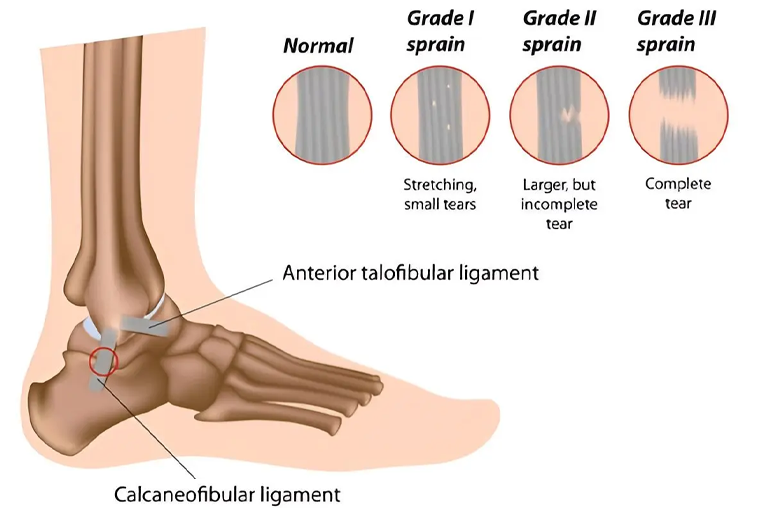
An ankle sprain is not a single injury with a single solution. Clinically, ankle sprains are classified into 3 grades, based on the severity of ligament damage. Understanding the difference between these grades is essential because treatment approaches, recovery time, and prevention strategies vary significantly.
What Is an Ankle Sprain? A Clinical Overview
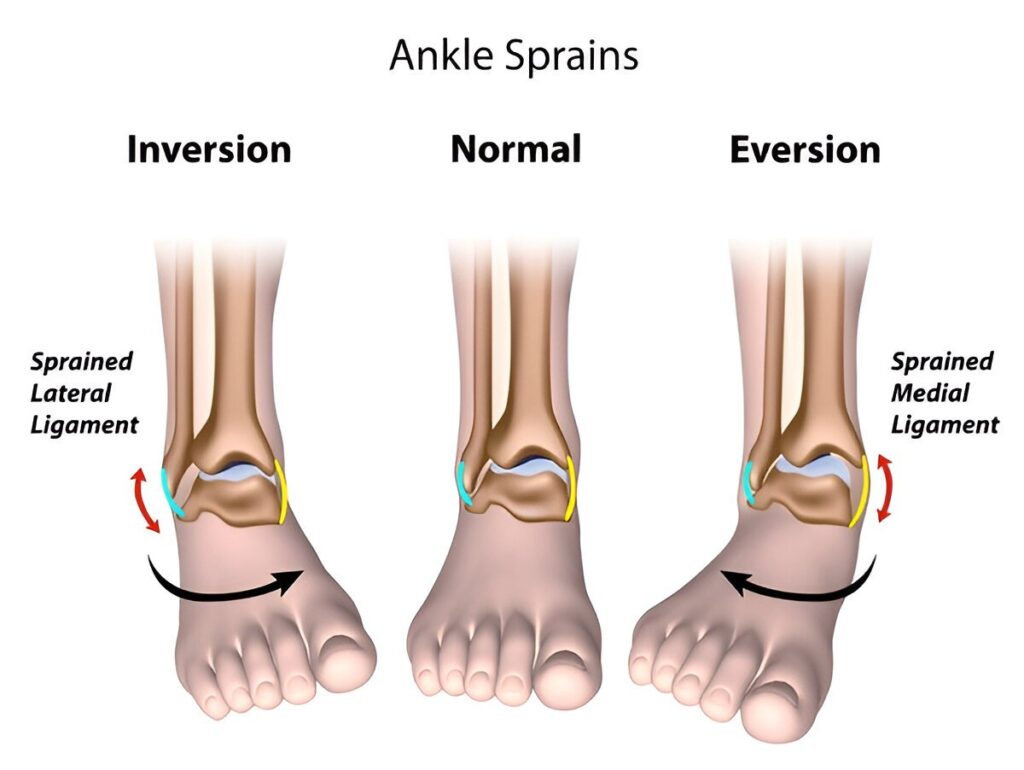
An ankle sprain occurs when the ligaments supporting the ankle joint are overstretched or torn, most commonly due to sudden inversion (rolling inward). Ligaments are dense connective tissues that provide joint stability. When injured, they compromise balance, load distribution, and control of movement.
An untreated or poorly managed sprain increases the risk of chronic ankle instability, delayed healing, and recurrent injury. This is why grade-specific treatment is essential rather than rest alone.
What Is Grade 1, Grade 2, and Grade 3 Ankle Sprains?
Ankle sprain grades are determined by the extent of ligament damage, not just pain intensity.
Grade 1: Ligament overstretching without tearing
Grade 2: Partial ligament tear
Grade 3: Complete ligament rupture
Each grade presents different symptoms, functional limitations, and recovery timelines — so it’s important to understand the cause, early signs, treatment options, and practical prevention strategies
You can explore our detailed ankle sprain prevention guide to reduce your future risk.
Grade 1 Ankle Sprain
What Causes a Grade 1 Ankle Sprain?
A Grade 1 injury usually results from a mild ankle twist during walking, stepping off uneven ground, or low-impact sports. The ligament fibers stretch but remain intact.
Signs of Grade 1 Ankle Sprain
- Mild swelling and tenderness
- Minimal bruising
- Full or near-full weight bearing
- Slight stiffness without joint instability
Ankle sprain grade 1 treatment focuses on reducing inflammation and restoring normal movement.
Treatment typically includes:
- Activity modification and load management
- Ice and compression for swelling control
- Gentle range-of-motion exercises
- Early physiotherapy-guided strengthening
The goal is to control movement rather than immobilization.
The recovery time is usually 7 to 14 days with appropriate care. Delayed rehabilitation may extend recovery unnecessarily.
Early Prevention for Grade 1 Injury
- Proper footwear with ankle support
- Balance training exercises
- Avoid returning to sport too early
- Address calf and foot muscle weakness
Grade 2 Ankle Sprain
What Causes a Grade 2 Ankle Sprain?
A Grade 2 sprain occurs when the ankle rolls forcefully, often during sports involving jumping or sudden direction changes. This results in partial tearing of ligament fibers.
Signs of Grade 2 Ankle Sprain
- Moderate swelling and bruising
- Pain during weight bearing
- Reduced ankle mobility
- Feeling of joint weakness or instability
The treatment requires structured rehabilitation rather than rest alone.
Evidence-based management includes:
- Controlled immobilisation if required
- Manual therapy to restore joint mechanics
- Progressive strengthening of ankle stabilisers
- Proprioceptive training (balance retraining)
- Gradual return to activity planning
Physiotherapy is essential to prevent incomplete healing.
The recovery time typically takes from 4 to 6 weeks, depending on rehabilitation consistency and activity demands.
Early Prevention for Grade 2 Injury
- Supervised physiotherapy during return to sport
- Neuromuscular training to improve joint control
- Avoid reliance on pain relief tablets alone
- Address biomechanical risk factors
Grade 3 Ankle Sprain
What Causes a Grade 3 Ankle Sprain?
Grade 3 sprains are caused by high-force trauma, such as landing awkwardly from a jump or severe sports collisions. These injuries involve complete ligament rupture.
Signs of Grade 3 Ankle Sprain
- Severe swelling and bruising
- Inability to bear weight
- Marked joint instability
- Significant loss of function
The treatment requires early professional management. While surgery is not always necessary, intensive physiotherapy is mandatory.
Treatment includes:
- Initial immobilisation for tissue protection
- Gradual loading under physiotherapist supervision
- Manual therapy to prevent joint stiffness
- Strength and balance retraining
- Functional testing before activity resumption
Electrotherapy may be used early to manage pain and swelling, while myofascial release helps restore tissue mobility during later stages.
The recovery time is usually 8 to 12 weeks, and sometimes longer for athletes or physically demanding occupations.
Early Prevention for Grade 3 Injury
- Strict adherence to rehabilitation milestones
- Avoid early return to sport
- Long-term ankle strengthening programs
- Supportive bracing during high-risk activities
How to Treat Ankle Sprains Correctly at Each Grade
To treat ankle sprains properly, it is important to determine which grade the sprain is:
- Grade 1: Early movement with guidance
- Grade 2: Structured physiotherapy and stability training
- Grade 3: Progressive rehabilitation with functional testing
Ignoring proper grade classification often leads to incomplete healing, long-term instability, and a higher risk of recurrent ankle injuries.
Effective recovery depends on matching the right treatment approach to the severity of the injury. Mild sprains still require guided care to prevent stiffness, while moderate to severe sprains demand a structured and progressive rehabilitation plan. Ankle sprain physiotherapy ensures that pain is managed safely, movement is restored gradually, and strength and balance are rebuilt in a controlled manner. By following a physiotherapy-led recovery program, individuals can return to daily activities and sports with improved ankle stability and a significantly reduced risk of re-injury.
Why Physiotherapy Matters in All Grades of Ankle Sprain
Physiotherapy addresses more than just pain. It restores proper joint mechanics, improves neuromuscular control, and rebuilds long-term stability—key factors in preventing repeat injuries. Through guided exercises, movement retraining, and progressive loading, patients gain better control and confidence during everyday activities and sports.
At Rapid Physiocare, physiotherapy programs are designed to deliver measurable recovery, not temporary relief. Patients managed with a structured physiotherapy plan recover faster, regain functional strength sooner, and achieve better long-term outcomes compared to those who rely on rest alone. Early intervention, professional assessment, and consistent rehabilitation help reduce downtime, prevent chronic issues, and support a safe return to movement.
If pain, instability, or limited mobility persists, seeking timely physiotherapy care can make a significant difference in recovery quality and long-term joint health.
Book a consultation with Rapid Physiocare today to address shoulder concerns early and move with confidence.
FAQs: Ankle Sprain Grades and Recovery
How does an ankle sprain occur?
An ankle sprain occurs when the ankle twists or rolls beyond its normal range, causing damage to the ligaments. A twisted ankle during walking, sports, uneven surfaces, or sudden movements is the most common cause. This can lead to pain, swelling, and reduced stability if not treated early.
What are the common ankle sprain symptoms?
The common symptoms include pain, swelling, bruising, stiffness, and difficulty bearing weight. A swollen ankle sprain may feel unstable or weak, especially during walking. Severe cases may indicate an ankle ligament injury or tear requiring physiotherapy care.
How long does ankle sprain recovery take?
Sprained ankle recovery time depends on the severity of the injury. Mild sprains may heal in 1 to 2 weeks, while moderate to severe injuries or ankle ligament tears can take several weeks to recover. Physiotherapy for ankle sprains helps speed up healing and prevents long-term instability.
When should I start physiotherapy for an ankle sprain?
You should begin physiotherapy as soon as pain and swelling are under control. Early physiotherapy intervention can improve mobility, strengthen ligaments, and reduce the risk of chronic or recurrent ankle sprain. Delaying treatment can slow recovery and increase the risk.
What is the difference between an ankle sprain and a fractured or broken ankle?
An ankle sprain involves ligament damage, while a fractured ankle or broken ankle refers to a bone injury. Both can cause swelling and pain, fractures usually involve severe pain and inability to bear weight. A physiotherapy assessment helps determine the right treatment or referral if imaging is required.
Can physiotherapy help with ankle ligament tear treatment?
Yes, Ankle ligament tear treatment focuses on reducing pain, restoring joint stability, and improving movement. Through guided ankle sprain exercises, manual therapy, and balance training, physiotherapy supports safe and effective ankle sprain recovery without surgery in most cases.
What exercises are used in ankle sprain rehabilitation?
Ankle sprain exercises include range-of-motion movements, strengthening drills, and balance training. These exercises improve ligament healing, prevent stiffness, and reduce reinjury risk. A physiotherapist customizes exercises based on injury grade and recovery stage.
Can untreated ankle sprains cause long-term problems?
Yes, ignoring an ankle ligament injury can lead to chronic pain, weakness, and repeated sprains. Recurrent ankle sprains often result from incomplete healing or poor rehabilitation. Proper treatment with physiotherapy ensures long-term joint stability and confidence in movement.
Tags : Ankle sprain, Ankle sprain physiotherapy, Ankle sprain treatment