

Physiotherapy Guide to Neck Pain Prevention: Simple and Practical Tips You Should Know
Introduction
Neck pain prevention has become a critical health priority in modern daily life. Long hours at desks, frequent mobile phone use, poor posture, and sustained psychological stress place a continuous load on the cervical spine. Over time, these factors contribute to muscle fatigue, joint stiffness, reduced circulation, and excessive strain on supporting ligaments and nerves.
Many patients seek treatment only when the pain becomes persistent or begins affecting daily function. At Rapid Physiocare, proactive physiotherapy aims to protect cervical spine health through education, movement correction, ergonomic guidance, and targeted strengthening strategies that address the root causes of strain.
What Is Neck Pain and Why Does Prevention Matter?
Neck pain refers to discomfort originating from the cervical spine, which includes muscles, joints, ligaments, intervertebral discs, and neural structures. Symptoms may present as local stiffness or pain may extend toward the shoulders, upper back, arms, or head depending on the affected tissues.
Without early action, constant strain may progress into chronic conditions such as cervicogenic headaches, nerve irritation, or movement restriction. Understanding the types of neck pain helps physiotherapists and patients identify early warning signs and create preventive strategies. Taking steps to prevent cervical pain early reduces the likelihood of long-term functional limitations and dependency on passive treatments.
How Does Neck Pain Develop in Daily Life?
Neck pain rarely develops from a single event. In most cases, it emerges gradually due to repeated low-level stress placed on cervical structures during routine activities.
Common contributors include prolonged desk or laptop work, forward head posture during mobile phone use, poorly adjusted workstations, inadequate physical activity, and emotional stress that increases muscle tension. These factors alter natural spinal alignment and overload cervical joints.
Understanding these everyday contributors allows patients to actively participate in neck strain prevention by modifying posture, improving movement habits, and addressing lifestyle factors that sustain muscle overload.
How Can Physiotherapy Help with Neck Pain Prevention?
Physiotherapy focuses on correcting the underlying causes of neck pain rather than simply managing symptoms. Preventive physiotherapy improves movement efficiency, posture awareness, joint mobility, and muscle coordination to reduce excessive strain on cervical structures.
A structured neck pain physiotherapy program includes postural assessment, targeted strengthening, mobility exercises, and hands-on techniques to restore normal movement patterns. This approach supports long-term neck pain prevention and reduces reliance on pain-relief tablets or passive interventions.
How to Prevent Cervical Neck Pain at Work?
Work-related posture is one of the most common contributors to cervical discomfort, especially among desk-based professionals. Learning how to prevent cervical neck pain at work can significantly reduce daily strain and cumulative tissue overload.
Physiotherapy-based workplace strategies include adjusting screen height to eye level, maintaining neutral head and shoulder alignment, supporting the lower back to reduce cervical load, and incorporating short movement breaks every 30 to 45 minutes. These adjustments help reduce cervical pain associated with prolonged sitting and repetitive tasks.
How to Reduce Neck Pain Caused by Poor Posture?

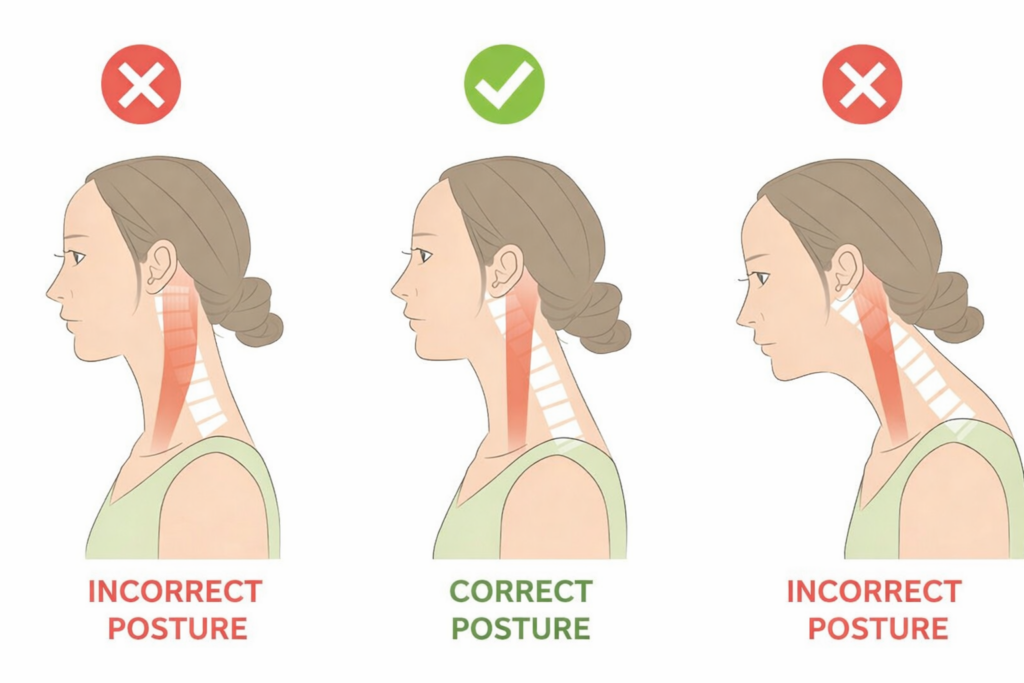
Poor posture alters spinal alignment and increases mechanical stress on the neck muscles and joints. Forward head posture, in particular, increases the load on cervical structures and accelerates muscle fatigue.
To understand how to reduce neck pain related to posture, physiotherapy focuses on strengthening deep neck flexor muscles, improving upper thoracic mobility, and training postural awareness during daily activities.
What Exercises Help With Neck Pain Prevention?
Exercise plays a central role in neck pain prevention by improving muscular endurance, joint stability, and nervous system control. When prescribed correctly, exercises help maintain spinal alignment and reduce stress on sensitive tissues.
Physiotherapy-guided programs commonly include gentle cervical motion exercises, deep neck flexor activation drills, scapular stabilization exercises, and controlled stretching for tight muscles. Exercise selection and progression are based on individual assessment to ensure safety and effectiveness while preventing overuse of injuries.
How Can Lifestyle Habits Prevent Neck Strain?
Daily habits strongly influence cervical spine health. Simple lifestyle adjustments can significantly help prevent neck strain and reduce the frequency of discomfort.
Key strategies include limiting continuous screen time, using supportive pillows that maintain neutral neck alignment during sleep, maintaining regular physical activity, and managing stress to reduce muscle tension. Physiotherapy integrates these habits into daily routines, ensuring neck strain prevention extends beyond clinic sessions.
Can Physiotherapy Prevent Cervical Pain Long-Term?
Yes. Preventive physiotherapy focuses on long-term movement of health rather than short-term symptom control. By improving posture, muscle balance, joint mobility, and movement efficiency, physiotherapy helps prevent cervical pain recurrence.
Preventive care also lowers the risk of developing chronic neck pain, cervicogenic headaches, nerve-related symptoms, and work-related musculoskeletal disorders. Consistency with prescribed exercises and ergonomic advice is essential for sustained benefits.
When Should You Seek Physiotherapy for Neck Pain Prevention?
Early physiotherapy assessment is recommended if you experience frequent neck stiffness, discomfort after prolonged work or screen use, reduced neck mobility, recurrent posture-related headaches, or early signs of muscle tightness.
Addressing these symptoms early allows physiotherapists to correct movement patterns before pain becomes chronic. Early intervention supports effective neck pain prevention and improves long-term outcomes.
How Physiotherapy Prevents Neck Pain Recurrence?
Preventing recurrence requires more than rest or medication. Physiotherapy addresses contributing factors through a structured and evidence-based rehabilitation approach.
Treatment may include manual therapy to improve joint mobility, myofascial release (hands-on techniques to relax tight muscle tissue), strengthening of deep cervical stabilizers, ergonomic education, and activity modification guidance. This comprehensive approach helps reduce cervical pain episodes and supports sustainable recovery.
FAQs
How can I prevent neck pain from daily activities?
Improving posture, taking regular movement breaks, and strengthening neck muscles can significantly reduce strain. Physiotherapy provides structured guidance to support safe prevention.
How can I reduce neck pain without medication?
Physiotherapy, posture correction, and targeted exercises help reduce pain naturally. Manual therapy and movement retraining address the root cause rather than masking symptoms.
Is neck pain prevention suitable for office workers?
Yes. Office workers benefit significantly from ergonomic correction, posture training, and preventive exercises to reduce daily cervical strain.
Can physiotherapy prevent neck strain from mobile phone use?
Yes. Physiotherapists teach posture awareness and movement strategies to minimise forward head posture during device use, supporting neck strain prevention.
How often should I do neck exercises for prevention?
Exercises are usually recommended daily or several times per week, depending on individual needs. A physiotherapist tailors frequency for safe progression.
Does preventive physiotherapy reduce cervical pain long-term?
Yes. Preventive physiotherapy improves movement efficiency and muscle support, helping reduce cervical pain recurrence over time.
When should I start neck pain prevention care?
Start as soon as stiffness, discomfort, or posture-related symptoms appear. Early care prevents progression into chronic neck pain.
Conclusion
Neck pain often develops silently through daily habits, posture, and repetitive strain. Understanding how to prevent cervical neck pain empowers individuals to protect spinal health before symptoms worsen.
At Rapid Physiocare, preventive physiotherapy focuses on education, movement correction, and strength development to support long-term neck pain prevention. Early intervention reduces recurrence, improves daily comfort, and protects cervical spine function.
Book a physiotherapy consultation at Rapid Physiocare to begin a structured neck pain prevention program tailored to your lifestyle and work demands.
Tags : neck pain physiotherapy, Prevention from neck pain