
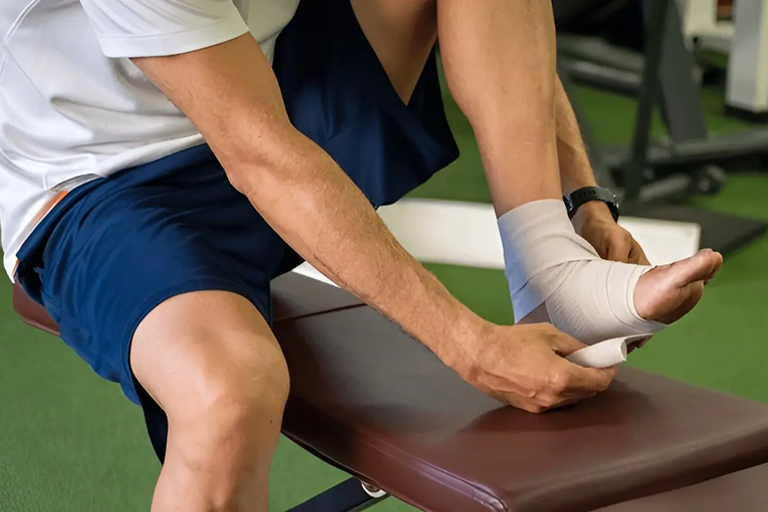
Ankle Sprains Prevention Before They Become a Recurrent Problem
An ankle sprain may appear minor at first, but it can be a serious injury. Many patients resume activity once the pain has settled, assuming the joint has healed. In reality, the ankle often remains unstable beneath the surface. Without proper care, a single sprain can quietly progress into repeated ankle twisting, chronic pain, and long-term joint damage.
At Rapid Physiocare, recurrent ankle sprains are one of the most common joint issues we treat. The good news is that ankle sprain prevention is highly achievable when addressed early, using evidence-based physiotherapy strategies that focus on strength, balance, and movement control.
This guide explains how to prevent ankle sprains, reduce ankle rolling, and protect your ankle before instability becomes a long-term problem.
Why Do Ankle Sprains Keep Coming Back?
An ankle sprain damages the ligaments that stabilize the joint. Most commonly, the front ligaments on the outer side of the ankle are affected. However, not all sprains are the same. Understanding the types of ankle sprain injuries may explain why some patients recover quickly while others experience repeated ankle instability.
Without structured care, patients often experience:
- Reduced joint stability
- Delayed muscle reaction time
- Poor balance and proprioception (joint position awareness)
- Repeated ankle twisting during walking or sports
This explains why ankle rolling prevention requires more than just rest or pain relievers. It is necessary to retrain the ankle in how it moves and responds to loads.
What Is the Best Way to Prevent Ankle Sprains Long-Term?
Effective ankle injury prevention focuses on restoring strength, control, and confidence in the joint. Physiotherapy addresses the root cause rather than masking symptoms.
Key principles of prevention include:
- Strengthening ankle and lower leg muscles
- Improving balance and neuromuscular control
- Correcting movement patterns
- Supporting the joint during high-risk activities
Each element works together to prevent repeated injury and long-term instability.
Exercises to Prevent Ankle Sprains

Targeted rehabilitation exercises are essential for restoring ligament support and muscle coordination. These exercises should be progressed gradually and supervised by a physiotherapist when possible.
Recommended Exercises:
- Resistance band ankle movements (inversion, eversion, dorsiflexion, plantarflexion)
- Single leg balance training on stable and unstable surfaces
- Calf strengthening exercises to improve shock absorption
- Controlled heel raises to build endurance
- Functional hopping drills once pain free
These exercises retrain the ankle to respond quickly and accurately during walking, running, or sudden changes in direction.
How Does Balance Training Reduce Ankle Rolling?
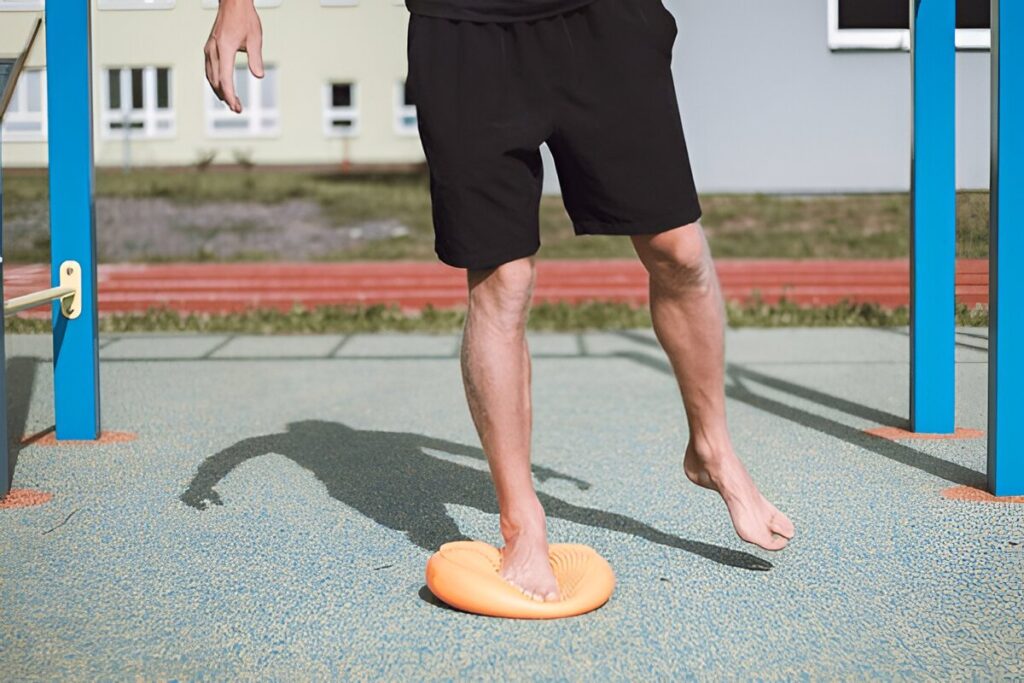 Balance training improves proprioception. After experiencing ankle sprain, this system becomes impaired.
When balance is poor, the ankle reacts slower during uneven ground contact. This delay increases the risk of sudden twisting.
Balance training helps by:
- Improving reaction time of stabilising muscles
- Enhancing joint awareness
- Reducing unexpected ankle collapse
- Supporting ankle rolling prevention during daily activity
Even short daily balance routines significantly reduce reinjury risk when done consistently.
Can Footwear Help You Avoid Ankle Sprains?
Footwear is critical in preventing ankle sprains, particularly for patients who walk or stand for long periods of time.
Key footwear recommendations:
- Firm heel counters to control rear foot motion
- Adequate arch support for load distribution
- Non-slip soles for surface grip
- Proper sizing to prevent instability
For certain patients, custom orthotics may be recommended to improve alignment and reduce abnormal ankle stress. Footwear alone is not a solution, but when combined with physiotherapy, it provides meaningful protection.
When Should You Use Ankle Supports or Bracing?
Ankle braces are helpful in specific situations. They provide external support while the internal stabilizers regain strength.
Ankle support is useful:
- During the return to sports
- On uneven terrain
- After a recent ligament injury
- During high-impact activities
However, long-term reliance without rehabilitation can weaken natural support structures. A physiotherapist determines when bracing is appropriate and when to reduce dependency.
How to Avoid Ankle Twists During Sports and Daily Activity?
Many ankle sprains occur during everyday movements rather than sports. A misstep on stairs or uneven pavement can trigger injury.
Strategies to avoid ankle twists include:
- Improving hip and knee strength to reduce ankle overload
- Practicing controlled movement patterns
- Avoiding sudden direction changes without preparation
- Maintaining ankle mobility without overstretching
Physiotherapy programs integrate whole-limb control, not just isolated ankle exercises.
Does Physiotherapy Prevent Recurrent Ankle Sprains?
Physiotherapy is the most effective approach for long-term ankle sprain prevention. Research consistently shows that structured rehabilitation significantly lowers reinjury rates compared to rest alone.
Physiotherapy focuses on:
- Ligament healing support
- Muscle strength restoration
- Neuromuscular retraining
- Movement correction
- Gradual return to activity
At Rapid Physiocare, ankle sprain treatment plans are customized to age, activity level, and injury history, ensuring safe and lasting recovery.
When Should You Seek Professional Help?
You should consult a physiotherapist if:
- Your ankle gives way repeatedly
- Swelling persists beyond two weeks
- Pain returns during walking or exercise
- Experience frequent ankle rolling
Early intervention prevents chronic instability and reduces the risk of cartilage damage or early arthritis.
Frequently Asked Questions
How long does it take to prevent recurrent ankle sprains?
With structured physiotherapy, stability improves within 6 to 8 weeks. Long-term prevention depends on continued strength and balance training.
Are ankle sprains serious if the pain is mild?
Yes. Even mild pain can indicate ligament damage. Untreated instability increases reinjury risk.
Can walking cause ankle sprains?
Yes. Uneven surfaces, improper footwear, and weak stabilising muscles can lead to ankle twisting during walking.
Should I rest completely after an ankle sprain?
Short-term rest is useful, but early controlled movement under guidance improves recovery outcomes.
Are exercises enough to prevent ankle sprains?
Exercises are essential, but footwear, movement control, and professional assessment complete the prevention plan.
Can physiotherapy help years after repeated ankle sprains?
Yes. Chronic instability responds well to targeted rehabilitation, even years after initial injury.
Do ankle sprains lead to arthritis?
Repeated ligament injury increases joint wear and raises the risk of early ankle osteoarthritis.
Is ankle taping effective?
Taping provides temporary support but should not replace rehabilitation.
Take Control Before Ankle Sprains Become a Pattern
Recurrent ankle sprains are not inevitable. With the right intervention, most patients regain stability, confidence, and full function. Prevention begins with understanding the problem and addressing it early.
At Rapid PhysioCare, our physiotherapists provide structured assessment, personalised rehabilitation, and long-term ankle injury prevention strategies tailored to your lifestyle.
Book a physiotherapy consultation today and take the first step toward a stronger and more stable ankle.
Tags : Ankle sprain, Ankle sprain physiotherapy, Prevention from ankle sprain