

Complete Guide to Hip Pain Treatment: Causes, Symptoms & Recovery Options
That sharp pull in your hip during a simple movement. You pause, wait for it to pass, and carry on. And a week later, it is still there.
Hip pain has a way of starting quietly and building into something that disrupts sleep, limits movement, and forces you to think twice before every step. Whether you felt it after a gym session, during a long walk, or seemingly out of nowhere, the cause matters. So does getting the right treatment early.
This guide covers everything you need to know: the common causes, the warning symptoms, and how physiotherapy for hip pain helps you recover and stay recovered.
What Is Hip Pain?
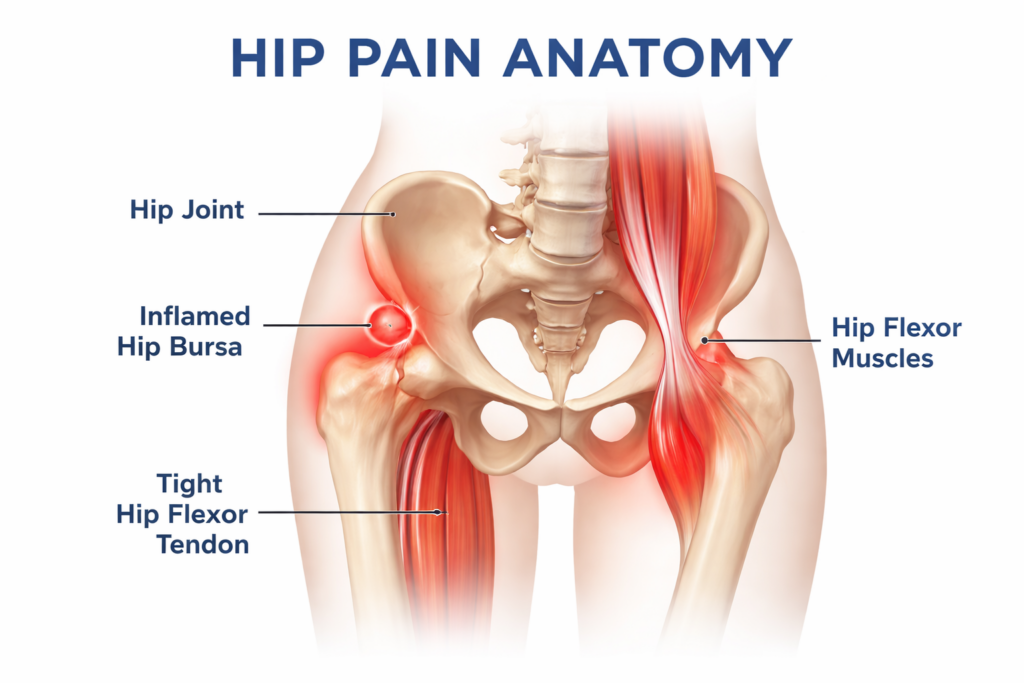
Hip pain refers to discomfort felt in or around the hip joint, the point where the thigh bone (femur) meets the pelvis. The hip is a ball-and-socket joint. It handles a significant load every day, absorbing impact from walking, climbing stairs, and prolonged standing.
Pain in this area is not always straightforward. It can originate from the joint itself, the surrounding muscles, tendons, bursae (small fluid-filled sacs that cushion the joint), or the nerves that run through the region. This is why accurate diagnosis matters.
Hip joint pain affects people of all ages. It appears in young adults after intense physical activity, in older adults due to years of accumulated wear on the joint, and in everyone in between for a wide range of reasons.
Common Causes
Understanding the cause is the first step toward effective treatment. The hip is a complex structure, and discomfort can originate from several sources.
- Muscle strain or overuse: Overworked hip muscles ache deeply and sharpen with continued use. This pattern is commonly seen in patients experiencing hip pain when walking.
- Hip joint inflammation: Deep, aching pain that worsens with movement and weight-bearing.
- Osteoarthritis: Cartilage breakdown causes pain, stiffness, and reduced joint movement.
- Bursitis: Inflamed bursae cause sharp or burning outer hip pain, most often trochanteric.
- Tendinitis: Repetitive movement irritates hip tendons, producing localised, persistent pain.
- Labral tear: Causes a locking sensation deep in the joint, often with groin pain.
- Sciatica: Nerve compression produces hip pain that radiates down the leg, often with tingling.
Symptoms You Should Not Ignore
Hip pain symptoms vary depending on the underlying cause. Certain presentations, however, warrant prompt attention rather than a wait-and-see approach.
- Hip pain while walking or standing: Weight-bearing pain that worsens over time and alters gait, placing added strain on the knee and lower back.
- Stiffness in the hip joint: Morning stiffness lasting beyond thirty minutes signals joint inflammation or early-stage arthritis.
- Hip pain radiating to the thigh or lower back: Spreading pain suggests nerve involvement or referred pain from the lumbar spine.
- Reduced range of motion: Difficulty rotating the leg or bringing the knee to the chest points to joint or soft tissue restriction.
- Hip pain while sleeping: Hip pain when lying on the affected side is linked to bursitis or tendinopathy and frequently disrupts rest.
When Should You See a Physiotherapist?
Some hip discomfort resolves with rest. Certain situations, however, call for professional assessment without delay. See a physiotherapist if you notice:
- Pain that persists beyond a few days despite rest and basic self-care
- Difficulty walking normally or bearing full weight on the leg
- Recurring pain that clears up then returns, often triggered by the same activity
- Pain that follows a fall, collision, or sudden movement
A physiotherapist will assess the joint, identify the specific structure involved, and build a treatment plan around the main cause. This approach is considerably more effective than managing the symptoms alone.
How Physiotherapy Can Help
Physiotherapy for hip pain is not a single technique. It is a structured, progressive process that addresses pain, restores function, and reduces the likelihood of recurrence.
- Pain assessment: Evaluates joint movement, muscle strength, and gait to identify the root cause.
- Manual therapy: Hands-on joint mobilisation and myofascial release reduce stiffness and tension.
- Strengthening exercises: Targets weak hip stabilisers to reduce joint load during daily movement.
- Posture correction: Corrects standing and sitting alignment to reduce strain on the hip joint.
- Mobility training: Gradually restores full, pain-free range of motion matched to tissue healing.
- Electrotherapy: Ultrasound and TENS manage acute pain, reduce swelling, and support recovery.
Effective Physiotherapy Exercises
Hip pain exercises should always be selected and guided by a physiotherapist. The right exercise depends entirely on the diagnosis. The following are commonly prescribed as part of a structured rehabilitation programme.
Clamshells:
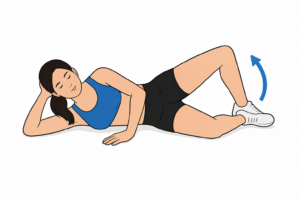
Lying on the side with knees bent, the patient slowly raises the top knee while keeping the feet together. This targets the gluteus medius, a key hip stabiliser that is frequently underactive in patients presenting with persistent hip and knee pain.
Hip flexor stretch:
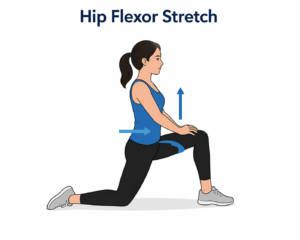
A kneeling lunge position stretches the iliopsoas muscle at the front of the hip. Tight hip flexors are common in individuals who sit for long periods and contribute significantly to anterior hip discomfort.
Supine hip rotation:
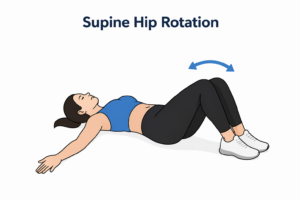
Lying flat, the patient gently rotates the bent knee inward and outward within a pain-free range. This restores joint mobility without loading the hip.
Glute bridges:
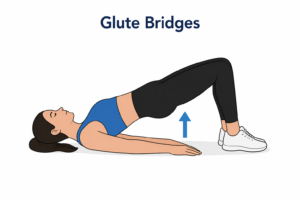
With knees bent and feet flat on the floor, the patient lifts the hips off the ground by contracting the gluteal muscles. This builds posterior chain strength and reduces strain on the anterior hip structures.
Side-lying leg raises:
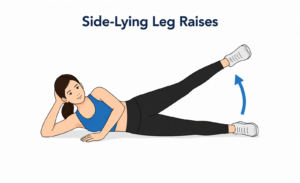
Slow, controlled leg raises in a side-lying position develop hip abductor strength, supporting lateral hip stability during walking and single-leg activities.
Do not attempt these independently if you are in the acute phase of pain. A physiotherapist will advise on the appropriate starting point and how to progress safely.
Hip Pain Treatment Options Beyond Exercises
Beyond exercises, hip pain physiotherapy treatment includes joint mobilization, dry needling, and shockwave therapy to target pain and accelerate tissue repair. Taping techniques and ergonomic guidance reduce hip strain during daily activities and rest.
Can Hip Pain Go Away on Its Own?
It depends on the cause and the severity. Minor muscle strains from a one-off activity, such as hip pain after gym or an unusually long walk, may resolve within a few days with rest and gentle movement. These presentations often do not require formal intervention.
But structural issues such as labral tears, bursitis, and osteoarthritis do not resolve without targeted treatment. Left unmanaged, they tend to worsen. Compensatory movement patterns develop as the body works around the pain, and these patterns create secondary problems in the knee, lower back, and opposite hip.
Knowing how to fix hip pain naturally is worth understanding in context: rest, gentle movement, and heat or cold application can support recovery in mild cases. For anything beyond a mild muscle strain, professional assessment gives you a clearer picture of what is happening and what the appropriate treatment timeline looks like.
How to Prevent Hip Pain
Prevention is considerably simpler than rehabilitation. Building good habits now protects the hip joint through every decade.
- Correct posture: A neutral pelvis while sitting and standing reduces asymmetrical hip load.
- Exercise regularly: Swimming, cycling, and walking keep hip joints mobile and muscles strong.
- Workstation setup: Correct chair height and foot placement to reduce abnormal load through the hip flexors.
- Warm up before activity: A five-minute dynamic warm-up prepares the hip joint for physical load.
- Manage body weight: Less body weight means lower joint load and reduced osteoarthritis risk.
Why Choose Rapid Physiocare for Hip Pain Treatment?
Rapid Physiocare is Singapore’s trusted physiotherapy network, with six clinics and forty-five years of combined clinical experience across the team.
Personalised treatment plans:
No two hip presentations are identical. Treatment at Rapid Physiocare is built around each patient’s specific diagnosis, lifestyle demands, and recovery goals. The programme adjusts as the patient progresses, rather than following a fixed schedule that does not account for individual response.
Experienced physiotherapists:
The clinical team manages a broad spectrum of hip conditions, from acute muscle strains to post-surgical rehabilitation and chronic joint degeneration. Patients receive care from practitioners who work with these presentations on a regular basis.
Evidence-based techniques:
Treatment modalities are selected based on clinical evidence and matched to the individual condition. Manual therapy, targeted exercise rehabilitation, electrotherapy, and shockwave therapy are applied where clinically indicated, not as a standard package.
Patient-focused care:
Every consultation includes time for the patient to understand their condition, the rationale behind the treatment plan, and what to expect at each stage. Informed patients recover with more confidence and better adherence to their programme.
If you are looking for a hip pain specialist with a team that treats the cause, not just the symptom, in Singapore, Rapid Physiocare offers assessments at six locations across the island. Finding a clinic near you is straightforward.
Frequently Asked Questions About Hip Pain
How long does it take to recover from hip pain?
Depends on the cause. Strains resolve in 2 to 4 weeks; bursitis in 6 to 12 weeks. Structural issues need longer care. Your physiotherapist will advise after assessment.
Is physiotherapy painful?
Generally no. Mild discomfort during joint mobilisation or soft tissue work is normal and settles quickly. Your physiotherapist will adjusts yourtreatment based on your feedback.
What causes hip pain in young adults?
Commonly linked to muscle overuse, tendinitis, labral tears, or hip impingement.Most prevalent in runners, cyclists, and those in physically demanding roles.
Why does hip pain get worse at night?
Bursitis or gluteal tendinopathy causes pain when lying on the affected side. A pillow between the knees offers short-term relief; treatment addresses the cause.
Can pregnant women receive physiotherapy for hip pain?
Yes. Physiotherapy is safe during pregnancy. Treatment includes gentle mobilisation, targeted strengthening, and postural support suited to each trimester.
Can I exercise if I have hip pain?
Gentle movement is generally beneficial. Your physiotherapist will prescribe exercises matched to your diagnosis and advise clearly on what to avoid during recovery.
Conclusion
Hip pain does not resolve by waiting long enough. The longer compensatory movement patterns are allowed to develop, the more structures become involved, and the longer full recovery takes. A clear diagnosis from a qualified physiotherapist gives you the most direct path from pain to full function.
Book a consultation with Rapid Physiocare today. With six clinic locations across Singapore and a team with forty-five years of combined clinical experience, expert care is closer than you think.
Tags : hip pain physiotherapy