

What Is TMJ Disorder? Causes, Symptoms & Physiotherapy Treatment in Singapore
Jaw discomfort often begins as a subtle click or a slight stiffness when waking up in the morning. For many individuals, these minor inconveniences escalate into chronic pain that affects eating, speaking, and even sleeping.
When the temporomandibular joint becomes dysfunctional, it can lead to a condition known as TMJ disorder that Singaporeans frequently encounter due to high-stress lifestyles and sedentary work habits. Understanding the mechanics of your jaw and identifying symptoms early is the first step toward effective recovery.
At Rapid Physiocare, we see many patients who have endured jaw pain for months, believing it will resolve on its own. However, temporomandibular joint disorder (TMD) is often a complex issue involving muscles, nerves, and ligaments. Professional intervention is necessary to restore normal function and prevent long-term joint degradation.
Understanding TMJ Disorder
The temporomandibular joint (TMJ) acts as a sliding hinge, connecting your jawbone to your skull. You have one joint on each side of your face, located just in front of your ears. This joint is one of the most complex in the human body; it facilitates both rotation and gliding movements required for chewing and vocalisation.
TMJ disorder is an umbrella term referring to any condition that prevents this complex system of muscles, bones, and joints from working in harmony. When the articular disc that cushions the joint moves out of place or the surrounding musculature becomes hypertonic (overly tight), pain and restricted movement follow.
The Anatomy of the Jaw Joint
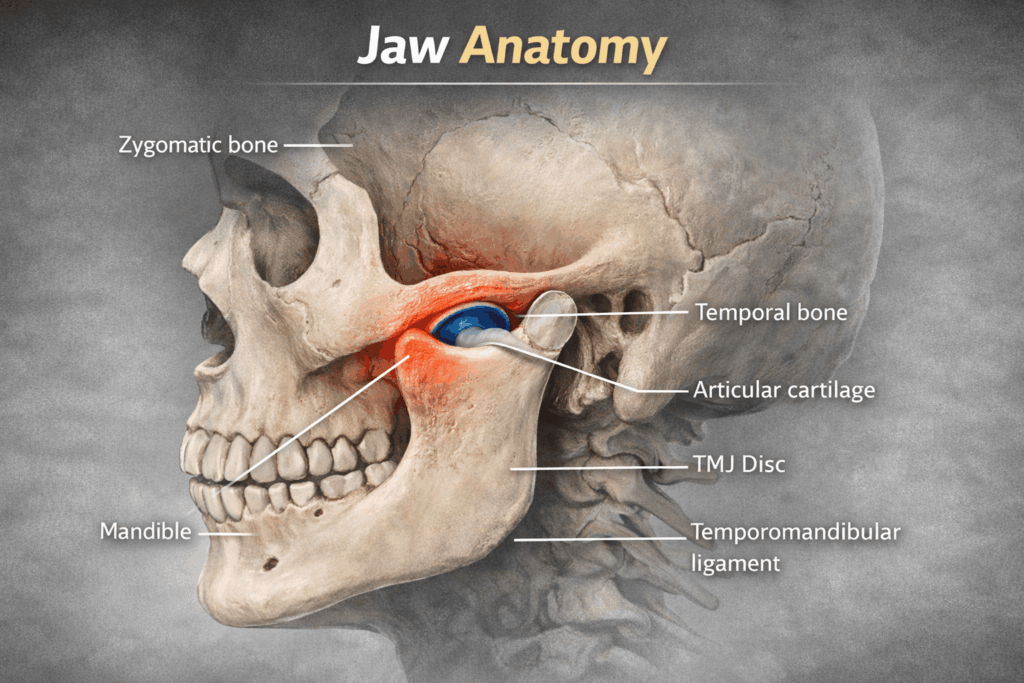
The TMJ consists of several key components:
- The Condyle: The rounded end of the lower jawbone.
- The Articular Disc: A small, fibrous disc that sits between the bone surfaces to ensure smooth movement.
- The Muscles of Mastication: Including the masseter and temporalis, which provide the force needed to move the jaw.
When any of these components are compromised by injury, inflammation, or structural misalignment, the result is TMJ pain.
Common TMJ Pain Causes
Identifying the root cause of jaw dysfunction is essential for developing a targeted treatment plan. While every patient is unique, several common factors contribute to the development of TMJ pain in a clinical setting.
1. Teeth Grinding (Bruxism)
Many patients unconsciously clench or grind their teeth, especially during sleep. This condition, known as bruxism, places immense pressure on the temporomandibular joint. Over time, this constant loading can wear down the articular disc and fatigue the jaw muscles. Stress is a significant trigger for bruxism, making it a prevalent cause among Singapore’s working professionals.
2. Jaw Injury or Trauma
Direct impact to the face or jaw can displace the joint or damage the internal disc. Even “micro-trauma”, such as repeatedly chewing on hard objects or biting fingernails, can lead to cumulative damage.
3. Poor Posture and Forward Head Position
In the digital age, “tech neck” or forward head posture is a major contributor to jaw dysfunction. When your head sits forward of its natural alignment, it creates tension in the muscles of the neck and throat. This tension pulls the jaw backward, altering the way your teeth meet and placing unnecessary strain on the TMJ. Our posture correction physiotherapy helps restore proper alignment and reduce stress on the TMJ.
4. Stress and Muscle Tension
Stress manifests physically. When stressed, many people hold tension in their shoulders and jaw. Chronic muscle contraction in the face leads to myofascial pain, where trigger points develop in the muscles, causing referred pain throughout the head and neck.
5. Arthritis in the Jaw Joint
Inflammatory conditions like rheumatoid arthritis or degenerative issues like osteoarthritis can affect the TMJ. This leads to the breakdown of the cartilage that protects the joint, resulting in painful bone-on-bone friction and audible grating sounds.
Identifying TMJ Symptoms You Should Not Ignore
Recognising TMJ symptoms early can prevent minor misalignment from becoming a chronic disability. If you experience any of the following, a professional assessment is recommended.
- Persistent Jaw Pain: A dull ache in the jaw area, which may feel worse in the morning or after meals.
- Clicking or Popping Sounds: Audible noises when opening or closing your mouth; these are often signs that the articular disc is slipping.
- Locking of the Jaw: A distressing sensation where the jaw becomes stuck in an open or closed position.
- Ear Congestion or Tinnitus: Pain that radiates to the ear, often mistaken for an ear infection, or a persistent ringing sound.
- Difficulty Chewing: A sudden change in your bite (malocclusion) or pain when consuming firm foods.
- Facial Swelling: Visible inflammation on the side of the face near the joint.
The Link Between TMJ, Neck Pain, and Headaches
It is a common misconception that TMJ issues are isolated from the jaw. Because the muscles of the jaw are intricately linked to those of the neck and upper back, dysfunction in one area frequently spills over into the others.
Patients seeking TMJ treatment report chronic tension-type headaches. These TMJ headaches often feel like a tight band around the forehead or pressure behind the eyes. This happens because the temporalis muscle, which helps move the jaw, covers much of the side of the head. When it becomes overactive due to jaw misalignment, it triggers referred pain across the cranium.
Similarly, the nerves that supply the jaw joint are closely related to those that supply the upper cervical spine (the neck). If you have a stiff neck or poor cervical posture, it can aggravate TMJ pain; conversely, a poorly functioning jaw can cause your neck muscles to overcompensate, leading to chronic neck stiffness. Tight neck muscles can contribute to jaw pain and limited movement. Many patients benefit from neck pain physiotherapy treatment alongside TMJ therapy.
Complete TMJ Physiotherapy Treatment
Physiotherapy is one of the most effective, non-invasive ways to manage jaw disorders. At Rapid Physiocare, our approach to TMJ physiotherapy focuses on restoring movement, reducing inflammation, and correcting the underlying mechanical issues.
1. Manual Therapy
Our physiotherapists use specialised hand-on techniques to improve joint mechanics. This involves gentle pressure applied to the jaw and surrounding tissues to reduce stiffness and improve the range of motion.
2. Joint Mobilisation
If the jaw joint is “stuck” or restricted, joint mobilisation involves specific, controlled movements performed by the physiotherapist to glide the joint back into its optimal path. This helps in reducing clicking and preventing the jaw from locking.
3. Muscle Release Techniques
We employ myofascial release to target trigger points in the masseter and temporalis muscles. By releasing these tight bands of muscle, we can significantly reduce the intensity of facial pain and headaches.
4. Corrective Jaw Exercises
Patients receive a personalised programme of corrective jaw exercises. These are designed to strengthen the muscles that open and close the jaw, ensuring they work symmetrically. Controlled opening exercises help “train” the jaw to move straight rather than deviating to one side.
5. Posture Correction
Since posture is so closely linked to jaw health, we provide strategies to improve your sitting and standing alignment. This may include ergonomic adjustments for your workstation and exercises to strengthen the deep neck flexors, which support the head and take the strain off the jaw.
Understanding the cause of your jaw pain is the first step toward effective recovery. Learn how our TMJ physiotherapy treatment in Singapore can help relieve pain and restore proper jaw function.
Why Early TMJ Treatment Matters
Choosing to ignore jaw pain can lead to permanent changes in the joint structure. Chronic inflammation can cause the articular disc to wear thin or perforate. In severe cases, the bone surfaces may begin to erode, leading to limited jaw opening that requires surgical intervention.
By seeking jaw pain treatment early, you can manage the condition through conservative means. Physiotherapy not only addresses immediate pain but also provides you with the tools to prevent recurrence. This proactive approach saves you from the potential need for invasive surgery or long-term reliance on pain relief tablets.
To further reduce the risk of recurrence and protect your jaw health long term, explore our guide on TMJ Prevention Tips: Protecting Your Jaw from Pain and Dysfunction.
What to Expect During Your TMJ Assessment
When you visit Rapid Physiocare for a TMJ disorder assessment, our physiotherapists conduct a thorough investigation. We do not just look at your jaw; we look at your entire upper body mechanics.
- Movement Analysis: We observe how your jaw moves when you open wide, close, and move from side to side. We look for deviations or “S-curves” in the movement path.
- Palpation: The physiotherapist will gently feel the jaw joint and the surrounding muscles to identify areas of tenderness, swelling, or heat.
- Cervical Screening: We examine your neck mobility and posture to see how they are influencing your jaw function.
- Strength Testing: We assess the coordination and strength of the muscles that control your bite.
Based on these findings, we create a structured plan that focuses on your specific goals, whether that is returning to eating firm foods or eliminating daily headaches.
Book a Professional TMJ Assessment in Singapore
Living with jaw pain can be exhausting, but you do not have to manage it alone. Our team at Rapid Physiocare specialises in treating complex jaw disorders using evidence-based techniques. We focus on providing clear, clinical solutions that help you return to your normal routine without the constant distraction of facial pain.
Book a consultation at Rapid Physiocare to get a personalised TMJ Disorder treatment.
Frequently Asked Questions
What is TMJ disorder?
TMJ disorder involves pain or dysfunction of the jaw joint and the muscles controlling jaw movement. It often causes restricted movement, clicking sounds, and facial discomfort.
How do I know if my jaw pain is TMJ?
If you experience clicking sounds, a locked jaw, pain while chewing, or chronic headaches, it is likely a TMJ issue. A professional assessment can confirm the diagnosis accurately.
Can physiotherapy help with clicking jaw treatment?
Yes. Physiotherapists use joint mobilisation and muscle release techniques to realign the jaw and improve disc positioning, which effectively reduces or eliminates clicking sounds.
Is TMJ treatment painful?
Physiotherapy for TMJ is generally not painful. While some manual therapy on tight muscles might feel intense, the goal is to provide relief and improve comfort during jaw movement.
How many sessions of TMJ physiotherapy will I need?
Most patients see improvement within 4 – 6 sessions. However, the total duration depends on whether the condition is acute or chronic and how well you follow home exercise plans.
Can TMJ cause ear pain?
Yes. Because the jaw joint is located extremely close to the ear canal, inflammation in the TMJ often feels like an earache or a sensation of fullness in the ear.
Can stress make TMJ worse?
Stress often leads to jaw clenching and teeth grinding (bruxism). This increases the load on the joint and facial muscles, significantly worsening TMJ symptoms and pain levels.
What are the common TMJ pain causes?
Common causes include teeth grinding, physical trauma to the jaw, poor posture, and inflammatory conditions like arthritis. Stress-induced muscle tension is also a primary contributor in Singapore.
Tags : TMJ disorder, TMJ physiotherapy