Scoliosis in Children: Early Signs, Causes & Physiotherapy Treatment
Scoliosis in children is a condition where the spine kind of just goes off in one direction instead of growing all nice and straight like it should. Whilst some kids with scoliosis can indeed live with it just fine with no pain at all, even at first, if you don’t get it sorted out, it can get worse as they grow up, which can then affect how they move around, how steady on their feet they are, and even their spinal health in the long run. A lot of parents don’t even notice scoliosis when it starts because it sneaks up on them; the changes are so gradual & can be hard to spot
The thing is, though, that if you catch it early, especially in cases of toddlers’ scoliosis & get your little one started doing some physio exercises, it can make a world of difference. With the right exercises, getting them to stand up straight, and getting the right kind of care, kids with scoliosis can still be as active & confident as all the rest, and they won’t have to put up with any pain.
This guide explains the early warning signs, what’s likely to have caused it in the first place, and how physio can help sort it out safely & effectively.
What Is Scoliosis in Children?
Understanding Pediatric Scoliosis
When a kid’s spine starts curving into an ‘S’ or a ‘C,’ that’s scoliosis in pediatric terms. This usually starts popping up when they’re going through a growth spurt & can reach a point where it’s advancing really fast if nobody keeps an eye on it.
How Common Is Scoliosis in Kids?
Scoliosis shows up in kids of all ages, but you’re most likely to see it between the ages of 8 and 14, especially when they’re hitting puberty.
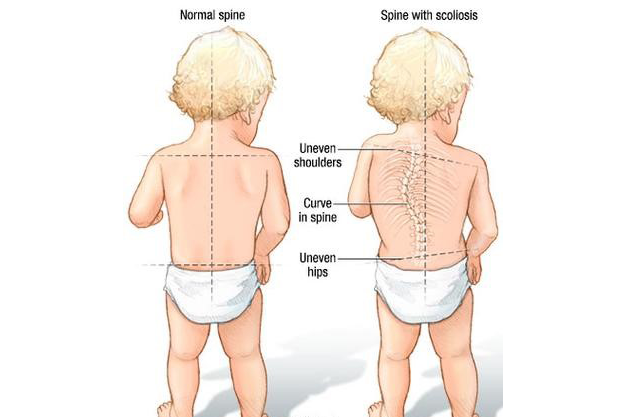
Early Signs of Scoliosis in Babies: Parents Should Not Ignore
Physical Signs to Watch For
- Their shoulders or hips aren’t lining up evenly
- One of their shoulder blades is jutting out
- Clothes just don’t fit right
- Their head is tilted at a weird angle or their waistline is all wonky
Symptoms Children May Experience
- Their back &/or shoulders are giving them grief
- They’re getting tired real quick after sitting or standing
- They’re not as bendy as they used to be
- They’re slouching all the time
Causes of Scoliosis in Kids
Idiopathic Scoliosis, the Most Common Type
The reason we can’t pinpoint the exact cause yet is that it often gets passed down in families and seems to pop up when kids are going through a big growth spurt.
Congenital & Neuromuscular Causes
Some kids are born with a crooked spine, while others get it because of conditions that affect their nervous system or their muscles.
Physiotherapy Treatment for Scoliosis in Children
Why Physiotherapy Is Important for Scoliosis in Children
Helping kids with scoliosis through physiotherapy can really make a difference in their lives. It can help with:
- Standing up straight and looking after their posture
- Building up the muscles around their spine and core
- Increasing their flexibility and sense of balance
- Reducing pain and fatigue that might come from the condition
- Slowing the progress of the curve
Specialized Exercises for Scoliosis in Children
- We work on exercises that help tackle the shape of the curve in kids’ specific needs
- Breathing techniques that work on the principles developed by the Schroth method
- Training them on how to maintain good posture even when they’re just doing everyday things
Individualized Non-Surgical Scoliosis Treatment Plans
Every kid with scoliosis is unique; their treatment will depend on their age, how severe their curve is, and where they are in their growth stage.
How Rapid Physiocare Supports Children with Scoliosis
At Rapid Physiocare, we offer scoliosis physiotherapy tailored to be friendly and effective for kids, focused on safety, being comfortable, and their long-term spinal health. Our physios specializing in kids work closely with families to make sure progress is steady and they feel confident.
Is surgery safe for Scoliosis in kids?
Growing kids with curves of more than 40 degrees are recommended for surgery which involves spinal fusion. In a few cases, surgery can lead to extreme complications such as loss of skin sensation, loss of strength in feet, loss of bladder and bowel control. The neurological complications start to appear within a few weeks of surgery. The side effects can be temporary or permanent. With physiotherapy, the complications can be minimized and often avoided.
What are the symptoms of Scoliosis in kids?
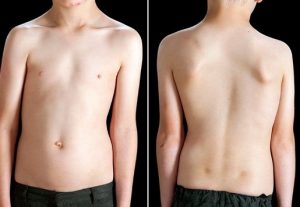
Kids with scoliosis can experience varied symptoms. Some of the common symptoms include
- Uncentred head leading to loss of balance with locomotion,
- Uneven shoulders
- Irregular hip position,
- Height difference with sides of the back when leaning down
- Difference in arm height when standing straight
Essential things a parent should know about scoliosis in kids
Since scoliosis is progressive, parents need to give extra care and attention if they find that their kids have any of the symptoms of scoliosis. Here are some of the key things to consider
- Detection of scoliosis early is essential as scoliosis gets pronounced during preteen and teenage years.
- Regular checkups are essential to know the state of the condition and if treatments given are effective.
Frequently Asked Questions
Is scoliosis painful for kids?
Most kids don’t feel pain when it’s first starting to show. But as it progresses, or if they’re stuck sitting or being super active for a long time, they may start feeling some discomfort.
Can physiotherapy in kids actually fix scoliosis?
Well, physiotherapy can’t completely straighten the spine, but it can definitely make a big difference; it helps slow down progression, improve posture, and get rid of those pesky symptoms.
When does scoliosis usually kick in?
It usually starts showing up somewhere between 8 and 14 years old, especially during those super rapid growth spurts.
How often should a kid with scoliosis do physiotherapy?
It really depends on how bad the curve is. Most kids are best off with 1 or 2 supervised sessions a week, along with some exercises to do at home.
Can scoliosis get out of control if left untreated?
Unfortunately, the answer is yes. If you don’t keep an eye on it and get treatment, scoliosis can get worse during those growth spurts, and that can cause some pretty long-term issues with posture.
Is physiotherapy safe for kids with scoliosis?
Yeah, it’s totally safe. Pediatric scoliosis physio really is just gentle and tailored to each kid’s age and abilities.
For more information, please contact www.rapidphysiocare.com or call +65 6904 4900
Tags : Physiotherapy