
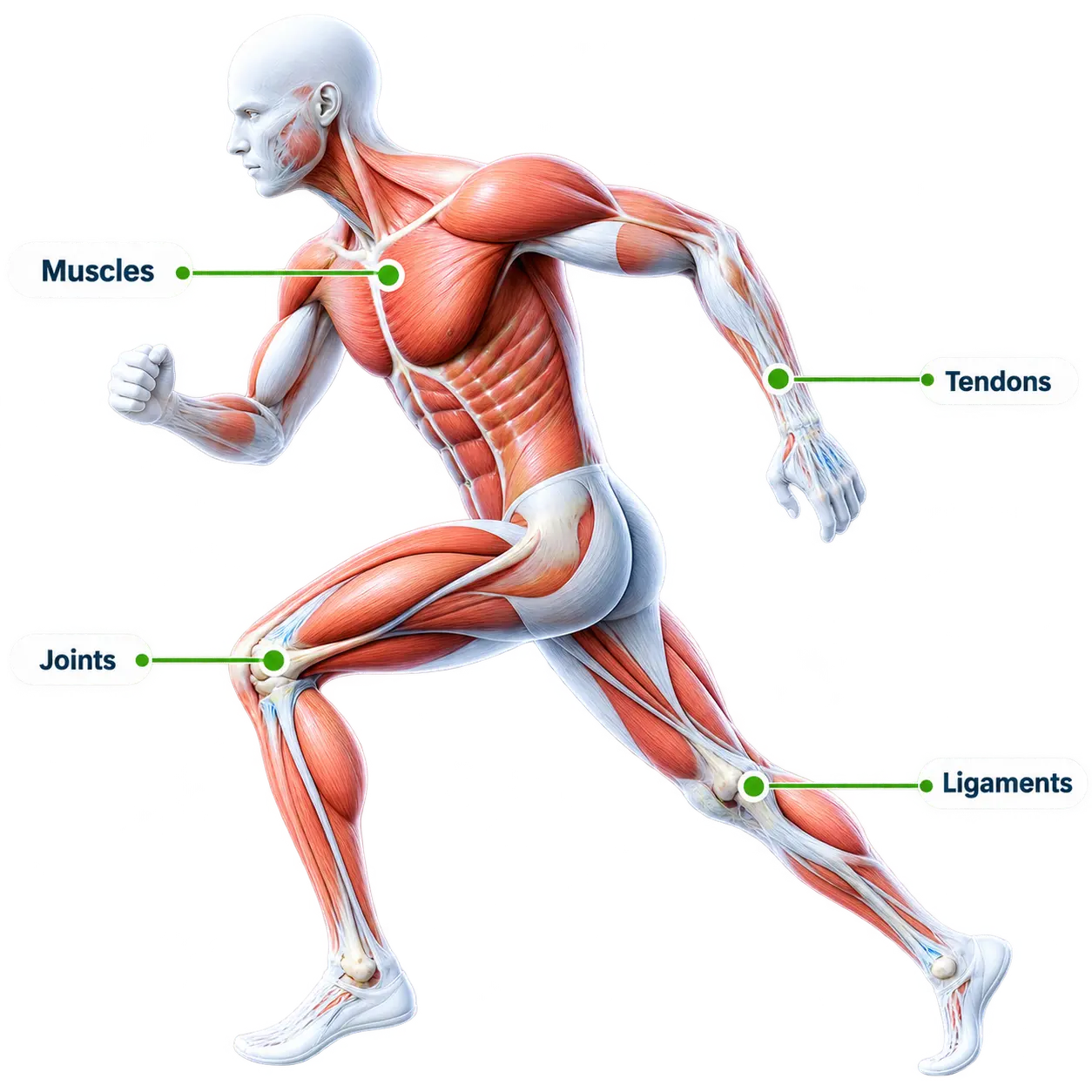
What Are Musculoskeletal Conditions?
Musculoskeletal conditions affect the muscles, joints, tendons, ligaments, bones, and other soft tissues that allow your body to move. They can develop suddenly after an injury or gradually through repetitive movement, poor posture, prolonged sitting, sporting activities, or age-related wear and tear.
These conditions can make everyday activities such as walking, lifting, climbing stairs, exercising, or even sitting at work uncomfortable.
Early assessment and treatment often help prevent the condition from becoming more severe, allowing you to recover faster and return to your normal routine sooner.
Common Musculoskeletal Symptoms
Musculoskeletal conditions affect everyone differently. The symptoms depend on the location of the problem and the tissues involved.
Conditions We Help Treat
At Rapid Physiocare, we help people recover from a wide range of musculoskeletal conditions, whether the symptoms appeared suddenly or developed gradually over time. Conditions our physiotherapists commonly treat include:
Musculoskeletal injuries often happen after sport, awkward movements, lifting injuries, falls, or repetitive strain.
Common Injuries :
Pain affecting muscles, joints, tendons, ligaments, or soft tissues. It may occur without injury or diagnosed disease.
Common Conditions :
Some conditions develop gradually because of changes within the joints or surrounding tissues, muscles, and structures.
Common Disorders :
Whatever the cause, every treatment plan is tailored to how you move, your lifestyle, and your goals. We explain your condition clearly and work with you to create a recovery plan tailored to your needs.
What Causes Musculoskeletal Problems?
Musculoskeletal conditions often develop through a combination of factors rather than one single cause.
Sometimes there is a clear injury that starts the pain. Other times, symptoms gradually build over weeks or months. Identifying the underlying cause helps us develop an effective treatment plan.
Common contributors include:


How Physiotherapy Can Help
Physiotherapy aims to reduce pain, improve movement, restore function, and help prevent future problems through evidence-based treatment.
When Should You See a Physiotherapist?
Early treatment often leads to quicker recovery and helps prevent minor problems from becoming more significant. Consider seeing a physiotherapist if:
- Pain lasts longer than expected
- Symptoms keep returning
- Pain affects work or daily activities
- Movement becomes restricted
- Sleep is disturbed by pain
- Exercise becomes difficult
- Recovery has stalled
Why Choose Rapid Physiocare?
At Rapid Physiocare, we provide personalised physiotherapy tailored to your symptoms, goals, and lifestyle. Our highly experienced physiotherapists bring extensive clinical expertise to every consultation, giving you the reassurance that your care is guided by professionals who understand your condition and recovery needs.
Our approach combines detailed assessment, evidence-based treatment, and practical rehabilitation strategies to help you recover safely and confidently.

FAQs
Frequently Asked Questions
Musculoskeletal disorders are conditions affecting the muscles, joints, tendons, ligaments, bones, and surrounding soft tissues. They can lead to pain, stiffness, weakness, reduced mobility, and difficulty performing everyday activities.
Musculoskeletal pain refers to discomfort arising from muscles, joints, bones, tendons, ligaments, or other soft tissues. It may result from injury, repetitive movement, poor posture, overuse, or age-related changes.
If pain persists, worsens, repeatedly returns, or starts affecting your work, exercise, or daily activities, it is advisable to have it assessed by a physiotherapist.
Your first appointment includes a detailed discussion about your symptoms, medical history, movement assessment, and physical examination. Based on the findings, your physiotherapist will explain the diagnosis, discuss your goals, and begin a personalised treatment plan.
Ready to Move Without Pain?
Don’t let musculoskeletal pain limit your work, exercise, or daily life. With the right assessment and personalised physiotherapy, you can move more comfortably and recover with confidence.