
TMJ Physiotherapy in Singapore
Relieve TMJ Pain. Restore Jaw Function. Improve Daily Comfort.
Persistent jaw pain can interfere with eating, speaking, and even sleeping. Clicking sounds, stiffness, facial tension, or headaches are often linked to TMJ disorder, also known as temporomandibular joint dysfunction.
At Rapid Physiocare, we provide structured, evidence-based TMJ physiotherapy in Singapore designed to reduce inflammation, restore jaw mobility, and correct the underlying mechanical causes of dysfunction. Our approach focuses on long-term control rather than temporary symptom relief.
If you are experiencing ongoing jaw joint pain, early intervention improves outcomes and prevents chronic complications.

What Is TMJ Disorder?
The temporomandibular joint (TMJ) connects your lower jaw (mandible) to the skull. It allows essential movements such as chewing, talking, yawning, and swallowing.
Unlike many joints in the body, the TMJ functions in coordination with:
- Facial muscles
- Cervical spine (neck)
- Upper back posture
- Bite alignment
When this joint becomes inflamed, misaligned, or overloaded, it results in TMJ disorder.
Common clinical features include:
- Pain near the ear or jaw
- Clicking or popping sounds
- Restricted mouth opening
- Locking episodes
- Facial muscle tightness
TMJ pain often overlaps with headaches and neck discomfort. Many patients initially assume it is dental pain. However, in many cases, the root cause is muscular or biomechanical, which responds well to TMJ treatment in Singapore through physiotherapy.
Signs and Symptoms of TMJ Pain
Symptoms may vary in intensity and duration. You may benefit from TMJ physiotherapy if you experience:
- Pain when opening or closing the mouth
- Jaw clicking with discomfort
- Locking or catching sensation
- Headaches around the temples
- Ear fullness without infection
- Pain while chewing
- Facial muscle tightness
- Neck stiffness accompanying jaw pain
If these symptoms persist for more than two weeks, a professional physiotherapy assessment is recommended.
Common Causes of TMJ Disorder
Understanding the cause guides effective TMJ treatment.
1. Muscle Overactivity and Bruxism
Chronic jaw clenching or teeth grinding, also known as bruxism, overloads the jaw muscles. Stress is a common trigger. Prolonged muscle tension leads to inflammation and restricted movement.
2. Joint Disc Displacement
Inside the TMJ is a small disc that cushions movement. When this disc shifts out of alignment, clicking and locking may occur.
3. Arthritis or Joint Inflammation
Degenerative changes can affect the joint surfaces, causing pain and stiffness.
4. Postural Dysfunction
Forward head posture increases strain on the jaw. Prolonged desk work is a frequent contributor in Singapore’s working population.
5. Neck and Upper Cervical Dysfunction
The jaw and upper cervical spine share neurological pathways. Dysfunction in the neck can amplify TMJ pain.
Our TMJ physiotherapy in Singapore addresses all contributing factors rather than focusing solely on the jaw.
Differentiate TMJ From Other Conditions
Accurate diagnosis prevents unnecessary treatment.
TMJ disorder is commonly confused with:
- Dental infection
- Trigeminal neuralgia
- Ear infection
- Sinus-related pain
A comprehensive assessment helps determine whether TMJ treatment in Singapore through physiotherapy is appropriate or if referral to a dentist or specialist is required.
For a deeper understanding of symptoms, causes, and treatment options, read our complete guide on TMJ disorder in Singapore.
How TMJ Physiotherapy Helps
Physiotherapy addresses both joint mechanics and muscular imbalance.
Comprehensive TMJ Assessment
Your assessment includes:
- Jaw range of motion analysis
- Palpation of masticatory muscles
- Joint noise evaluation
- Cervical spine screening
- Postural assessment
- Functional chewing evaluation
This structured evaluation ensures precise TMJ pain treatment.
Manual Therapy for TMJ
Manual therapy involves hands-on techniques to restore joint mobility and reduce muscle tension.
Techniques may include:
- Joint mobilization (gentle guided movement of the joint)
- Myofascial release (soft tissue tension reduction)
- Trigger point therapy
- Cervical spine mobilization
- Intra-oral release techniques (when clinically appropriate)
These methods reduce stiffness and improve coordinated jaw movement.
Targeted TMJ Exercises
Exercise therapy restores motor control and reduces recurrence.
Programs may include:
- Controlled jaw opening drills
- Lateral deviation exercises
- Deep neck flexor strengthening
- Postural correction exercises
- Relaxation breathing techniques
Patients are taught safe TMJ exercises to perform at home, promoting faster recovery.
Pain Management Modalities
When needed, adjunct therapies such as:
- TENS (Transcutaneous Electrical Nerve Stimulation)
- Ultrasound therapy
may be used to reduce acute discomfort.
Tablets prescribed by your physician may assist short-term inflammation control, but physiotherapy remains central to long-term recovery.
TMJ Treatment Phases
Recovery progresses through structured stages.
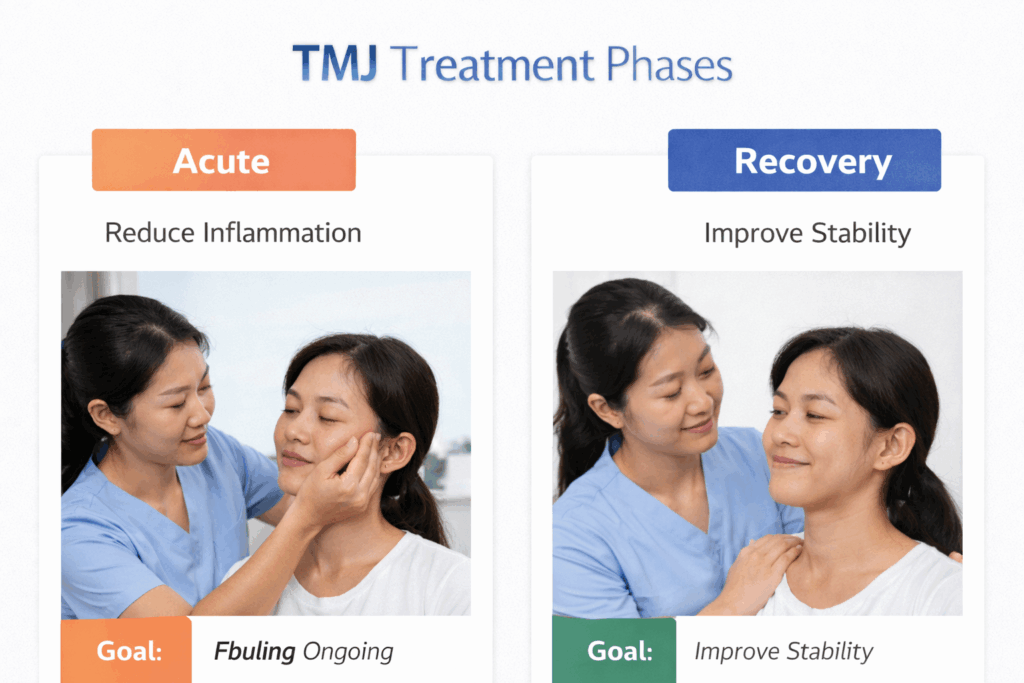
| Phase | Objective | Clinical Focus |
|---|---|---|
| Acute | Reduce pain and inflammation | Gentle mobilization, unloading |
| Subacute | Restore joint mechanics | Controlled mobility, muscle release |
| Recovery | Improve stability and endurance | Strengthening, posture correction |
Most mild cases improve within 4–6 weeks. Chronic TMJ disorder may require 8–12 weeks, depending on severity and compliance.
Consistency is essential. Skipping exercises prolongs recovery.
Who Should Seek TMJ Physiotherapy Treatment
You should consider TMJ physiotherapy in Singapore if you experience:
- Persistent jaw pain
- Clicking is associated with discomfort
- Locking episodes
- Frequent temple headaches
- Jaw fatigue while chewing
- Neck pain with jaw symptoms
- Bruxism-related soreness
Early management prevents chronic joint changes and prolonged dysfunction.
Is TMJ Physiotherapy Painful?
Treatment is designed within the patient’s tolerance. Mild soreness may occur initially as restricted tissues regain mobility. Exercises are progressed gradually to ensure comfort and safety.
Why Choose Rapid Physiocare for TMJ Physiotherapy?
Rapid Physiocare delivers structured, evidence-based care focused on measurable outcomes.
We provide:
- Licensed physiotherapists with musculoskeletal expertise
- Comprehensive biomechanical assessment
- Individualized rehabilitation programs
- Integration of neck and postural correction
- Clear recovery timelines
- Practical home guidance
Our approach treats the root cause of TMJ disorder, not only the symptoms.
We emphasize education, control, and long-term prevention.
Book Your TMJ Physiotherapy Session at Rapid Physiocare
Don’t let persistent TMJ pain affect your daily life. Book your TMJ physiotherapy assessment in Singapore today and
Start a personalized recovery plan for lasting relief.
Frequently Asked Questions
What is TMJ physiotherapy treatment?
TMJ physiotherapy is a non-surgical treatment that reduces jaw pain, improves joint mobility, and restores normal function through manual therapy, exercises, and posture correction.
Can physiotherapy cure TMJ disorder?
Physiotherapy can significantly reduce TMJ pain and dysfunction. In many cases, structured treatment helps resolve symptoms without the need for surgery.
How long does TMJ physiotherapy take to work?
Most patients notice improvement within 3–6 weeks, depending on severity. Acute cases may improve faster, while chronic TMJ issues require longer rehabilitation.
What are the common symptoms of TMJ disorder?
Common symptoms include jaw pain, clicking or popping sounds, difficulty opening the mouth, headaches, ear pain, and facial muscle tightness.
Is TMJ physiotherapy painful?
Treatment is generally gentle and well-tolerated. Some mild soreness may occur initially, but it typically reduces as inflammation decreases and mobility improves.
Do I need a doctor’s referral for TMJ physiotherapy in Singapore?
In most cases, a referral is not required. You can directly book an assessment with a qualified physiotherapist for TMJ treatment.
What techniques are used in TMJ physiotherapy?
data-start=”1468″ data-end=”1621″>Treatment may include manual joint mobilization, soft tissue release, dry needling (if appropriate), jaw strengthening exercises, and posture correction.
When should I see a physiotherapist for TMJ pain?
You should seek treatment if jaw pain persists for more than a few days, limits mouth opening, causes headaches, or affects chewing and speaking.