

What Is Neck Pain Physiotherapy?
Neck pain physiotherapy is a hands on and exercise-based treatment that relieves pain, restores movement, and builds the strength your neck needs to stay comfortable. A physiotherapist first works out which structures are irritated. A combination of manual therapy, targeted exercise and practical advice will be given that fits your work and daily routine.
Your neck, or cervical spine, is made up of seven small vertebrae between your skull and shoulders. Intervertebral discs cushion each level, and small facet joints at the back act as hinges that guide every turn and tilt. Nerves branch out from here into your shoulders and arms.
Deep muscles at the front of the neck hold your head steady. In long-term neck pain, these muscles can become less active, so the larger muscles across the top of your shoulders work overtime. That imbalance helps explain why tightness so often spreads towards the shoulder blades.
No two presentations are identical, so your treatment follows no generic protocols.
Recovery Focus Areas:
- Pain Relief, Restoring Neck Movement, Strength & Control and Long-Term Prevention
Common Challenges With Neck Pain
Neck pain rarely stays in the neck. Patients usually describe one of these patterns.
Types of Neck Pain We Treat
In physiotherapy, neck pain is grouped by what is driving it. Your physiotherapist identifies the type during your first visit, because it shapes everything that follows.
- Non-specific neck pain (the most common type, with no single damaged structure)
- Acute wry neck (“slept wrongly”)
- Facet joint irritation
- Cervical radiculopathy (a pinched nerve causing arm symptoms)
- Disc-related neck and arm pain
- Whiplash after a car accident or sudden jolt
- Cervical spondylosis (age-related wear of the neck joints)
- Cervicogenic headache
Note: Scans often show age-related wear in people with no neck pain at all. An X-ray result on its own rarely explains your symptoms, which is why a hands-on assessment matters.
What Can Slow Your Recovery?
There is no single correct posture. Staying in any one position for too long tends to matter more than the position itself, so movement through the day is part of your treatment.
Recovery also stalls when pain is managed but its cause is never addressed.
Common factors include:
- Long hours without moving
- Avoiding neck movement entirely
- Poor sleep
- High stress
- Relying only on massage or painkillers
- Delaying an assessment
How Neck Pain Physiotherapy Works
Each stage builds on the last, and your physiotherapist adjusts the plan as you improve.
We ask how the pain started, what eases or worsens it and how it affects your work and sleep. We then check neck movement, muscle strength and nerve function in your arms.
Hands-on techniques ease stiff joints and tight muscles. Many patients find they can move more freely within the first few sessions.
Targeted exercises retrain the deep neck muscles and strengthen the muscles around your shoulder blades, which share the work of holding up your head.
You leave with a short home routine and specific changes for your desk, commute and sleep.
Neck Pain Treatment Without Surgery
Can neck pain be treated without surgery? In most cases, yes. Most neck pain improves with conservative care. Surgery is usually reserved for specific situations, such as severe nerve compression with worsening weakness.
Physiotherapy for neck pain at Rapid Physiocare combines several approaches, chosen to suit your assessment findings.
How Long Does Neck Pain Take to Heal?
Recovery depends on the type of neck pain and how long you have had it. Treat these timeframes as general guides; your physiotherapist gives you a personal estimate after assessment.
| Phase | Focus | General timeframe |
|---|---|---|
| Acute Phase (Pain relief) | Calm pain and muscle spasm, restore gentle movement | Days to about 2 weeks |
| Subacute Phase (Restoring range) | Regain full movement and better muscle control | About weeks 2 to 6 |
| Recovery Phase (Strength & prevention) | Build strength, endurance and habits that prevent flare-ups | About weeks 6 to 12 |
An acute wry neck often settles within days to a couple of weeks. Nerve-related arm pain and whiplash can take longer, sometimes several months.
When Should You Start Neck Pain Physiotherapy?
Start early, once serious causes have been ruled out. Book an assessment if:
- Neck pain has lasted more than a week
- Stiffness keeps coming back
- You get headaches from your neck
- Pain or tingling spreads into your arm
- Neck pain disturbs your sleep or work
- You have had a sports knock or minor accident (after a medical check)

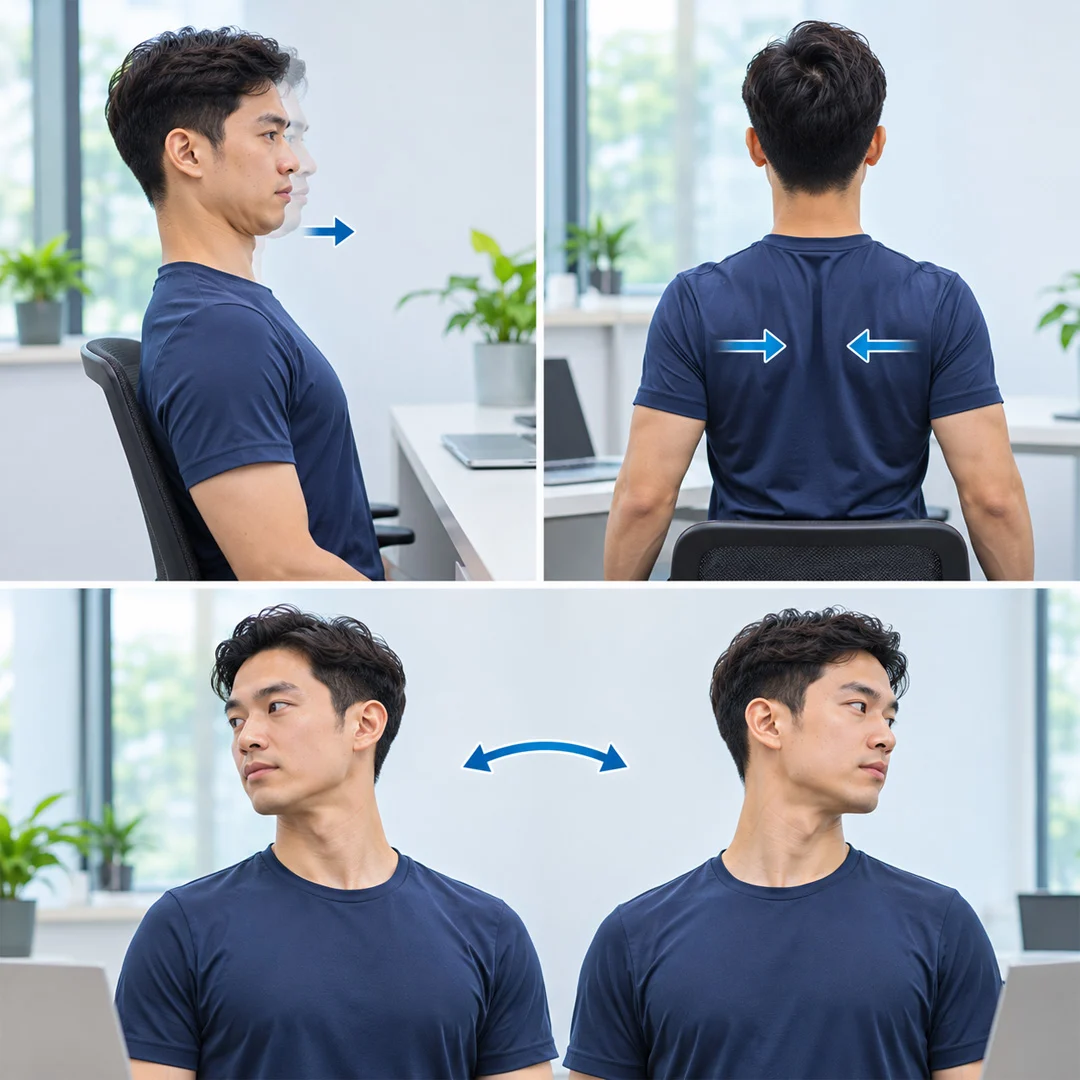
Three Gentle Neck Exercises to Try at Your Desk
These simple movements suit most people with everyday neck stiffness. They take about 2 minutes, so they fit easily between meetings or emails.
- Chin Tuck
Sit tall and look straight ahead. Gently draw your chin straight back, as if making a double chin, without tipping your head down. Hold for 5 seconds, then relax. Repeat 5 to 10 times. - Shoulder Blade Squeeze
Sit or stand tall with your arms relaxed. Gently draw your shoulder blades back and down towards your back pockets. Hold for 5 seconds. Repeat 10 times. - Gentle Rotation
Slowly turn your head to look over one shoulder, as far as feels comfortable. Pause, return to the centre, then turn to the other side. Repeat 5 times each way.
Stay safe: Move within comfort. Stop and book an assessment if any exercise increases your pain or causes tingling, numbness or dizziness. Skip these exercises if your symptoms match any of the urgent warning signs above. These are general exercises and may not suit every type of neck pain, so your physiotherapist will tailor your programme after assessment.
Neck Pain Prevention: Habits That Help
Neck pain prevention comes down to two things: regular movement and enough strength.
- Change position regularly at your desk, for example every 30 to 45 minutes.
- Keep your screen at roughly eye level, whether you are at the office or at home.
- Strengthen your upper back and shoulders 2 or 3 times a week. Our [Strength and Conditioning] programme can guide you.
- Choose a pillow that keeps your neck roughly in line with your spine.
- Act on early stiffness before it settles into a pattern.
FAQs
Frequently Asked Questions
Usually not. Most neck pain is diagnosed through your history and a physical assessment. If any signs point to a more serious problem, your physiotherapist will refer you to a doctor for further tests.
It depends on the type of neck pain. A sudden stiff neck may need only a few sessions. Longer-standing or nerve-related pain usually involves regular reviews over 6 to 12 weeks.
A massage can ease muscle tension for a while. Neck pain physiotherapy starts with an assessment to find what is driving your pain, then adds hands-on treatment, exercise and a plan to keep it from returning.
Usually, yes, with some modifications. Gentle activity such as walking often helps. Your physiotherapist will tell you which movements to modify, such as heavy overhead lifting, until your neck settles.
Stress is closely linked with neck pain. It can increase muscle tension and make pain feel stronger. Good sleep, regular movement and pacing your workload all help.
Posture is one factor among several. Long periods in any single position, low activity, stress and poor sleep all play a part, so your plan addresses more than how you sit.
Dizziness has many possible causes, including inner ear problems. If you feel dizzy along with neck pain, mention it at your assessment.
Start Neck Pain Physiotherapy at Rapid Physiocare
Book an assessment to find out which type of neck pain you have, what is driving it and how long recovery should take. Sessions run at our clinics across Singapore, conveniently close to home or work.