
Rotator Cuff Injury Physiotherapy in Singapore
Restore Shoulder Strength. Reduce Pain. Return to Daily Function.
A rotator cuff injury can make simple tasks harder. Lifting your arm, reaching behind your back, or even sleeping on your side may trigger pain. At Rapid Physiocare, we provide clinically proven physiotherapy for rotator cuff injury designed to reduce inflammation, restore strength, and improve shoulder stability without unnecessary surgery.
Our structured rehabilitation programs focus on long-term recovery, not temporary relief.

What Is the Rotator Cuff?
The rotator cuff is a specific set of four muscles and their rotator cuff tendons that work together to stabilize and control the shoulder joint.
The shoulder is the most mobile joint in the human body, but that mobility comes at the cost of stability. Unlike the hip joint, which has a deep socket, the shoulder socket is relatively shallow. This makes it highly dependent on soft tissue structures for support.
The four rotator cuff muscles are
- Supraspinatus: Initiates arm lifting (abduction)
- Infraspinatus: Assists with external rotation
- Teres Minor: Supports outward rotation and stability
- Subscapularis: Enables internal rotation and anterior stability
Together, these muscles:
- Keep the humeral head centered in the socket
- Reduce excessive upward motion of the shoulder
- Coordinate smooth upward movement
- Stabilise the shoulder during lifting, pushing, and pulling
When the rotator cuff tendons become overloaded, inflamed, degenerated, or torn, it results in a rotator cuff injury.
Without proper rotator cuff treatment, the condition may worsen, leading to weakness, stiffness, and reduced function.
Types of Rotator Cuff Injury
1. Rotator Cuff Tendinopathy
This is the most common form of rotator cuff injury. It develops gradually due to repetitive strain or poor shoulder mechanics.
It involves:
- Micro-tears in the tendon
- Collagen degeneration
- Reduced tendon capacity
- Chronic inflammation
Common in:
- Office workers
- Swimmers
- Tennis players
- Weight lifters
- Individuals with poor posture
Early physiotherapy for rotator cuff injury can reverse symptoms before structural damage progresses.
2. Partial Rotator Cuff Tear
A partial rotator cuff tear means part of the tendon thickness is damaged.
There are two types:
- Articular-sided tears
- Bursal-sided tears
Symptoms often include:
- Painful lifting
- Weakness in rotation
- Night discomfort
- Fatigue with repetitive movement
Structured rotator cuff tear treatment can often prevent progression to a full tear.
3. Full-Thickness Rotator Cuff Tear
A full-thickness rotator cuff tear means the tendon is completely detached from the bone.
Causes may include:
- Sudden trauma
- Heavy lifting injury
- Long-standing degeneration
Symptoms may involve:
- Significant weakness
- Difficulty lifting the arm
- Compensation using neck or upper back muscles
Even with a complete tear, gentle physiotherapy can significantly improve rotator cuff injury function in certain patients.
4. Shoulder Impingement with Rotator Cuff Involvement
This occurs when the shoulder rotator cuff tendons are compressed beneath the acromion during arm elevation.
Repeated impingement can lead to:
- Tendon inflammation
- Bursa irritation
- Progressive tearing
Correcting biomechanics is critical in preventing recurrence.
Causes and Signs of a Rotator Cuff Injury
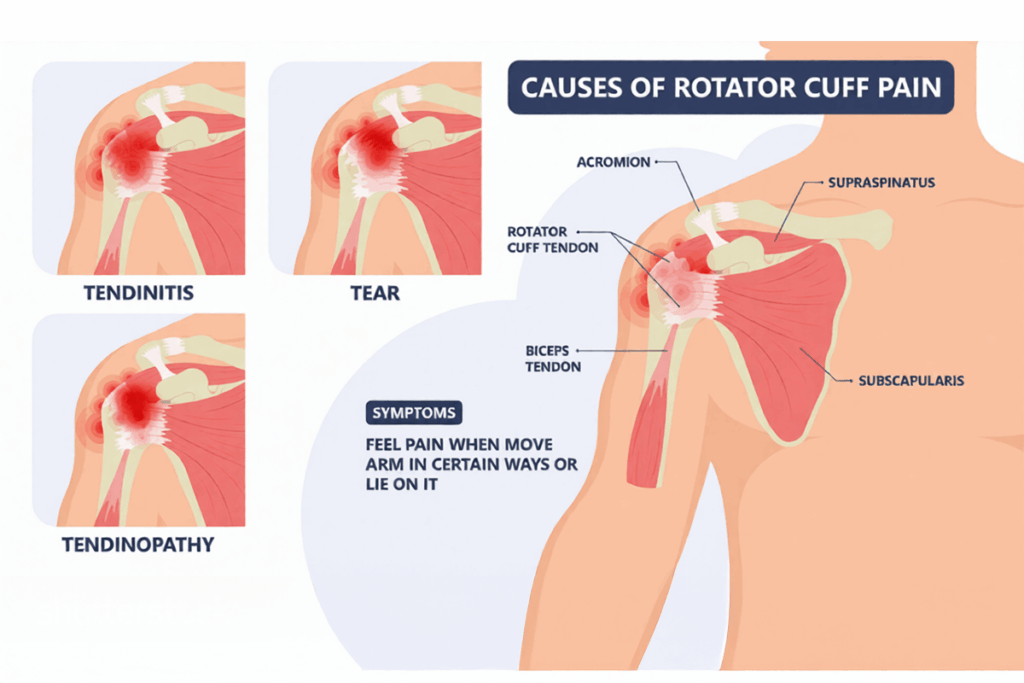
Common Causes
- Repetitive overhead activities
- Sudden lifting injury
- Age-related tendon degeneration
- Poor shoulder posture
- Weakness of rotator cuff muscles
Signs and Symptoms of Rotator Cuff Tear
- Pain when lifting the arm
- Weakness during overhead movements
- Night pain when lying on the affected side
- Clicking or catching sensation
- Reduced shoulder range of motion
If symptoms persist beyond two weeks, professional assessment is recommended.
Treatment Options for Rotator Cuff Injury
Treatment depends on severity, age, and functional goals. In most cases, nonsurgical treatment is effective.
Non-Surgical Rotator Cuff Treatment
Evidence shows that structured physiotherapy provides excellent outcomes for many partial tears and tendinopathies.
Nonsurgical management includes:
- Activity modification
- Anti-inflammatory tablets when prescribed
- Targeted rotator cuff exercises
- Manual therapy
- Electrotherapy for pain relief
Surgery is considered when:
- There is a large full-thickness tear
- Significant weakness persists
- Conservative care fails after structured rehabilitation
At Rapid Physiocare, we prioritize noninvasive solutions whenever clinically appropriate.
Recovery Time for Rotator Cuff Injury
Recovery timelines vary depending on:
- Severity of tendon damage
- Duration before treatment
- Age and tissue health
- Compliance with exercises
General Guidelines:
| Condition | Estimated Recovery |
|---|---|
| Mild rotator cuff tendinopathy | 4–8 weeks |
| Partial rotator cuff tear | 8–16 weeks |
| Chronic degenerative tear | 3–6 months |
| Post-surgical rehab | 4–6 months |
Tendons heal slower than muscles. Progressive loading is essential for recovery. Skipping rehabilitation increases recurrence risk. Early rotator cuff injury physiotherapy significantly improves prognosis.
How Physiotherapy Helps Rotator Cuff Injury
The goal of physiotherapy for rotator cuff injuries is to safely restore movement, reduce pain, and rebuild strength.
Complete Examination
We evaluate:
- Shoulder biomechanics
- Muscle imbalances
- Postural contribution
- Tendon loading tolerance
This ensures accurate diagnosis and tailored treatment.
Manual Therapy
Techniques may include:
- Glenohumeral joint mobilisation
- Myofascial release (soft tissue tension reduction)
- Scapular stabilisation techniques
These reduce pain and improve mobility.
Progressive Rotator Cuff Exercises
The treatment of rotator cuff tears begins with exercise therapy.
Patients are guided through:
- Controlled strengthening of rotator cuff muscles
- Scapular control training
- Resistance-based tendon loading
- Functional movement retraining
These exercises rebuild tendon capacity gradually.
Electrotherapy Support
Where appropriate, modalities such as:
- Ultrasound therapy
- Interferential therapy
- TENS
may be used to manage pain and support tissue healing.
Provide Long-Term Shoulder Stability
Rehabilitation focuses not only on healing but also on preventing recurrence. This includes:
- Ergonomic correction
- Postural education
- Safe lifting mechanics
- Advanced rotator cuff stretches
Structured physiotherapy reduces recurrence rates and improves long-term shoulder strength.
Who Should Seek Treatment?
You may benefit from an assessment if you experience:
- Persistent shoulder pain
- Weakness during lifting
- Limited range of motion
- Recurrent shoulder strain
- Difficulty sleeping due to shoulder discomfort
Early treatment prevents minor tendon irritation from progressing into a full rotator cuff tear.
Why Choose Rapid Physiocare for Rotator Cuff Treatment?
- Licensed physiotherapists with muscles and joints expertise
- Proven rehabilitation protocols
- Individualised recovery programmes
- Modern rehabilitation equipment
- Clear recovery timelines and goal tracking
We prioritize measurable improvement. Our goal is safe, lasting shoulder function.
Take Control of Your Shoulder Recovery At
Rapid Physiocare
A rotator cuff injury should not define your daily movement. With structured physiotherapy for rotator cuff injury, most patients regain strength and mobility without surgical intervention.
Schedule an assessment and begin a personalized recovery plan today.